
Tips to help a wider range of students feel like they belong in chemistry
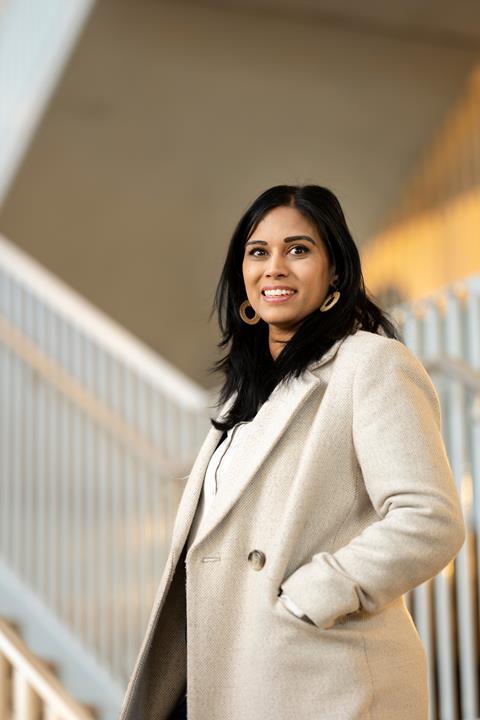
‘A diverse curriculum is a way in which we’re allowing everybody in the room that’s taking part in that curriculum… to be able to have a voice,’ says Baljit Thatti at Kingston University London, UK.
Yet, a recent Royal Society of Chemistry report found that students are still being held back by their socioeconomic backgrounds. Meanwhile, women remain underrepresented in science, black and ethnic minority students are leaking out of the academic pipeline and scientists that identify as LGBTQ+ continue to face struggles.
Yet, while there have been strides in making staff, students and curricula better reflect life outside of chemistry departments, there is still a way to go before reaching Thatti’s vision of diversity. For example, a recent Royal Society of Chemistry report found that students are still being held back by their socioeconomic backgrounds. Meanwhile, women remain underrepresented in science, black and ethnic minority students are leaking out of the academic pipeline and scientists that identify as LGBTQ+ continue to face struggles.
So, what can chemistry departments do to tackle some of these issues and become more diverse?
Changing the curriculum
Chemistry is a content-heavy subject, with many lecturers often sticking to existing lecture slides to fit everything into a tight timetable. Yet, as a recent survey funded by the Royal Society of Chemistry’s inclusion and diversity fund highlighted, students can sometimes feel like ‘it’s white people teaching [students] about white people.’
Chemistry is a content-heavy subject, with many lecturers often sticking to existing lecture slides to fit everything into a tight timetable. Yet, as a recent survey funded by the Royal Society of Chemistry’s inclusion and diversity fund highlighted, students can sometimes feel like ‘it’s white people teaching [students] about white people.’
Developing a series of resources – including posters, lecture slides and videos – to highlight minoritised figures in chemistry can combat this issue. Using such resources in teaching sessions, or making them available for students to explore in their own time, highlights the contributions of a range of chemists to a specific field. This can help students connect with figures that come from similar backgrounds.
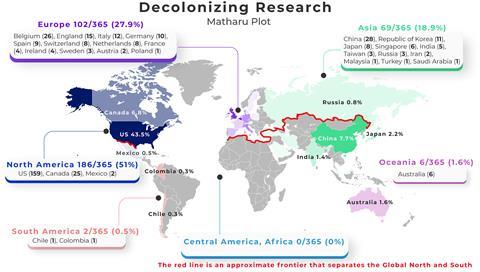
Avtar Matharu at the University of York, UK has taken this a step further by creating ‘Matharu plots’ that get students to analyse the background of the researchers found in their thesis or dissertation bibliographies. These highlight gaps in the research that students search for and ultimately end up citing, encouraging students to widen the scope of their literature reviews the next time around.
As well as raising the profile of less-well known chemists, David Smith, also at the University of York, UK says that it’s also important to note that many of the chemists that students learn about are ‘all dead, white German [chemists], sometimes American, sometimes British’.
Smith picks out Fritz Haber as an example, describing him as a ‘controversial’ figure. Haber, along with Carl Bosch, revolutionised agriculture by developing the Haber–Bosch process as a way to fix nitrogen in the air into ammonia. However, he was also involved in synthesising poisonous gases in the first world war. ‘I pretty much leave it for the students to make their own minds up about what they think about his legacy,’ Smith says.
Students entering industry need to know about the eponymous Haber–Bosch process, he adds, but describing reactions or processes where possible, rather than relying on their old-fashioned names, can also help diversify the language that students use to talk about chemistry. It can also make it easier for students to learn mechanisms or theories, rather than knowing that it is simply a ‘Beckmann rearrangement’, for example.
‘[Altering how we teach chemistry] is about just properly reflecting the histories and origins of certain areas of science,’ says Smith. ‘We’re still teaching people thermodynamics and kinetics and organic reaction mechanisms.’
As students progress through their studies, Thatti says that departments should also teach the context in which scientists carry out research. A piece of analytical equipment, for example, may ‘do all this amazing stuff. However, not every country and population can afford those things,’ she says. ‘How about if we deliver the facts through some discussion and debate and get students to really start thinking about [these issues].’
Creating a diverse community
At Kingston, Thatti says that around 80–90% of students are from an ethnically diverse background. Many students commute from home or have commitments outside of their studies, such as work or caring responsibilities. Even at such a diverse university, it is still important to support students by fostering community with those from similar backgrounds.
This could be by celebrating cultural or religious events throughout the year, such as Pride or Diwali, or by setting up specific clubs and societies. For example, Namrah Shahid at the University of Leeds in the UK set up a ‘Hijabi Runners’ club to create a space for Muslim and ethnic minority runners to run in a comfortable, all-female environment. Creating safe spaces in departments, such as prayer or contemplation rooms, makes students feel that they are part of the chemistry community, rather than just the wider university.
Support for students also recognises that not all are able to stick to a rigid timetable. Reducing the number of early lectures or ensuring lab practicals don’t finish too late can make it easier for those commuting from home, rather than student accommodation.
Diversifying is a process
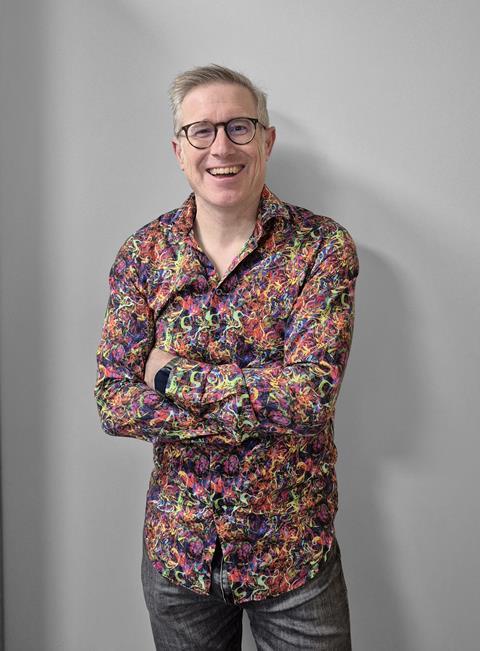
‘It’s about being proactive and reactive throughout the whole curriculum, not seeing [changes] as a standalone,’ says Thatti. She points out that a cohort of students may need additional support in later years of a chemistry degree or might even be able to be challenged. Speaking to current students and using data about students’ results or backgrounds where possible will make sure that chemistry departments respond to emerging challenges.
Thatti says that chemistry departments also need to work more with industry to make employers ‘fully aware of the diversity of students that we have in universities’. This might change the picture of what an ‘ideal graduate’ is: ‘It’s no longer going to be the same type of individual that we were looking for say 20 to 30 years ago,’ she says.
Making a chemistry department more diverse is an ongoing and lengthy process. Smith recommends starting small, getting engaged staff involved to spearhead the transition and implement concrete ideas. ‘None of [these changes] magically make all your [students] feel included instantly within the department,’ says Smith. ‘They’re all little pushes that you make so that eventually the culture looks very different to how it did perhaps 15 or 20 years ago.’
Making a chemistry department more diverse is an ongoing and lengthy process. Smith recommends starting small, getting engaged staff involved to spearhead the transition and implement concrete ideas. ‘None of [these changes] magically make all your [students] feel included instantly within the department,’ says Smith. ‘They’re all little pushes that you make so that eventually the culture looks very different to how it did perhaps 15 or 20 years ago.’
Thatti says that chemistry departments also need to work more with industry to make employers ‘fully aware of the diversity of students that we have in universities’. This might change the picture of what an ‘ideal graduate’ is: ‘It’s no longer going to be the same type of individual that we were looking for say 20 to 30 years ago.’













No comments yet