Collections
Solutions for India's sustainability challenge
At COP29 delegates from countries around the world are meeting to discuss and agree plans to reduce emissions and tackle climate change. In this collection, experts in law, policy, science, finance and education explore the sustainability challenges facing India, and how chemistry can enable the country to meet its ambition of reaching net zero emissions and to deliver its plans for growth and development.

Chemistry will support India’s sustainability ambitions
Chemistry is central to addressing challenges across a range of sectors

Chemistry is paving the path to net zero
From energy and materials to food and transport, the central science is having an impact

How can chemistry help developing countries decarbonise their economies?
The central science offers opportunities for energy, buildings, industry and transport

Creating carbon sinks in India: a law and policy perspective
India’s history of protecting its forests will be vital for its future

Tackling India’s climate change health problems at Scale
A model to put health and wellbeing at the heart of climate action

Sodium-ion batteries could deliver India’s net zero ambitions
The promising energy storage alternative still faces a number of challenges

Building community-centric technology from the ground up
In India’s Uttarkhand state, public engagement has been the key to adopting new technology

Can tax deductions enable sustainable citizen-driven green finance?
India’s income tax framework could provide the means for direct public investment

International lessons for designing India’s emissions trading scheme
How to make sure the country’s cap and trade system succeeds
Teaching chemistry in the context of climate science
Changes to India’s undergraduate curriculum could be transformative

Transforming food waste management in India
Challenges, innovations and the path to reducing waste

Smart sensors can help deliver India’s net zero targets
Metal oxide–polymer composites offer a nanotech sensing solution
More on sustainability from Chemistry World
 News
NewsGreen chemistry co-founder John Warner on tragedy, creativity and science
Warner shares how his passion for music transitioned into a love of chemistry and how life events have shaped his professional successes
 Research
40 years of patent data reveals an overreliance on hazardous solvents
AI models trained on biased datasets could perpetuate hazardous practices rather than making chemistry more sustainable
 Business
300MW electrolyser construction starts off Spanish ‘hydrogen valley’
Project tests benefits of siting in renewable energy-rich country
 Opinion
Ineos temporarily closes UK acetyls plants
Owing to high high gas prices, the plants are uncompetitive, despite their high efficiency
 News
NewsEPA to revoke emissions limits on fossil fuel power plants
Trump administration estimates that its action will save over $300bn, but opponents criticise decision to ‘eliminate limits on climate pollution’
 Business
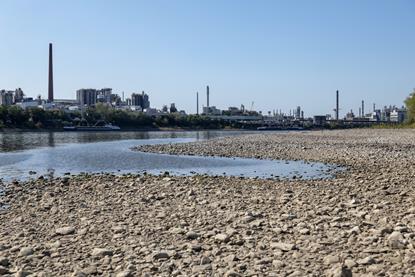
Record low European river levels threaten chemical freight and process cooling
Cutting off bulk barges leaves few options for high-volume gaseous cargoes, where road and rail options are unsuitable
 Business
Pfizer’s green chemistry team turns 25
What began as a grassroots initiative has become embedded across Pfizer’s research and manufacturing operations, helping reshape processes from Viagra to Paxlovid
 Business
EU relaxes methane and carbon emission rules
Methane regulation fines delayed carbon trading restrictions eased amid concerns over energy supply and security
 Opinion
Where does chemical recycling of plastics go from here?
US and EU plant closures highlight economic difficulties of scaling technology alongside associated policy and infrastructure
 Research
Chemical treatment slashes emissions of making hydrogen from plastic waste
Process can produce hydrogen from polyethylene and polypropylene more cleanly than from natural gas
 Podcast
A warning for US science & wool’s chemical versatility
We discuss highlights from Marcia McNutt’s final address. Plus, what’s the chemistry behind the woolly sweaters keeping you warm?
 Business
Making South Africa’s mines more sustainable
Tighter environmental regulations are stimulating a move to greener extraction technology
 Research
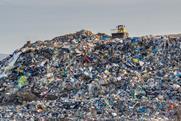
Extreme weather likely to increase methane emissions from landfills
Observations and models reveal precipitation and temperature linked to 13% of emissions from these sites
 Research
Warming seas impact cell structures that deliver oxygen to coral
Oxygen-sensitive nanoparticles reveal a new mechanism of coral stress
 Research
Climate change driving extreme acidification of North American streams that threatens life in them
Oxidation of sulfides in melting permafrost acidifies stream and leaches toxic metals from minerals
 Podcast
Quantum computing & a mysterious microplastic contaminant
How close are we to using quantum computers in our own labs? Plus, an unexpected source of contamination affecting microplastics research results.
 Feature
Wool’s complex chemistry unlocks sustainable applications beyond textiles
Once the cornerstone of industrial wealth, wool has struggled against synthetic fibres for decades. Now, its versatile protein structure, featuring keratin helices and sulfur-rich crosslinks, is inspiring innovative applications beyond traditional textiles.
 Business
UK government promises £350 million support for the chemicals sector
Officials say funding will help industry build resilience, remain competitive and decarbonise
 Research
Lab glove deposits drive false microplastic signatures in atmospheric pollution samples
Researchers uncover contamination pathway that’s complicating efforts to understand how much plastic is in the air
 News
NewsCould lab-grown cocoa be the solution to the climate and supply chain woes plaguing chocolate?
Companies are ready to begin supplying chocolate makers with cell-based cocoa powder in early 2027
 News
NewsHandbook of practical advice will help chemistry departments reduce environmental impact, save money
Collection of real-life examples aims to balance environmental and financial concerns
 Feature
How depolymerisation could enable infinite reuse of plastics
Nina Notman discovers how a type of chemical recycling – depolymerisation – could increase recycling rates, reduce plastic waste and enable a more circular economy