Anomeric effect cannot be explained by hyperconjugation alone
By  Mason Wakley2026-01-12T15:59:00
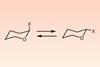
Computational studies suggest this textbook principle is governed by a range of factors
Computational analysis suggests that the anomeric effect arises from a combination of factors and is not limited to just hyperconjugation. Researchers say that this ‘curiosity-driven’ work reminds chemists that attributing the effect to one dominant cause oversimplifies a ‘fundamentally complex phenomenon’.
The anomeric effect helps chemists rationalise why substituents next to a heteroatom in a ring preferentially adopt an axial configuration, rather than the less sterically hindered equatorial orientation. Hyperconjugation of a heteroatom’s lone pair of electrons into the anti-bonding orbital of an adjacent substituent is a common explanation for this effect.