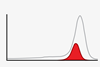
Certain peaks in the spectra of carbon-based materials can arise from multiple defects, researchers have concluded after computational analysis revealed that non-hexagonal rings, oxygen-containing functional groups and vacancy defects can generate similar signals. As a result, chemists may have been misassigning some peaks and overlooking opportunities to tailor the properties of such materials by deliberately introducing defects.
Carbon-based materials, such as carbon fibre, graphene and carbon nanotubes, are used in fuel cells, insulation, aerospace engineering and many other applications. Their specific properties depend on atomic structure, including the type and distribution of defects.
‘Understanding the nature of these defects provides valuable insight into how they influence the properties and functionality of carbon materials,’ says computational chemist Jean-Sabin McEwen at Washington State University in the US, who was not involved in the work. He explains that defects can impact catalyst activity, selectivity and reaction mechanisms.
Techniques like Raman, infrared and x-ray photoelectron spectroscopy help chemists identify imperfections in a material’s structure. However, researchers in Japan are now suggesting that some peaks in certain spectra may have been previously misassigned.
The team, based at Chiba University, first computationally analysed a variety of graphene-based materials with various defects using density functional theory (DFT). Comparing the simulated spectra to experimental data from carbon materials made at 1200°C or above revealed that certain results could have multiple origins, rather than arising from a single defect.
For example, a peak at around 285eV in x-ray photoelectron spectra is generally thought to signal electrons in the 1s orbital of an sp3 carbon, likely from adventitious carbon not in the structure itself. ‘However, our calculations demonstrate that [the peak] actually originates from [sp2] carbon atoms surrounded by structures containing seven-membered, eight-membered and vacancy defects,’ says Yasuhiro Yamada, who led the work.
‘Researchers would routinely cite established papers and interpret [the peak] as sp³ carbon almost as an automatic reflex, without critical re-evaluation,’ he says, ‘because there were almost no [other] reported assignments.’ He notes, for example, that certain C–N bond energies can overlap with the sp3 carbon peak.
‘If defects have been misassigned, computational models based on those assignments may lead to incorrect conclusions,’ says McEwen, adding that previous studies ‘may need to be revisited and reinterpreted.’

However, he points out that the models that the team uses do not include periodic boundary conditions. ‘The absence of [these conditions] could influence the calculated binding energies and vibrational properties, particularly for extended graphitic systems,’ he says.
As for the Raman spectra, the team unveiled the origin of peaks that overlap between 1500 and 1500cm-1, which had previously been challenging to identify. Analysis revealed that carbon–carbon double bonds near to cyclic ethers and non-hexagonal rings could generate signals in this region. The team was able to figure this out by deconvoluting the broad peak into ‘as many as 17 distinct peaks’, says Yamada, which could then be compared to computational predictions.
Being able to fully assign peaks in spectra is not just an academic pursuit; it could also help chemists design better materials. Yamada’s team has done this, for example, by controlling the degree and position of nitrogen-doping in carbon materials to increase selectivity for carbon dioxide capture.2 Yamada also notes that ‘the insights gained in the study are by no means limited to the specific carbon fibres’ that the team analysed: ‘They can be widely applied as a fundamental guideline for analysing and interpreting the [spectra] of various [carbon materials].’
References
1 Y Yamada et al, J. Mater. Sci., 2026, 61, 23750 (DOI: 10.1007/s10853-026-12911-9)
2 K Kondo et al, Carbon, 2026, 254, 121405 (DOI: 10.1016/j.carbon.2026.121405)


No comments yet