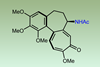
A new total synthesis of (+)-colchicine epitomises how green chemistry tools are becoming mainstream strategies for building complex molecules.1 While the route has slightly more steps and a lower yield than the best one previously reported, it relies on electrochemistry and other sustainable methods instead of hazardous chemicals and transition metals.

Colchicine is a classic target for total synthesis. Its distinctive core has a six-seven-seven ring system, and it has several elements of stereochemistry, which together have challenged and inspired organic chemists. The molecule is also biologically active: a poison that has also been used since ancient times to treat gout and – more recently – familial mediterranean fever. Analogues of colchicine are also under investigation as potential cancer therapies.

Chemists have increasingly turned to electrochemistry over the past decade to make carbon–carbon, carbon–oxygen and carbon–nitrogen bonds, including in cyclisation reactions and functionalisation steps. While electrochemistry once sat on the periphery of total synthesis, being rolled out to solve specific problems,2 the new strategy for making colchicine puts it at the heart of the route.

The eight-step synthesis – developed by Andrei Malkov at Loughborough University in the UK and co-workers – has four electrochemically mediated transformations. In this synthetic route, electricity drives the reduction of a double bond, the oxidative deprotection of an amino-group, an intramolecular coupling that leads to the formation of one of the seven-membered rings, and a de-aromatisation process. It also includes a solvent-free mechanochemical aldol condensation and an organocatalytic reductive amination.

Motivating the research was a desire to develop a greener synthesis for colchicine, says Malkov: ‘firstly, electrochemistry replaces the stoichiometric oxidants; they are toxic and aggressive reagents. And secondly, we wanted to use it in place of transition metals.’ He explains that trace levels of transition metals in pharmaceutical compounds are tightly regulated, so synthetic methods that avoid them are particularly attractive. Moreover, mechanochemistry in the first step of the reaction ‘allows, without using solvents, to scale up the synthesis and make it much shorter.’

Retrosynthetic scheme showing the synthesis of (+)-colchicine from simple aromatic starting materials via a mechanochemical aldol reaction, electrochemical reduction, reductive amination, oxidative coupling and electrochemical dearomatisation

Source: © Andrei Malkov/Loughborough University

Retrosynthetic analysis of colchicine identified where electrochemical and mechanochemical methods could replace more conventional synthetic approaches

‘Overall, this work highlights the enabling potential of electrochemical and mechanochemical transformation in complex molecule synthesis, offering a greener alternative to traditional approaches,’ comments Bhisma Patel, an expert in electro-organic synthesis at the Indian Institute of Technology Guwahati.

William Chain, whose research at the University of Delaware in the US focuses on improving the efficiency of natural product synthesis, says ‘there are myriad examples of natural product and other organic molecule total syntheses that leverage electrochemically-mediated transformations’. Adding ‘this work is certainly distinct in employing electrochemical and mechanochemical transformations that construct the carbon framework of the natural product. These transformations afford several advantages including reduced waste streams, energy-efficient engineering requirements, and overall ease of execution.’

‘Our work is part of the broader movement towards this enabled technology, not simply as a specialist curiosity, but … as a methodology to solve synthetic problems,’ says Markov. In the broader context of total synthesis, electrochemistry is indeed becoming a common choice for synthetic chemists, driven not only for its greenness but also by wider availability of the required equipment, and for the simplicity it introduces to the retrosynthetic analysis of complex molecules.