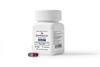
Following impressive early results, the US Food and Drug Administration (FDA) has approved the first example of what Bristol Myers Squibb (BMS) calls the CELMoD class of molecular glues. The FDA gave accelerated approval to iberdomide (Zenbexus) in a combination therapy including anti-cancer monoclonal antibody daratumumab, for use when multiple myeloma patients stop responding to prior treatments.
‘Iberdomide approval marks a significant milestone in treatment of multiple myeloma,’ says Omar Nadeem, clinical director of the myeloma immune cell therapy program at the Dana-Farber Cancer Institute in Boston, US. Nadeem, who helped oversee earlier trials of iberdomide, notes that the drug is effective, safe and is taken orally as a pill.
Degrader drugs hit harder
The approval further swells the number of drugs treating disease by tagging targets for degradation by the proteasome, the system in cells that routinely breaks down proteins. Iberdomide is a highly potent binder of a receptor called cereblon, part of a ligase enzyme that tags proteins so the proteosome recognises them.
Alessio Ciulli, founder and director of the Centre for Targeted Protein Degradation at the University of Dundee in the UK, tells Chemistry World that iberdomide also binds multiple myeloma protein targets such as ikaros and aiolos. This ability to ‘stick’ the ligase and target together is why researchers call the drugs molecular glues.
Iberdomide’s potency makes it ‘effective in heavily pretreated, relapsed patients who no longer respond to standard therapy,’ says Ciulli. He calls the drug ‘a real hope for those who have run out of options, and proof that making a degrader hit its targets harder and faster can pay off clinically’.
BMS already markets structurally similar drugs that function in the same way, namely thalidomide, lenalidomide and pomalidomide, which it obtained when it acquired their developer Celgene in 2019. Its new Cereblon E3 ligase modulators (CELMoDs), such as iberdomide and mezigdomide, bind cereblon more tightly, explains Julia Morris, a pharmaceutical industry analyst specialising in oncology at Clarivate. That’s why they degrade ikaros and aiolos more potently, she says.
A win for Minimal Residual Disease
Iberdomide is the first multiple myeloma drug that the FDA has cleared for use based on minimal residual disease (MRD) data. This measure targets being able to detect fewer than one myeloma cell per 100,000 cells examined in a patient’s bone marrow. After around 16 months of receiving the combination therapy including iberdomide, 41% of 207 patients who had previously stopped responding to treatment reached this level. Just 21% of 213 patients receiving a combination therapy where the drug bortezomib replaced iberdomide reached the same MRD criteria.
‘Rather than waiting several years for mature progression-free survival (PFS) data, regulators accepted a biomarker that can be measured much earlier,’ explains Morris. As such, following this accelerated approval, BMS will need to provide adequate PFS data for the drug to remain on the market.
Can CELMoDs go beyond multiple myeloma?
As multiple myeloma treatments, existing molecular glues lenalidomide and pomalidomide ‘have been remarkably successful’, comments Morris. ‘They transformed outcomes and became backbone therapies.’ Multiple myeloma patients diagnosed early often live for five years or more. PFS data will determine the life extension that iberdomide offers.
Meanwhile, despite extensive investigation, lenalidomide and pomalidomide ‘have not replicated the same level of success across solid tumours’, Morris adds. Patients will therefore be watching keenly to see if the CELMoDs can change this.
In a recent analysis, Clarivate showed that molecular glues are currently dominating the multiple myeloma therapy market, outselling immune-oncological therapies such as CAR-T cell therapy. Yet iberdomide would not be considerably cheaper than CAR-T. Clarivate’s analysis indicates that the average cost of a CAR T-cell therapy infusion in the US is $520,000 (£380,000), Morris explains. Patients typically only receive one such infusion. By comparison, doctors administer iberdomide in repeated monthly treatment cycles, costing $29,500 per cycle. At the 16-month mark at which these results were reported, iberdomide treatment would therefore have cost $472,000.


No comments yet