


The main barriers to sustainable chemistry are not in the lab, but in the structures that fund, motivate and communicate the results. This is the view of scientists at a research consortium in Switzerland, according to a survey conducted at its 2025 annual meeting.
When asked what could strengthen their engagement with sustainable chemistry, participants consistently called for changes to academic incentives, publishing culture and funding structures. Rather than the chemistry itself, the responses indicated the key enablers were systemic rather than scientific.
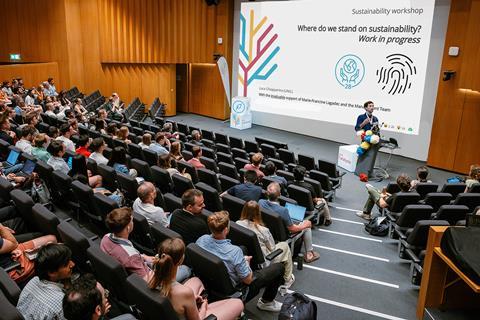
The live survey was conducted at the annual meeting of NCCR Catalysis, a consortium with over 250 members across 48 research groups at 13 institutions. Alongside catalyst discovery and process innovation, the consortium develops sustainability metrics and environmental assessments to inform upstream research, development and production choices.
Coordinated by Luca Chiapperino from the University of Applied Sciences and Arts of Western Switzerland and colleagues, the survey aimed to learn more about the struggles NCCR Catalysis scientists face when trying to incorporate sustainability into their research. It asked participants for their thoughts on sustainability in the chemical sector, how their work already addresses sustainability objectives and what would help them engage with sustainability more effectively.
When asked what would strengthen their engagement with sustainability, respondents called for greater collaboration between industry and academia, as well as with toxicology centres when choosing safe and sustainable alternatives for chemicals of concern. They also wanted sustainability guidelines tailored to specific research fields, with one respondent noting that catalysis as a subject area is ‘too broad’.
Respondents also felt that journals should do more to enforce sustainability through publication criteria. One respondent said it’s ‘the journals who ultimately have all the control on what is “acceptable” research’, while another noted that the focus of their research is heavily influenced by ‘whatever will produce a high impact factor paper’.
The pace of research was another issue with institutional pressure to produce results undermining efforts to practise sustainable chemistry. More time, respondents suggested, would allow them to better follow sustainability guidelines.
The level of dissatisfaction expressed by respondents about their own fields and their desire for change surprised Chiapperino. He noted how some respondents feared that focusing on sustainability might be detrimental to their career, ‘it’s crazy that the lack of incentives makes them feel like that.’
Chris Slootweg, professor of circular chemistry at the University of Amsterdam in the Netherlands, agrees that systemic change is needed but feels that enforcing sustainability through publication criteria and academic incentives could go against academic freedom. He added that ‘academia is centred around PIs, so the PI determines the sustainability focus or lack of. The same as how some are more entrepreneurial than others… the PI is the changemaker within the team.’
Meanwhile, David Laviska, who works at the ACS Green Chemistry Institute in the US, agrees with the study’s call for reform, but notes that education is key to driving this change, ‘because if the people who are writing the grant descriptions, the funders, the PIs doing the research, and/or the editors of the journals are not themselves aware of the importance of these things, then why would they do their part to emphasise them?’
’Social scientists are rarely integrated in Stem programmes. The diverse points of view generated by our study show the value of fresh perspectives in shaping the discourse of sustainable chemistry,’ comments Javier Pérez-Ramírez, director of NCCR Catalysis.
Chiapperino says future work should focus on repeating the survey with different research communities in other countries to see whether the findings hold or if cultural and political factors create new barriers. By reproducing the study in different contexts, he says we can begin to ‘really speak about global chemistry research’.
References
This article is open access
L Chiapperino et al, Green Chem., 2026, DOI: 10.1039/d6gc03278h

Scientists say barriers to sustainable chemistry lie beyond the lab

Survey sparks call to reform how chemistry research is funded, published and rewarded
 Currently
reading
Scientists say barriers to sustainable chemistry lie beyond the lab
- 2



No comments yet