
Phillip Broadwith
Business editor, Chemistry World
As Business editor, my aim is to highlight to readers the exciting and innovative chemistry going on in the commercial sector, as well as keeping you abreast of trends and developments in the world of chemistry businesses.
From the point I left school, my aim was to join the pharmaceutical industry. A gap year and summer placements in company labs, and a PhD in organic synthesis followed.
But halfway through my PhD I entered a writing competition run by the Daily Telegraph. I managed to win – somewhat to my own surprise. That changed my perspective and made me think that I should consider writing more seriously as a career. I joined the Royal Society of Chemistry just before submitting my thesis, and luckily a position with Chemistry World came up a few months later. I sometimes miss the thrills (less so the spills) of lab work, but interacting with world-leading scientists and industrialists, as well as learning new things on a daily basis more than makes up for it.
 Opinion
Ineos temporarily closes UK acetyls plants
Owing to high high gas prices, the plants are uncompetitive, despite their high efficiency
 Opinion
Feeding AI’s appetite for data
Tapping companies’ archives makes for better predictions of how proteins bind drugs, but any data inputs need to be transparent and attributed
 Podcast
Drugging the ‘undruggable’ cancer proteins & conserving the Bayeux Tapestry
How did molecular glues help crack one of cancer’s toughest targets? And we explore the chemistry behind the investigation and conservation of the Bayeux Tapestry.
 Business
Deadly ammonia leak at fertiliser plant in Iraq
Two dead and 114 injured in incident at state-operated plant in Basra industrial area
 Opinion
The Chemistry World team shares some of its low-stakes mistakes
Have you ever made a typo, broken some equipment or made a general slip-up? Get in touch and tell us about some of your own low-stakes mistakes.
 Opinion
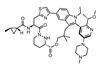
‘Molecular glues’ are sticking it to cancer
Compounds that enhance selected protein–protein interactions to interfere with signalling or send proteins to be destroyed are making it possible to influence processes that were previously considered ‘undruggable’
 Opinion
Deadly reminders of the importance of risk assessment
Serious incidents in two university labs highlight the importance of knowing what to do when things go wrong
 Business
Investigation flags chemical incompatibility in deadly US incident
Mixing nitric acid with sodium trithiocarbonate at Catalyst Refiners formed hydrogen sulfide
 Opinion
Artificial intelligence or clever artifice?
It’s important to be realistic about what AI can, and can’t, achieve, across the chemistry enterprise
 Opinion
Messy megamergers
Rumoured merger between AstraZeneca and Bristol Myers Squibb has collapsed, and that’s probably a good thing
 Podcast
Thermo Fisher data manipulation & the shrinking chemical recycling industry
We discuss fabricated images in Thermo Fisher’s online catalogue. And, what barriers are preventing chemical plastic recycling from taking off?
 Opinion
Trump threatens generic drug tariffs
Plan aims to encourage domestic US supplies, but will it work?
 Opinion
Where does chemical recycling of plastics go from here?
US and EU plant closures highlight economic difficulties of scaling technology alongside associated policy and infrastructure
 Opinion
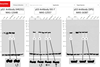
Trust is easily broken and hard to rebuild
Thermo Fisher needs to be open and honest about data manipulation to reassure researchers
 Opinion
Is industry getting more or less safe?
US figures suggest an increase in incidents involving serious injuries and fatalities in recent years
 Podcast
An update on the Strait of Hormuz & potential explosives at an Antarctic base
Will temporarily reopening the Strait of Hormuz ease rising costs of resources? Plus, why are (possibly) explosive chemicals suspected to be present at a historical Antarctic base?
 Opinion
Should the EU stop exports of pesticides it has banned?
Agrochemicals including paraquat remain legal elsewhere, prompting questions over regulatory responsibility
 Business
Evonik to cut a further 3200 jobs by 2029
Most cuts will be in Germany, adding to the firm’s 2800 jobs shed between 2023 and 2026
 Opinion
GSK agrees $10 billion deal for Nuvalent cancer drugs
Deal includes two late-stage molecules to augment GSK’s renewed cancer therapy pipeline
 Opinion
How far will EU push for fairer trade with China?
Strengthening rules on pharmaceutical and chemical trade could protect critical industries