Astrochemistry
The latest chemistry news and research on astrochemistry, including interstellar medium and stellar chemistry, from the Royal Society of Chemistry's magazine, Chemistry World
-
 Opinion
Our cosmic origins remain plausible, not proven
The evidence is there that the molecular ingredients for life can form in space, but that doesn’t mean that they did
-
 Research
First sugar detected in the interstellar medium
Erythrulose – a chiral four-carbon sugar – may have formed from simpler molecules on interstellar dust grains, computational studies suggest
-
 Research
Near-Earth asteroid samples contain all five nucleobases key to life
Meteorites rich in chemicals used to build nucleic acids may have helped kick-start life on early Earth
-
 Feature
How RNA reveals clues to life’s origins on Earth
The discovery of catalytic RNA transformed our understanding of life’s beginnings. Clare Sansom explores how the RNA world hypothesis bridges the gap between non-living chemistry and the first cells
-
 Research
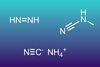
Three nitrile molecules identified as fresh targets for life-hunting astronomers
Experiments at interstellar temperatures yield new chemical clues to the molecules that seed biology
-
 Feature
The JWST reveals the molecular origins of planetary systems
The world’s most expensive infrared spectrometer – the James Webb Space Telescope – is unearthing extraordinary exoplanet chemistry. James Mitchell Crow looks to the skies
-
 Research
Chemical reaction almost as old as the universe was faster than thought
New modelling and experimental work solves mystery of primordial chemistry
-
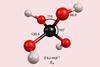 Research
Strange tetra-alcohol synthesised in simulated interstellar ice
After finding ‘impossible molecule’ methanetriol, team reaches ‘the final frontier’ and detects methanetetrol after 100 years
-
 Feature
The young female astronomer who worked out what the sun is made of
100 years ago, Cecilia Payne deduced that the sun is mainly made of hydrogen – but was encouraged to downplay her findings by her PhD supervisor. Mike Sutton takes up the story
-
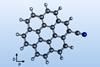 Research
Largest aromatic molecule found in deep space is double the size of previous record holder
Cyanocoronene found in an interstellar nursery
-
 Research
Fullerenes help explain why there’s so much molecular hydrogen in space
The famous carbon allotrope can catalyse the formation of hydrogen molecules in cold interstellar environments
-
 Research
Simulations suggest why highly unsaturated molecules are so abundant in the interstellar medium
Shocks, cosmic rays and x-rays seem to ionise and fragment saturated molecules via mechanisms that result in structures with the highest possible number of π bonds
-
 Research
Low-energy electrons in cosmic ice spring surprise by generating prebiotic molecules
Electrons play a far more significant role than photons in creating molecules that might have kick-started life on Earth
-
 Research
Interstellar cloud conditions yield ‘impossible molecule’
Discovery of rule-breaking compound hypothesised to exist for decades ‘pushes the boundaries of our understandings of chemistry’
-
 Feature
The surprising organic chemistry in interstellar space
Even in the bleak wastelands of interstellar space complex organic molecules seem to find a way to form. Anna Demming finds out how
-
 Opinion
Atmospheres conducive to life
Researchers propose a new biosignature that could hint at habitable exoplanets
-
 Research
Superheavy elements forged in giant stellar collisions
Nuclei with mass numbers above 260 are produced in r -process events
-
 Research
Interstellar ices could have been the nursery for building blocks of life
Modelling conditions thought to exist between the stars led to formation of amino acid precursors
-
 Research
Crystal analysis pushes the moon’s age back 40 million years
Samples retrieved by Apollo astronauts show that the moon formed 4.46 billion years ago
-
 Webinar
Astronomical spectroscopy: understanding the complex chemistry hidden between the stars
Find out how scientists are resolving the chemistry of the gaps between the stars and planets