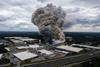
A corroded sprinkler system and an excess of improperly stored reactive chemicals contributed to the massive fire and toxic gas release at a Bio-Lab plant in Conyers, US in September 2024. The incident catastrophically damaged the pool chemical manufacturing facility and led to its permanent closure, according to a final report from the US Chemical Safety and Hazard Investigation Board (CSB) released on 21 July.

BioLab fire

Source: © Associated Press/Alamy Stock Photo

The smoke and gas plume from the incident lasted several days and exposed large areas to various chlorinated and other hazardous compounds

Water leaking from the damaged sprinkler came in contact with chlorinated isocyanurates, initiating a decomposition reaction that led to fires and a large plume of toxic smoke and gases containing chlorine, hydrogen chloride, bromine, and other substances, the CSB confirmed. There were no injuries reported but approximately 17,000 residents were evacuated and the dangerous emissions continued for several days.

In April 2025, the US federal Occupational Safety and Health Administration (Osha) fined Bio-Lab more than $61,000 (£46,000) for safety violations and concluded that the cause was ‘improperly stored hazardous chemicals’.

The CSB’s final report finds that when the Bio-Lab warehouse was built in 2019 it was supposed to contain an ‘average inventory’ of about 2800 metric tonnes of raw materials, including oxidisers, but it was storing over 6000 tonnes of chlorinated isocyanurates and other reactive chemicals by the time of the September 2024 incident. That is more than twice the amount that the company initially indicated to local officials, according to the CSB.

In addition, the agency points to Bio-Lab’s inventory records indicating that there were approximately 5000 ‘super sacks’ inside its warehouse at the time of this catastrophic event, and each contained around a tonne of chlorinated isocyanurates. Unfortunately, the CSB found, these woven polypropylene bags were not waterproof and were stacked in ways that exacerbated the problem.

Unacceptable conditions

‘The conditions and circumstances at the Bio-Lab Conyers warehouse were completely unacceptable,’ stated CSB chair Steve Owens, noting that proper safeguards were not in place.

In recent years, there have been several other incidents in the US involving pool treatment chemicals that resulted in the release of chlorine gas or other potentially toxic byproducts, noted Vonzella Vincent, the CSB lead investigator. That includes a September 2020 incident at Bio-Lab’s Lake Charles facility in Louisiana.

Although the chlorinated isocyanurates and other substances involved in this incident have reactive characteristics and the inherent ability to produce toxic gas, Vincent pointed out that they are not covered by Osha’s Process Safety Management standard or the US Environmental Protection Agency’s Risk Management Plan rule, which is designed to prevent accidental releases of extremely hazardous substances and minimise their potential impact on local communities or the environment.

‘We urge OSHA and the EPA to act to expand coverage of these hazardous chemicals so that severe incidents, like the one at BioLab Conyers, do not keep happening,’ stated Sylvia Johnson, the CSB’s only current member besides Owens. ‘These incidents negatively impact workers and the surrounding communities,’ she said.

The CSB, which currently only has two members and is operating at 40% board capacity, has been calling for greater regulatory coverage of reactive chemicals for over two decades.

The Trump administration had proposed to shut down the agency, which is only independent US federal agency charged with investigating industrial chemical accidents and developing recommendations to prevent their recurrence, by October 2025. But earlier this year, the US Congress intervened and maintained the CSB’s funding at $14 million for the remainder of the financial year, until 1 October 2026.