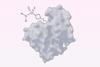
The tool-kit for covalent drugs has been expanded with a new class of molecular warhead that relies on the ‘spring-loaded’ reactivity of bicyclobutanes. The researchers suggest that the approach could lead to safer therapeutics with fewer side-effects for patients and potentially expand the spectrum of diseases that can be treated with covalent drugs.

Covalent drugs have a functional group, or warhead, that forms a covalent bond with an amino acid on a target protein, usually to inhibit an enzyme. Toxicity concerns traditionally hindered their development but recent years have seen these obstacles overcome with several covalent drugs now approved for the clinic.
Their advantages are that they can be more potent, longer-lasting and latch onto hard-to-reach targets compared with traditional drugs. Most covalent drugs use acrylamides for their warhead, which selectively target and bond to cysteine, a reactive, sulfur-containing amino acid.
However, the dominance of acrylamide warheads means that most existing covalent drugs rely on one type of chemistry, which limits their clinical diversity. What’s more, acrylamides can sometime go off-target and bond with a different amino acid, causing undesirable side-effects.
Now, Justin Lopchuk and colleagues at the H. Lee Moffitt Cancer Center and Research Institute, US, have developed a modular approach to make warheads using bicyclobutanes (BCBs), including sulfonamide- and sulfonimidamide-bicyclobutane groups. Their reactivity means they only selectively engage cysteine.
Working with BCBs for over a decade, Lopchuk was intrigued about their potential for covalent inhibition due to their strained structure allowing them to rapidly react by releasing energy like a coiled spring. However, he says the challenge was that there were no existing reagents or methods that allowed for a mild, late-stage installation of sulfur(VI) containing sulfonamide- and sulfonimidamide-bicyclobutanes to amines on drug molecules. The problem, in effect, was their spring-loaded reactivity.
‘We spent a long time trying to develop sulfur(VI) versions of these BCB transfer reagents but could never engineer a system with the balance of stability and reactivity that was needed to enable the late-functionalisation process,’ he says.
The breakthrough came when the researchers switched to a sulfur(IV) reagent, which makes BCBs less reactive and more amenable to late-stage functionalisation. The upshot is this allowed them to add the sulfur(IV) reagent to the amine first, and then perform oxidation or oxidative amination to make the reactive sulfur(VI)-based warhead on the drug.
Experiments revealed that when the spring-loaded BCB warheads were tested against acrylamide-based analogs, the BCB ones were more selective and there were much fewer off-target interactions. Meanwhile, a BCB sulfonamide analog of approved cancer drug, dacomitinib, was shown to work just as well at reducing tumours in mice.

‘This is a remarkable achievement which allowed the authors to access a much wider set of covalent drug analogues containing a BCB warhead than ever before,’ says Elena De Vita at Queen Mary University of London, UK. ‘While these warheads will not be a one-size-fits-all … I think we will see more and more sulfonyl and sulfonimidoyl BCBs quickly implemented both in academic and industrial research pipelines, especially if the sulfur(IV) reagents introduced by this work become commercially accessible.’
Lopchuk and two of his colleagues have now founded a startup called Thyora Therapeutics to develop new medicines. ‘We are working to increase access to a wider array of BCB-containing chemical space that can be directly applied to drug discovery,’ Lopchuk says. ‘We hope that the BCB technology will be rapidly and directly translated into the creation of novel small molecules that will afford patients more precise, safer therapies in oncology and beyond.’
References
Z P Shultz et al, Science, 2026, 393, 408 (DOI: 10.1126/science.adx7219)
No comments yet