
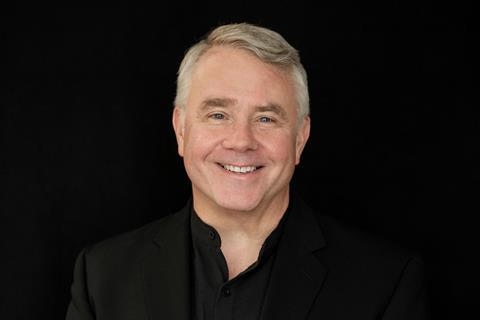
Green chemistry co-architect John Warner did not grow up destined to be a chemist. When he was young his passion was music.
‘I wasn’t some child dreaming about pouring beakers and flasks and things like that; I was a musician,’ he recalled during a lecture at the recent autumn conference of the American Chemical Society (ACS) in Chicago. ‘I had no real fundamental exposure to science as a child; it wasn’t something that was in my DNA, so to speak,’ Warner stated.
In high school and early university, he played synthesiser and keyboards in a local band called The Elements. ‘It had nothing to do with carbon, hydrogen, nitrogen or oxygen,’ Warner recalled. ‘We kind of sounded like the band The Cars, but with better lyrics.’ The rock group was playing in local bars several days a week and recording songs, having lots of success. Then tragedy struck.
‘My close friend – the drummer of the band – ended up getting a form of leukaemia and very quickly passed away,’ Warner recalled. ‘As a 17-year-old child, this was an existential crisis for me.’ At the time, Warner was enrolled at the University of Massachusetts Boston and was planning to major in music.
‘But I had to take a core set of courses,’ he recalled. ‘And I liked biology – mitosis, meiosis, genetics, that’s kind of cool, I liked physics – subatomic particles, astronomy, that’s kind of cool.’ And then, Warner said he chose chemistry in ‘a moment of inspiration’ because he couldn’t pick between biology and physics.
Soon after, he was in a chemistry teaching lab when organic chemist Jean-Pierre Anselme asked the student next to him – who turned out to be Paul Anastas with whom Warner co-authored the 12 principles of green chemistry in 1998 – if he was interested in doing research. Warner wanted to join and followed them into the lab. When he got there everything changed.
The creativity of chemistry
‘All my life, there were two types of people – artists and scientists – and because I was marginally acceptable at music, I must be an artist,’ he related. ‘But then I got into the research lab and I found out that chemistry was more than pV=nRT, that people designed things and created things.’ He added: ‘Bringing something into the world that didn’t exist before – that’s not art, that’s not science, that is something far more human.’
Soon, Warner fell in love with chemistry and was spending 40 to 60 hours a week in the lab. By age 19 he had published five papers in scientific journals and, in 1983, at 20 years old, he spoke at an ACS national meeting for the first time. ‘I realised this is where I belonged and it was such an amazing feeling to be surrounded by such diversity but with a common focus,’ Warner recalled.
Next, he entered Princeton University in September 1984 with the goal of pursuing cancer research, earning a master’s degree in organic chemistry in 1986 and a PhD in the same field two years later. Warner described being ‘insanely productive’ and publishing ‘a ton of papers’ as a graduate student.
But his career shifted again when a senior corporate officer from Polaroid, Lloyd Taylor, came to visit him at this Princeton lab in the late 1980s. They went to lunch and Taylor offered him a job on the spot heading an exploratory research group at Polaroid.
From medicinal to industrial chemistry
‘I said, “I’m a medicinal chemist, I’m going into academia”,’ Warner recalled. ‘He told me how much he was going to pay me and I said, “When do I start?”’
‘As a medicinal chemist, I was used to working in cells, bags of water, at room temperature. Now, all of a sudden, I was manufacturing products at high temperatures and pressure,’ Warner said. He then developed a concept called non-covalent derivatisation. ‘Essentially, I asked why is it that nature outperforms us humans and not only in the elegance of the molecule but everything in biology is manufactured at room temperature, ambient pressure, using water as a solvent,’ he explained.
Warner said his theory is that ‘chemists look at a molecule as if it was halfway between Jupiter and Saturn in the deuterated chloroform in an NMR tube, but in reality, molecules snuggle up with each other’ and interact with one another, the environment, as well as solvent molecules.
While at Polaroid, the company sent Warner to Washington, DC to meet with officials from the US Environmental Protection Agency (EPA) to understand the regulatory processes at the agency. There he crossed paths again with Anastas, who at the time was a staff chemist and programme manager in the agency’s Office of Pollution Prevention and Toxics and was establishing the EPA’s nascent green chemistry programme.
The two had graduated university together, were lab mates and had actually published a paper together in the Journal of Chemical Education in 1985. And Warner said at one time he played in a funk band with Anastas’ older brother, Nicholas, who later became an environmental toxicologist and currently serves as a senior adviser at the EPA.
At this point, Warner was 27 years old and felt on top of the world. ‘I’m interacting with people in Washington, I have now a bunch of patents, a bunch of papers and my head is this big,’ he told the ACS audience. But then disaster struck again and he lost his two-year-old son to a birth defect.
‘Lying in bed the night of my son’s funeral, I’m asking myself: “Did something I touched cause this? Did something, heaven forbid, that I got an award for cause this?”’ Warner recounted. ‘What really drove me crazy is I couldn’t answer the questions.’ He realised how important it is for chemists to understand how a chemical’s structure relates to its potential for harming human health and the environment.
A science, not a social movement
‘Yet what I realised was that not one chemistry programme on the planet required chemists to learn this stuff,’ Warner recounted. ‘It’s not an epic battle of good and evil or between industry and environmentalism,’ Warner said, but instead the field of chemistry had simply ‘not evolved’ to recognise the importance of teaching this to future generations of chemists.
‘We needed not a social movement, not a [body] politic, but a science; and so, Paul and I, we wrote Green Chemistry Theory and Practice,’ Warner stated. He said it was ‘very frightening’ to publish the book, but they both felt it had to be done. ‘Let us never forget that these things don’t happen spontaneously; they don’t happen because it’s the right thing to do,’ Warner stated. ‘It takes vision, it takes leadership.’
Warner left Polaroid for academia in the mid-1990s at the company’s peak. ‘It looks like I was clairvoyant leaving beforehand, but I wasn’t,’ he said. Warner just wanted to address the issues he cared about from an academic perspective, so he returned to the University of Massachusetts Boston in 1996. There, he helped create the world’s first PhD programme in green chemistry in 2001 and then joined the University of Massachusetts Lowell in 2004.
From academia to philanthropy
But Warner and his wife Amy Cannon, who earned the world’s first PhD in green chemistry through that programme, left their chemistry professorships at the University of Massachusetts Lowell in 2007. ‘We made the very difficult personal decision to leave academia,’ Warner stated. ‘We envisioned a world where the chemical building blocks of products used everyday are healthy and safe for humans and the environment.’
They cofounded Beyond Benign, a non-profit focused on green chemistry education and curriculum reform from K–12 through to higher education, with Cannon serving as the organisation’s executive director. And Warner started what was then the Warner Babcock Institute for Green Chemistry with entrepreneur Jim Babcock, now rebranded as the Technology Greenhouse.
But to ensure that the chemical building blocks of everyday products are safe for humans and the environment, Warner said ‘we need to work on the “how”, and that “how” is uniquely a chemistry problem that is codified in the field of green chemistry’. He remarked: ‘It’s not going to happen on hopes and dreams; it’s going to happen in beakers and flasks.’
The world is ‘insanely polarised’ right now, rife with arguments about numerous topics like whether recycling or biointegration is optimal and whether industry or federal government funding is preferrable, Warner argued. ‘We’re fighting over everything and I think we chemists have a unique opportunity to weigh in at a very different level,’ he suggested.
‘Maybe our whole science of understanding different perspectives simultaneously superimposed on themselves, that is something that we need to offer society,’ Warner concluded. ‘Something magical.’
But he emphasised that chemists need to have humility. ‘Chemistry creates biology, biology creates neuroscience, neuroscience creates philosophy, philosophy creates mathematics, mathematics creates physics, physics creates chemistry,’ Warner stated. ‘There is no centre, this is a continuum. Chemistry is everything, but so is it everything else.’








No comments yet