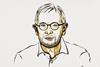
The 2026 Nobel prize in physics has been awarded to Belgian astrophysicist Francis Halzen for his work on the detection of high-energy cosmic neutrinos that launched a new era of astronomy. Halzen spearheaded the development of the IceCube Neutrino Observatory in Antarctica, which has enabled scientists to track high-energy neutrinos that have reached Earth from the farthest reaches of the universe. It is the first time that the physics prize has been awarded to an individual recipient since 1992, when Georges Charpak was recognised for his work on particle detectors.
Neutrinos are elementary particles released by many different sources, including radioactive substances, the sun and other celestial bodies. But the neutrinos released by highly energetic processes like giant supernovae in the distant universe can have energies far higher than other cosmic neutrinos. As a result, these high-energy neutrinos – which have no charge and almost no mass – travel across the universe barely interacting with other matter and without changing direction or losing energy. This means that when these neutrinos reach the Earth they carry information about extreme environments in distant regions of space that cannot be gathered by monitoring other types of radiation such as light or gamma rays.
But the very properties that make high-energy cosmic neutrinos such useful carriers of information also make them incredibly difficult to detect. In the 1980s, Halzen came up with the idea of building a giant facility at the South Pole, where flashes of blue light given off as neutrinos pass through the Antarctic ice could be tracked. Halzen and his colleague John Learned presented the concept at a conference in Poland in June 1988.

Since then, Halzen, who works at the University of Wisconsin–Madison in the US, has spent years developing techniques to detect neutrinos, contributing to projects in Greenland and Antarctica that honed the technology. Eventually, he led an initiative that culminated in the construction of the IceCube Neutrino Observatory, in which more than 5000 special sensors are spread across a cubic kilometre of Antarctic ice deep below the surface.
The IceCube facility was completed in 2011, and uncovered the first evidence of high-energy cosmic neutrinos just two years later. The project involves more than 450 researchers from 14 countries and has paved the way for further international collaboration to detect cosmic neutrinos. Speaking at the prize announcement, the Nobel committee chair Mark Pearce noted that a global network of neutrino telescopes, based in ice and the oceans, is currently being established, which will allow researchers to ‘monitor all of the sky, all of the time’.
Speaking on the phone immediately after the announcement, Halzen described the award as ‘a great surprise’ and emphasised the critical contributions from his collaborators over the years. ‘When we started this project, everybody realised this was a good idea, but very few thought it would work – including myself,’ he said. ‘So this was an adventure where success was not guaranteed and we were lucky to overcome the various challenges, partly because the talent of collaborators and partly because of luck. It was a long journey, but it finally worked.’
Chemistry World will be bringing you all the news and analysis on the Nobel prize in chemistry in the run up to the announcement at 11.45 GMT (10.45 BST) tomorrow 7 October. Following the announcement we’ll be hosting a free webinar to explore the impact of this Nobel-prize winning research with an expert panel on Friday 9 October 16.00 GMT (15.00 BST).


No comments yet