
A French and Japanese chemist have just shared this year’s chemistry Nobel prize for their discovery of non-linear effects and autocatalysis in asymmetric organic synthesis. We take a deeper dive into who they are and how they each came to this field.
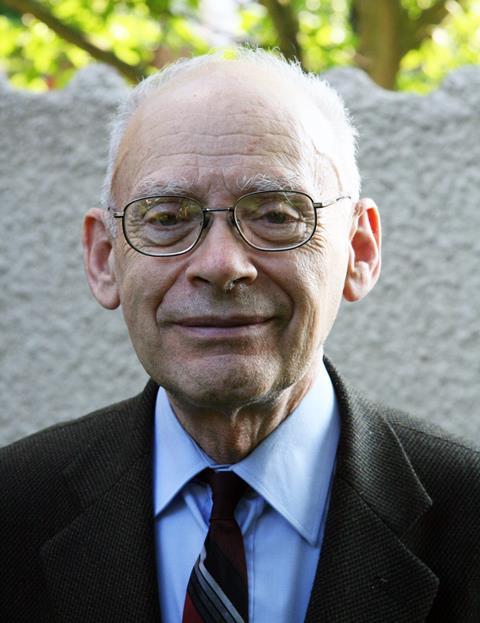
Henri Kagan
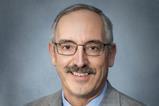
French organic chemist Henri Kagan, who is currently professor emeritus at the University of Paris-Saclay – the successor to the Université Paris-Sud, where he worked for more than three decades until his retirement in 1999 – is considered a founding father of asymmetric catalysis.
At 95 years old, he is the second-oldest scientist to receive the Nobel prize in chemistry, behind John Goodenough, who was 97 years old. Goodenough passed away at 100 in June 2023.
 k
k
Kagan was born in December 1930 in Boulogne-Billancourt, France to a Jewish family who took refuge in a southern French village during the second world war using assumed names. His younger brother Jacques, who passed away in 2022, also became a prominent academic chemist and university professor as well but spent his career in the US.
Kagan earned an undergraduate degree in physical and chemical sciences at the Sorbonne in Paris in 1954 and then went on to receive a PhD from the College of France in 1960. Staying at the college, he then became a research associate with the prominent French organic chemist and stereochemist Alain Horeau throughout the 1960s, before moving to the Université Paris-Sud in 1968. While there, he set up his laboratory and was promoted to full professor in 1973.
In 1986, Kagan discovered and formalised non-linear effects in asymmetric catalysis, work that would win him the chemistry Nobel prize 40 years later. He described several different asymmetric reactions that displayed non-linear effects. Many chemists, including Kensō Soai in Japan, were inspired to explore this new phenomenon.
Therefore, when the chemistry Nobel prize was awarded to William Knowles, Ryōji Noyori and Barry Sharpless for their work on asymmetric catalysis in 2001, there was uproar within the French chemistry community over Kagan apparently being overlooked. The French science minister even wrote a letter of protest directly to the Nobel Foundation and the Royal Swedish Academy of Sciences.
Prior to the awarding of the 2001 chemistry Nobel prize, that year Kagan shared the Wolf Prize in chemistry with Sharpless and Noyori for ‘pioneering, creative and crucial work in developing asymmetric catalysis’.
Among Kagan’s other honours and awards is the Prelog Medal from the Swiss university ETH Zurich in 1990, the Japanese Nagoya Medal of Organic Chemistry in 1998, the Tetrahedron Prize for Creativity in Organic Chemistry in 1999, as well as the Royal Society of Chemistry’s Centenary Prize in 1999, the Ryoji Noyori Prize from the Japanese Society of Synthetic Organic Chemistry in 2002 and the Lavoisier Medal from the French Chemical Society in 2015.
In an interview in April 2005, Kagan recalled that he was very interested by physics and maths at the Sorbonne but was attracted to chemistry because ‘it could be very practical’. ‘At one time, I was very close to stopping this [asymmetrical synthesis] chemistry because we were always at a very low level of selectivity – no improvement; we decided to continue but all the time changing the strategy and finally there was a break.’
Kagan has recounted often telling his group members: ‘What is unexpected is sometimes more interesting than what was planned or expected.’ The Nobel Foundation stated on social media that Kagan always looked for roles that gave him the opportunity ‘to mentor the next generation’. ‘He enjoys being asked difficult questions whose answers require hard-thinking.’
Kensō Soai
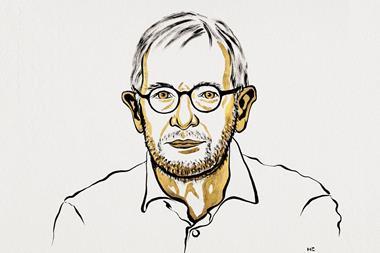
Japanese synthetic organic chemist Kenso Soai, currently professor emeritus at Tokyo University of Science in Japan, was born in Hiroshima, Japan in 1950 during the country’s immediate post-war reconstruction era.
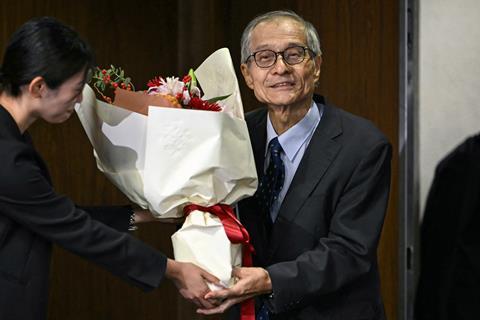
Soai graduated from a prestigious high school in Hiroshima 1969 and then enrolled as an undergraduate at the University of Tokyo. He graduated with a chemistry degree in 1974 and went on to earn a PhD in organic synthesis from the university in 1979. Soai’s doctoral advisor was Teruaki Mukaiyama, a prominent Japanese organic chemist who has been referred to as a founding father of modern synthetic organic chemistry.
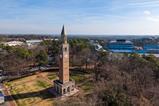
Later in 1979, Soai moved to the US to do a postdoctoral fellowship at the University of North Carolina, Chapel Hill. Two years later, he launched his independent career as a lecturer at Tokyo University of Science. He was promoted to associate professor in 1986 and then a full professor in 1991, retiring in March 2016
In March 2008, Soai told the Royal Society of Chemistry’s Chemical Science that he had always been interested in the natural sciences since childhood. He recalled deciding to focus on chemistry in the middle of his second year at university because he thought that he ‘would be able to contribute the most to this subject’.
In 1995, Soai discovered the autocatalytic reaction that bears his name, which can amplify a small enantiomeric excess in the starting solution to produce a solution that is virtually enantiomerically pure. In a 7 October interview with Adam Smith, the chief scientific officer for Nobel Prize Outreach, Soai expressed his delight that chemists all over the world are now studying this reaction once more. ‘International researchers are attracted to that phenomenon, and I am really pleased to know that they are examining that reaction – we are scientific friends,’ he stated.
In his conversation with Smith, Soai agreed that his Nobel prize-winning work makes an important contribution to understanding why life on Earth is homochiral – it favours just one enantiomer of biomolecules such as sugars and amino acids. ‘We made a contribution to that homochirality problem,’ he said, which remains an unsolved mystery in origin-of-life chemistry. Soai had to cut the conversation short, however, because Japanese prime minister Sanae Takaichi was trying to reach him.
During the Nobel prize announcement on 7 October, Soai was reached by telephone in Hiroshima where he was out shopping and running errands. ‘This is one of the most exciting days in my life, I am very glad to share this prize with Professor Henri Kagan, such a famous organic chemist,’ he stated.
Soai has received numerous honours such as the Chemical Society of Japan’s Award for Creative Work in 1999, the Japanese Association of Synthetic Organic Chemistry’s Synthetic Organic Chemistry Award in 2003, the Italian National Academy of Sciences Literatures and Arts Medal for Scientific Achievement in 2003, the 115th Japan Academy Prize in 2025 and the Special Award in Synthetic Organic Chemistry from the Japanese Society of Synthetic Organic Chemistry Japan in 2025.
Join Chemistry World at 3pm BST (4pm UTC) on Friday 9 October for a free webinar exploring the life and science of this year’s chemistry Nobel laureates. Confirmed speakers include members of the Chemistry World team and David Pendlebury, head of research analysis at the Institute for Scientific Information at Clarivate, and other special guests. Previous panels have featured former associates of the laureates and even one of the Nobel laureates themselves. Register now to be the first to hear as more speakers are confirmed.



No comments yet