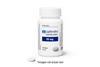
The US Food and Drug Administration (FDA) has approved Merck & Co’s Lipfendra (enlicitide) to reduce levels of ‘bad’ low-density lipoprotein–cholesterol (LDL-C). The macrocyclic peptide is the first oral inhibitor of PCSK9, and offers an alternative to injected antibodies when standard statin treatment hasn’t lowered patients’ LDL-C enough.

Enlicitide has been in development for a decade, explains David Thaisrivongs, Merck executive director head of biocatalysis, who says ‘it’s been long time coming’ after the success of PCSK9 injectables. Regeneron’s Praluent (alirocumab) and Amgen’s Repatha (evolocumab), which target the same enzyme, have both been on the market since 2015.

Enlicitide

Enlicitied is a macrocyclic peptide with chemical crosslinks that improve its stability and efficacy, allowing it to disrupt complex protein–protein interactions

‘Despite the tremendous progress in the treatment of cardiovascular disease, it remains the number one cause of death worldwide. I’m super proud of the science [of enlicitide] but seeing the real-world impact – I just get goosebumps thinking about what this could mean for so many people,’ says Thaisrivongs.

The interactions between PCSK9 and the LDL proteins are very difficult to influence using small molecules. Thraisivongs says that enlicitide shows ‘it’s possible to use a macrocyclic peptide to do what a traditional small molecule couldn’t’. Designing enlicitide involved introducing molecular complexity that created a ‘massive chemistry challenge’, says Thaisrivongs, who faced serious doubts over whether this larger molecule could be manufactured in a way that would be ‘viable in the marketplace’.

‘Our goal was always to develop the most potent and accessible cholesterol-lowering pill. Many companies including Merck tried to develop a small molecule but weren’t successful,’ he explains. The Merck team took a different approach, developing a macrocyclic peptide that can be ‘delivered orally like a small molecule but is large enough to interact in-between PCSK9 and the LDL receptor.’

He says there were a couple of ‘pivotal moments’ in the discovery of enlicitide, including the phase 1 studies finding it could be orally absorbed – providing that first ‘promise of a pill therapy’. He adds that an ‘incredible innovation’ came from the medicinal chemistry team’s recognition, based on crystal structure data, that the molecule’s potency and stability could be enhanced with key chemical cross-links. ‘Those cross-links provide the exquisite properties of enlicitide that allow it to function [more like an] antibody,’ he explains.

Enlicitide (Lipfendra) pills and bottle

Source: Merck & Co (MSD)

As a tablet rather than an injected antibody, Lipfendra might be more widely prescribed by generalist doctors, rather than cardiovascular specialists

In the end, the team developed a biocatalytic synthesis that employs 13 different engineered enzymes, which enabled simultaneous reactions without the need for protection and deprotection reactions to avoid cross-reactivity, greatly improving efficiency. ‘There’s been an incredible sea change in the way that we think about working on molecules. It’s important to appreciate that 15–20 years ago, this was a really crazy idea for chemists,’ Thaisrivongs says.

‘The kinds of molecules that are being discovered and evaluated clinically these days are so much more diverse from when I started my career,’ he adds. ‘There’s so many interesting, weird and wonderful molecules that fall somewhere in between the extremes [of large and small molecules] and enlicitide is one example. To bring the promise of these new types of molecules to patient impact, we need to be able to make them in a way that provides for accessibility.’

Because enlicitide is a peptide, to ensure it survives the stomach, patients must take it on an empty stomach and not eat or drink for 30 minutes afterwards for it to be fully effective. Preventative cardiologist Michael Shapiro, whose work at Wake Forest university, US includes investigating PCSK9 physiology, says this is unlikely to be much of a barrier.

‘There’s lots of very common drugs that require fasting so that’s not really a big deal in my mind,’ he says. ‘What’s very exciting is it seems to [be just as effective] as the injectable drugs.’ He explains that PCSK9 antibodies are mostly prescribed by specialist doctors, whereas oral drugs might be more likely to be an option that general practitioners would prescribe, making them more easily accessible to more patients. ‘The cost will still be an issue,’ he says, ‘but in the future when it’s generic, it will be inexpensive.’

However, looking to the future of heart health, Shapiro says it goes far beyond individual medicines, bringing whole-system shifts towards prevention. He hopes to one day see an annual or even once-in-a-lifetime heart attack prevention treatment. ‘Things are dramatically changing – some of which is obviously years away but it’s very likely to come to fruition. Enlicitide is certainly an exciting development, but the landscape of cholesterol therapies, this is incremental compared to much more innovative approaches.’

He points out that huge numbers of deaths from cardiovascular disease should be preventable. ‘The problem is implementation, cost, adherence, and many other practical, logistical considerations. Enlicitide will help a group of patients – which is great – but it won’t solve the larger problem we have.’