A new technique produces hydrogen radicals using mild conditions and off-the-shelf reagents. The method eliminates the harsh conditions that have previously been required to generate these extremely reactive species, making them much easier for scientists to use and exploit. ‘Any chemist could run it,’ says project leader Roopender Kumar from University College London, UK.

Previously, preparing the hydrogen radical – the simplest radical species, formed of just a single proton and an electron – was a complicated process, explains Kumar. ‘To liberate a hydrogen atom from molecules like water […] you must break bonds that are exceptionally strong,’ he says. ‘Brute force’ routes to radicals included ‘white-hot filaments, electrical discharges, mercury lamps or ionising radiation,’ Kumar notes.

However, the alternative method developed by Kumar’s team requires reagents ready on any ordinary bench. It works with just 30°C, a violet LED, a cheap sulfur-based organocatalyst and hydrazine. ‘No precious or toxic metals, no hydrogen gas, no pressure equipment,’ adds Kumar.

The team’s method relies on the hydrazine and the sulfur catalyst combining to produce an intermediate that then reacts when irradiated with ultraviolet light. This generates protonated hydrazine with an extra electron – an unusual product, known as a neutral Rydberg radical. This highly unstable species soon splits back into hydrazine and the hydrogen radical, ready to react with alkenes and halides to yield a variety of products. ‘You start seeing the free hydrogen atom as [a reagent] for hydrogenation, dehalogenation, and beyond,’ says Kumar.

ja6c07870_0001 copy

A sulfur-based organocatalyst and hydrazine are used in the new method for generating hydrogen radicals, which can then be exploited in other reactions

Despite being ‘one of the most fundamental […] reactive species in chemistry’, hydrogen radicals are ‘notoriously difficult to generate under practical laboratory conditions’, says Maxie Roessler, an expert in radical chemistry and electron paramagnetic resonance spectroscopy working at Imperial College London, UK, who wasn’t involved in the study.

Generating hydrogen radicals under mild conditions and simple near-UV light sources is a big breakthrough, Roessler explains. The discovery ‘makes hydrogen radical [reactions] far more accessible, allowing a broader range of researchers to explore and exploit this species,’ she says.

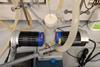
Set-up

Source: © 2026 Nils J Flodén et al

The reaction produces hydrogen radicals using off-the-shelf reagents and UV light

The new technique unlocks reactions that, until now, had ‘remained confined to physics laboratories, out of reach for synthetic chemists’, says Kumar. The best example is alkene hydrogenation, where the hydrogen radical provides ‘yields up to 96% on a gram scale, across a broad substrate scope [and] tolerating aryl chlorides, bromides and carbamates,’ he adds. Current alternatives for alkene hydrogenation, such as palladium catalysts, would traditionally destroy these functional groups.

Kumar and his team studied other hydrogenation reactions, including on compounds structurally related to fluoxetine (Prozac) and menthol, as well as terpenoids and amino acids. Interestingly, the radical reaction hydrogenated allyl glycine ‘without scrambling stereochemistry’, he notes.

According to Kumar the ability to make hydrogen radicals under controllable conditions could ‘change how chemists think’, adding that the results offer ‘the first real hope of more accessible alternatives’ for greener radical reactions.