Google DeepMind has developed a way to watermark proteins designed by artificial intelligence (AI) during the design process itself, which could help scientists better track the origin of these structures.

Structure

Source: © David Stutz et al 2026

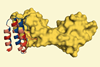
Researchers at Google DeepMind have created a way to ‘watermark’ protein structures generated by AI, such as this VEGF-A binder protein, by adding a short binding sequence that has little impact on its properties. But will the idea catch on?

Generative AI models have become a standard tool for researchers to design new protein structures with specific properties or functions, such as muscle-inspired proteins that are stronger than their natural counterparts. Given the influx of AI-generated protein structures, particularly since Google DeepMind’s AlphaFold won the Nobel prize in chemistry in 2024, there needs to be a way to track their origin.

Creating a centralised database to store these structures could help solve this issue but doing so would make it hard for researchers to keep their findings under wraps if, for example, they wanted to patent their findings. Equally, adding metadata to a structure can describe how a protein was designed, though this information is often easy to remove.

Google DeepMind has instead found a way to tag proteins as the AI model designs them. One of their new models adds a small protein-binding sequence into a target protein sequence, which can then be detected. Comparing the sequences of known proteins – such as the Sars-Cov-2 receptor – with the watermarked equivalent revealed that watermarking had very little impact on the strength of interactions with other proteins.

By building on the latest version of AlphaFold, the team has also developed a new model that watermarks protein structures themselves, finding that there is little change to the bond lengths and angles within the structures.

The researchers say that watermarking structures makes it harder to change the structure of a protein once it has been designed. They say that this could be useful to uphold scientific integrity, as well as preventing the misuse of generative AI tools to create biological agents that could cause harm.