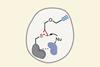
A new thianthrenium reagent creates short, stable protein crosslinks that will help identify rarer protein–protein interactions in cells. ‘We have invented new chemistry that can afford answers to questions that could not be asked before with the chemistry that was available,’ says Tobias Ritter of the Max-Planck Institute for Coal Research in Germany, who led the work.

Protein–protein interactions (PPIs) are fundamental to intracellular processes, making studying them integral to understanding cellular metabolism. Methods for studying PPIs in their native cellular environments are important for identifying transient and less stable interactions. ‘Everywhere we have gone looking, every part of the cell, every disease state or every viral interaction we’ve gone looking for, that people think are pretty well understood before, we find novel binders that are doing subtle regulatory things, because we’re capturing them in the cell first,’ explains Francis O’Reilly, who studies structural biology at St Jude Children’s Research Hospital in the US and wasn’t involved in the research.

In crosslinking mass spectrometry, chemical crosslinkers can be used to form covalent bonds between peptides in close proximity that are being studied, stabilising the interactions. Some bear affinity tags to allow for downstream enrichment before the peptides are identified with MS.

Scheme

Source: © 2025 Kostiantyn Bohdan et al/American Chemical Society

A range of in-cell crosslinking strategies have been created, but the new thianthrenium dication one addresses a range of shortcomings in these techniques  

Most crosslinking reagents are bifunctional electrophiles, with each end targeting a protein residue, usually lysine. Homobifunctional N-hydroxysuccinimide (NHS) ester crosslinkers can easily incorporate a bioorthogonal tag that can be used to help isolate crosslinked proteins, but doing so requires extended linker lengths that can impair cellular permeability and cause false-positive PPIs. Diazarines can also be irradiated with UV light to form short-lived carbenes, but lack a way to incorporate tags.

Now, researchers in Germany have developed a thianthrenium dication reagent (TTD). The crosslinking reagent carries an alkyne enrichment tag but still creates short and stable links to cysteine in a rapid single-step process, thanks to a highly reactive episulfonium intermediate.

The team previously demonstrated that vinylthianthrenium tetrafluoroborate (VTT) works as an effective in-cell chemical crosslinking agent. VTT, however, lacked an affinity tag to make identifying rarer PPIs easier. Ritter and his colleagues therefore designed TTD, incorporating a bioorthogonal alkyne tag and an ether to retain cell permeability. It can be synthesised from commercially available reagents in good yield in a single step, and proceeds via the same crosslinking mechanism as VTT. The researchers validated their strategy in cells using several well-known PPIs, as well as identifying several previously unreported interactions.

‘The innovation is chemical reactivity, the application that may benefit in this case is the identification of previously unknown protein–protein interactions,’ explains Ritter. ‘Being able to learn about protein–protein interactions in intact cells is inherently valuable to generate knowledge – beyond that, even potentially useful to identify new drug targets.

‘New chemistries are still very important, so we can interrogate different parts of the proteome that you can’t interrogate with other chemistries,’ says O’Reilly. ‘Everyone uses NHS esters, maybe sometimes diazirines, all the time, and they haven’t really had a competitor, another chemistry, that has been that effective.’

He isn’t, however, entirely convinced by the new PPIs identified. ‘[The researchers] have this interesting situation where they’re like, “we’ve got this interesting chemistry. We show that it does what it says on the tin” … but then they’re stuck trying to make biological conclusions of very thin data .’

For Ritter, establishing the chemistry was just the beginning. ‘We have found five previously unknown PPIs. That’s exciting, but only a proof of principle,’ he says. ‘For this approach to be useful, we would need to find many more.’