
Conceptual, epistemic and political factors all influence who is deemed to have made a scientific discovery
Every year when the Nobel prize in chemistry is announced, I’m set to write something about it. Usually the angle I follow is based on the scientific work that is praised: what did the winners discover and why was it significant? Once I even went so far as to ask about the nature of scientific knowledge itself. I suppose this is not particularly surprising for a philosopher.
This year, my intention was to write about catalysis, going through the history of its discovery. But I ran into a small problem: my sources didn’t agree on what that story was.
My standard starting point is William Brock’s classic book, the Fontana History of Chemistry. There he says:
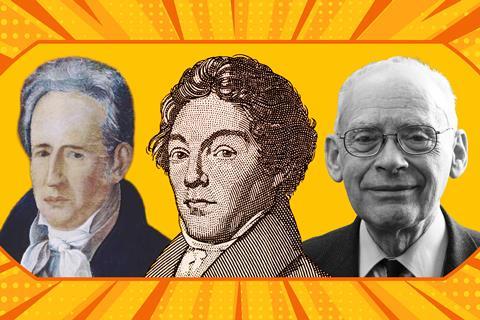
’A good example is Döbereiner’s discovery in 1823 of what Berzelius was to call ‘catalysis’. On 27 July 1823 Döbereiner found that hydrogen burned extremely rapidly in the presence of platinum. During that week he reported the phenomenon personally to five journal editors, as well as to his friend Goethe.’1
One would infer from this passage that the discoverer of catalysis is Johann Wolfgang Döbereiner.… right? Well, Google’s AI overview doesn’t agree; nor does Wikipedia. These suggest that Elizabeth Fulhame ‘invented’ the concept of catalysis in 1794. So I had to dig deeper. A paper published in a leading history of chemistry journal in 1976 mentions Humphry Davy as the discoverer of heterogenous catalysis.2 Thankfully every source I checked seemed to agree that the term was coined by Jöns Jacob Berzelius, though some sources also referred to him as the discoverer.
Who gets the credit?
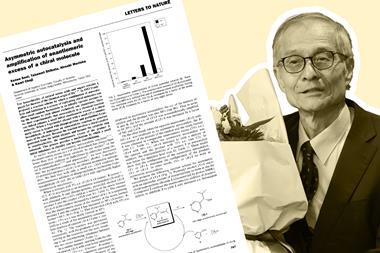
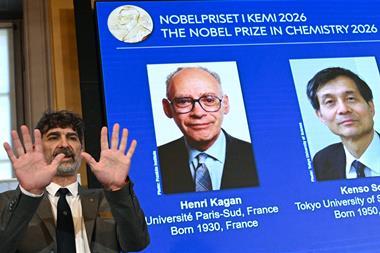
Disagreements over recognition have persisted to this century. Henri Kagan (one of the two Nobel winners of this year) was overlooked when the Nobel prize was given for similar work in 2001. This created uproar in the French chemical community, with the science minister writing a letter to the Nobel foundation.
All of which highlights a very intriguing issue in science: how do we give credit? The history of chemistry reveals that it’s easier said than done – and getting it ‘wrong’ can turn things ugly. Take the Transfermium Wars. In the 1950s (during the hype of the Cold War) independent research groups in the US and Russia tried to synthesise element 102. Both claimed that they were the first to do it and thus wanted to have the right to name it. Things turned sour and became even worse during the pursuit of elements 104 and 105, which led to public spats at international conferences and scientific journals. Ultimately, the International Union of Pure and Applied Chemistry (Iupac), together with its physics equivalent Iupap, brought an end to the wars by creating a committee in the 1980s that produced a list of criteria for the admittance of elements, published in 1991 and revised in 2018.3
This incident is just one of many that reveals the political, social and sometimes cultural factors that influence the scientific committee in matters of credit. Take vanadium. Apparently this element was discovered by Spanish chemist Andrés Manuel del Rio in Mexico 1801, only to be ‘rediscovered’ and credited to Nils Sefström from Sweden 30 years later. The lack of acknowledgement of del Rio’s contribution was taken by del Rio himself to be due to the fact that he was Spanish.
Do we need to know that we have discovered something in order to be given credit for it?
However, there are also epistemic issues that hinder the recognition of a discovery. Element 102 is a case in point because the dispute between the American and Russian groups came down to a debate about the appropriate methods of synthesising the element. This was not an easy matter to resolve, notwithstanding the political context in which it was situated. The element was not stable for long enough to safely say that one had observed (or rather, inferred) the creation of a sufficient amount of it.4
Finally, there are conceptual difficulties. Take for instance oxygen. Joseph Priestley and Carl Wilhelm Scheele are considered among its discoverers. This is strange because, as historian and philosopher Thomas Kuhn noted, both chemists were supporters of the phlogiston theory, neither actually referred to the element they discovered as oxygen, and neither correctly understood oxygen’s role in combustion and other chemical phenomena.5 It was only after Antoine Lavoisier’s combustion experiments that this element was correctly conceptualised and understood. Nevertheless, Priestley and Scheele are credited for oxygen’s discovery because they were the first to isolate it. So, this raises the question: what counts as a discovery? Do we need to know that we have discovered something in order to be given credit for it?
There is much to unpack here and once again, I cannot stress enough how important historians and philosophers of science can be in informing the conceptual and epistemic nuances that underlie such matters. Perhaps it is best to just follow Manuel del Rio who, disappointed about being overlooked, said this: ‘I have always been of the opinion that it is of greater importance to science, that the world should concern itself more with the discoveries that are made, than with those who make them’.
References
1 William H Brock, The Fontana History of Chemistry, p438. Fontana Press, 1992
2 P Collins, Ambix, 1976, 23, 96 (DOI: 10.1179/amb.1976.23.2.96)
3 AH Wapstra, Pure and Appl. Chem., 1991, 63, 879
4 VA Seifert, Prediction and discovery in the search for chemical elements. In The Perils and Promises of Prediction in the Natural Sciences: Historical and Epistemological Perspectives p101. Cham: Springer Nature Switzerland, 2026
5 TS Kuhn, The structure of scientific revolutions/ Thomas S. Kuhn; with an introductory essay by Ian Hacking, 4th edition. Chicago: The University of Chicago Press, 1970/2012











No comments yet