
Patrick Walter
News editor, Chemistry World
I came to science via making mini traffic lights, measuring the speed of falling sycamore seeds and brewing fine ‘perfumes’ from whatever could be dug up from the garden. These unorthodox projects eventually led to a course studying biochemistry at Bristol to indulge my interest in science. Here I found that I had more of a flair for writing about science than actually doing it, after some spectacularly unsuccessful afternoon practicals!
After stints working on science journals, writing for society newsletters and editing and writing jobs with the magazine Chemistry & Industry I joined Chemistry World. Writing for the magazine has given me a wonderful opportunity to meet childhood heroes and some of the best scientists in the world. Telling the world about their work is not only great fun, but also matters. A scientifically literate public and body politic is vital if we expect evidence to play a greater role in policy-making.
 News
NewsChemistry Nobel laureate wants humanity to focus on mining ‘invisible gold’ all around us
Susumu Kitagawa says that his vision is that one day porous materials will allow us to tap air for raw materials
 Research
Polymer sponge could save stars of the silver screen from ‘vinegar syndrome’ destruction
Material that mops up acetic acid could slow degradation of old movie reels
 Opinion
It’s time for consensus on science’s place in government
The latest shake-up of UK science policy oversight brings uncertainty to a sector that needs stability to succeed
 News
NewsCan we have a world without PFAS?
Chemistry World spoke to Rudy Dams, a former 3M scientist, about our uneasy relationship with PFAS, proposed bans and the search for alternatives
 Opinion
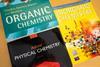
Rewriting the textbooks – authors tell us how they do it
Peter Atkins, Catherine Housecroft and Jonathan Clayden guide us through the changing world of textbooks
 Podcast
Quantum computing & a mysterious microplastic contaminant
How close are we to using quantum computers in our own labs? Plus, an unexpected source of contamination affecting microplastics research results.
 Podcast
Battery week 2026: The EV cathode race & battery-recycling photocatalysts
Who will win the EV cathode race, manganese cobalt or iron phosphate? Plus, how a new photocatalyst could change the way we recycle batteries.
 Opinion
Crispr therapies will change medicine but there will be challenges along the way
The first treatments making use of Crispr gene editing may suffer some early hiccups
 News
NewsPhoto of coiling net-caster spider silk wins Royal Society competition
Stunning electron micrograph of silk structure among 10 scientific photos to win prizes
 News
NewsUK’s new national laboratories site will support ‘invisible infrastructure’ of measurements that keep world in sync
£20 million investment by LGC will boost country’s analytical and metrology capabilities
 News
NewsThe 2025 Nobel prize in chemistry as it happens – live
Join us as we provide analysis and commentary in the run up to the announcement of the biggest prize in chemistry
 Opinion
Why I’m still in love with the Nobel prize
The enthusiasm and excitement the awards generate for the sciences are still second to none
 Opinion
Drowning in a sea of fakery
Addressing rising fraud in the scientific literature is a huge issue that AI is set to exacerbate
 Opinion
What happens next after the plastic treaty negotiations fail once again?
Bold action may now be needed to secure agreement on plastic pollution
 Opinion
Chemistry ‘deserts’ threaten to push poorer undergraduates out
Course and departmental closures in the UK are creating ‘cold spots’, leaving students high and dry
 Opinion
If the UK wants growth fuelled by R&D, universities need relief now
The spending review has left universities struggling with deficits with few options but to hope for good news
 Opinion
Can scientific curiosity and pressure to work long hours be balanced with well-being?
Younger researchers must beware the trap that sees their scientific fervour take over their lives
 News
News‘I worked on it little by little, with the help of a beer’: Making MOFs out of paper
Chemistry World talks to Ryo Horikoshi about engaging students with chemistry concepts using his stunning paper models
 News
NewsHow to make metal–organic frameworks and cages out of paper
Ryo Horikoshi shows us how to make amazing supramolecular models to inspire students
 Opinion
Quality research under threat as budgets are being squeezed
Researchers are once again being asked to turn less into more