All Chemistry World articles in September 2026 – Page 2
-
 News
NewsExplainer: Potential explosives found at Antarctic explorer laboratories
New Zealand sounds warning about explosive material inside Antarctic huts used by Robert Scott and Ernest Shackleton
-
 Opinion
Peter Atkins: ‘Rather than a single author book with an author’s voice, it’s becoming more of a committee construction’
The author of the venerable Physical Chemistry on how writing chemistry textbooks has changed over his career
-
 Opinion
Catherine Housecroft: ‘Undergraduates do not want to buy big, heavy textbooks’
The author of the authoritative Inorganic Chemistry discusses how changing student attitudes have led the shift to digital resources
-
 Opinion
Jonathan Clayden: ‘I like to feel that we have set the curriculum rather than followed the curriculum’
The co-author of the much-loved Organic Chemistry shares his insights on creating a chemistry textbook
-
 Research
Watching unpaired electrons at work
From building the Centre for Pulse EPR at Imperial to probing electron transfer in real time, Maxie Rößler is pushing an overlooked technique into the spotlight
-
 News
NewsTrump administration stands by controversial OMB proposal despite growing resistance
White House denies requests to extend public comment deadline on its plan to give political appointees control over science funding
-
 News
NewsUK government’s new charter aims to better support women in research
‘Now is the time for research institutions to step up and level the playing field for women,’ notes one government official
-
 Research
Protein wrappers designed by AI solve membrane proteins’ solubility problem
Protein sheaths encapsulate membrane proteins while preserving their structure and function making them easier to study
-
 Research
Remediating PFAS pollution in Europe could cost €100 billion a year
Analysis highlights the enormous financial burden of remediating long- and short-chain PFAS contamination
-
 News
NewsChemistry delivers £60.5 billion to the UK economy and makes local economies more resilient, says RSC report
Report reveals how chemical sciences contribute to key sectors and industries, and warns that university closures, rising energy costs and geopolitical instability threaten future growth
-
 Research
‘A materials breakthrough’: membranes to separate crude oil could slash energy costs
Separating crude oil into useful fractions take 1% of the world’s energy. These researchers have a plan to tackle this
-
 Research
One-electron bonds may be more common than chemists thought
Researchers identify one-electron behaviour in systems traditionally described as covalent, ionic and dative bonding
-
 Research
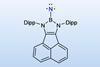
Elusive crystal structure of borylnitrenes finally captured
In situ crystallography reveals a snapshot of a boron-bound nitrene
-
 News
NewsAston University unveils new £6 million membrane research facility
The facility will investigate membranes for applications such as water purification and drug development
-
 Research
Rethinking ‘dynamic catalysis’ optimisation: chemists may have been doing it the wrong way for years
Researchers should focus on reaction progression rather than time for promising catalytic system
-
 Research
First sugar detected in the interstellar medium
Erythrulose – a chiral four-carbon sugar – may have formed from simpler molecules on interstellar dust grains, computational studies suggest
-
 Research
Gold hydrogen bonds found to be as strong as other similar textbook interactions
C–H···Au bonds in gold acetonitrile complexes are comparable to conventional hydrogen bonds formed by O–H and N–H groups
-
 Research
Relativity rewrites the textbook take on triple bonds, experiments on carbon–bismuth ion prove
Results show how bonding in heavy elements mixes up molecular orbitals
-
 News
NewsUK’s defence research site unveils new NMR lab to protect against evolving chemical and biological threats
The new lab at Porton Down, Salisbury, will allow scientists to ‘crack on’ analysing a range of samples
-
 Opinion
How the UK’s defence laboratory keeps the world safe from the threat of chemical weapons
DSTL has been supporting investigations into the use of chemical weapons for over 25 years - here’s how it does its job
- Previous Page
- Page1
- Page2
- Page3
- Page4
- Next Page