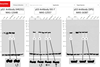
The discovery of extensive manipulation in Western blot images used by laboratory supply giant Thermo Fisher Scientific as verification data for antibody reagents has led to a serious breakdown of trust between the company and its customers.
There are several potentially serious problems. One is whether Thermo’s antibodies actually work as described, and what that implies about ongoing and completed research using them (with both positive and negative results). But perhaps a bigger issue is the impact on researchers’ confidence and trust in Thermo’s products more broadly.
The ethics surrounding the relationship between vendors and buyers, and the responsibilities that fall on each party, have been the subject of philosophical discussions for thousands of years. One of the Latin texts I toiled over translating in school – from the third volume of Marcus Tullius Cicero’s De Oficiis – still sticks with me over 30 years later.
‘Suppose that an honest man wants to sell a house because of certain defects of which he alone is aware. […] Suppose he does not disclose these facts to purchasers, and sells the house for much more than he expected. Has he behaved unfairly and dishonestly?’

This is a somewhat extreme example, but it highlights that commercial relationships almost always involve one side having more information than the other, which can potentially be exploited. Later, Cicero concludes that the seller has a moral duty to avoid ‘sharp practice’. In Thermo’s case, the company maintains that its products’ performance is unaffected by the image manipulation. It’s also not clear to what extent the company was aware of the scope of the manipulation – Thermo is conducting a review, but has not said whether it will make the findings public. However, the examples uncovered so far include products developed in-house at Thermo, as well as others from third parties, suggesting that this is not an isolated problem.
One could argue, given antibodies are complex reagents with a somewhat chequered quality history, that researchers should routinely run their own verification experiments when beginning a project with a new product. But this is expensive, time-consuming and requires specialist expertise. The counter argument is that such verification is precisely what researchers are paying suppliers hundreds of pounds per vial for.
In the end it comes back to that question of ethics and expectations. If a company like Thermo wants its customers to continue buying its antibodies, then it is reasonable for buyers to expect that the quality of the products meet the seller’s claimed standards. Once that confidence is breached, it can only be rebuilt through significant effort and a transparent demonstration that the problems have been addressed.


No comments yet