
Turn complex data into clear insight through hands-on learning and expert guidance
Join us live for a two-part interactive workshop and explore how modern data visualisation and exploratory data analysis (EDA) support rigorous, insight-driven scientific work.
As scientific data becomes increasingly complex, the ability to interpret and communicate findings clearly is essential. This workshop provides structured, practical training in visual analytics, equipping participants with tools to uncover structure, evaluate relationships, and support defensible conclusions.
Using guided, hands-on exercises and live expert discussion, participants develop practical techniques for exploring data efficiently and effectively. Across both sessions, expect to gain practical skills you can immediately apply to your own scientific or engineering data.
Who should attend?
- Scientists working with experimental or analytical data
- Engineers optimising processes
- Analysts seeking faster, deeper insights
- Anyone looking to strengthen their exploratory data analysis skills
No advanced statistical background required. Reserve your place today and start seeing your data differently.
Complete both workshop modules to earn a certificate from the Royal Society of Chemistry.
Please note: Closed captions (subtitles in English) are available on this webinar.
The deadline has now passed to claim a certificate for this workshop. If you met the eligibility criteria before the deadline passed, but have not yet received your certificate, please contact Chemistry World.
Certificates are available for attending both parts of the ‘Visualising data for scientific discovery’ programme.
Eligibility
Certificates are available to those who either attended the programme live or watched it on-demand after the broadcast date.
The Chemistry World team will check that the below conditions have been met prior to issuing a certificate to you.
- You must have personally registered for both parts of the programme. You cannot have someone else register on your behalf, nor attend or watch the webinars using someone else’s account.
- You must have either attended live or watched on-demand both parts of the programme in their entirety by the closing date of 10 June 2026.
How to claim
- If you attended the programme live then certificates will be automatically issued to the email address you provided at registration within one week of broadcast. You need take no further action.
- If you view both parts on-demand – after the initial broadcast date – you will receive your certificate within one calendar week of completion. You must watch both parts before the closing date, as claims made after this date will not be honoured.
- Certificates will normally be issued within 2 weeks of completion of both parts of the workshop.
Please note that your certificate will show your first and last names exactly as you provided at registration. No changes can be made.
Register now
Day 1: Foundations of visual analytics
What is the foundation of working with visual analytics? Using example case studies, you'll discover how scientists and engineers can benefit.
Show moreDay 2: Exploring high-dimensional data
In the second session, you'll gain a deeper understanding of how to integrate your own data with the tools, and discover more advanced problem-solving techniques that will enable you to hit the ground running with your own visualisations.
Show moreMeet your JMP experts
Spyros Megalou
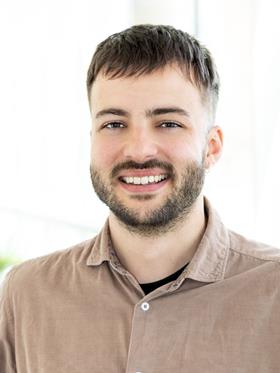
Spyros Megalou is a systems engineer at JMP, where he assists users in the Nordics. He holds a PhD in RFID technology and applications and has a strong foundation in electrical and computer engineering with a focus on telecommunications. He is also a co-founder of Beyond Earth Aristotle Missions, a student space association.
Ben Barroso-Ingham
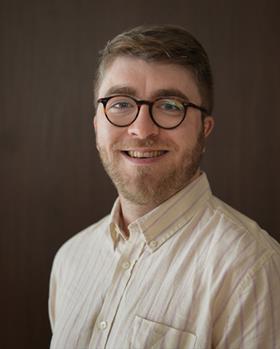
Ben Barroso-Ingham is a systems engineer at JMP. Previously, he has held roles as a fermentation/upstream scientist at Elanco Animal Health and Allergan Biologics, focusing on developing small-scale microbial fermentation models and the application of design of experiments. He has a PhD in chemical engineering from the University of Manchester, where he focused on the use of design of experiments in fermentation optimisation and analytical method development.
Websites