
Victoria Corless
A chemist turned science writer, Victoria completed her PhD in organic synthesis and, ever the cliché, realized lab work was not something she wanted to do for the rest of her days.
After dabbling in science writing and a brief stint as a medical writer, Victoria joined Wiley’s advanced science news where she works as an editor and writer. On the side, she freelances for various outlets, including Research2Reality, Space.com, and Chemistry World.
 Research
Rethinking ‘dynamic catalysis’ optimisation: chemists may have been doing it the wrong way for years
Researchers should focus on reaction progression rather than time for promising catalytic system
 Research
Click chemistry toolbox expanded with 'forbidden' C–C bond forming reaction
Copper-catalysed addition produces functional links that should be compatible with biological systems
 Research
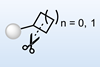
Electrochemistry unleashes untapped potential of strained rings to build molecules
One pot technique achieved functionalisation at up to four sites
 Research
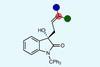
Unruly [1,2]-Wittig reaction tamed to produce products with precise stereochemistry
Stubborn rule-breaker becomes a model reaction by sidestepping radical reaction mechanism altogether
 Research
Lithium-free battery breaks voltage barrier for ultra-cheap energy storage
New chemistry overcomes drawbacks that have hampered this promising class of battery
 Research
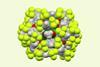
Stable copper superatom breaks carbon dioxide electroreduction records
Highly efficient nanoclusters can form fuels and basic chemicals such as ethylene, ethanol and acetic acid
 Research
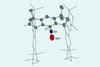
Bottleable group 14 isonitrile a synthetic first
Highly bulky aryl ligand made isolation of germanium isonitrile possible
 Research
New evidence sheds light on mystery of ‘magic-angle’ graphene’s superconductivity
Best evidence yet points to unconventional superconductivity in twisted layer material
 Research
Nanopore sensor can detect individual volatile organic compounds
Technology could be used to detect subtle shifts in bodily markers in breath that herald infections and cancers
 Research
AI tool paints bigger picture of global impact of millions of research grants, papers and patents
Team behind Funding the Frontier hope it will help funders and policymakers make better decisions but others worry system might favour ‘safe’ research
 Research
Chemical reaction almost as old as the universe was faster than thought
New modelling and experimental work solves mystery of primordial chemistry
 Research
Comprehensive investigation suggests stirrer bars have little impact on reactions
Examination of over 300 organic reactions suggests stirring is nothing more than a placebo
 Research
Electrochemistry offers ‘modest’ boost to deuterium fusion reaction
Electrochemical cell used to increase density of deuterium fuel
 Research
AI tools turned to creating designer proteins for personalised cancer therapies and antibiotics
Powerful new class of AI model could dramatically speed up process of producing new kinds of drug candidates
 Research
LLMs could rewrite how AIs predict reactions and plan syntheses
Chemists welcome approach but warn that unthinking dependence on AI should be avoided
 Research
Liquid carbon characterised in the lab for the first time
When targeted by a high-energy laser that generates pressures over one million atmospheres, carbon samples melt at around 6700K
 Research
AI predicts transition states with exceptional precision
Model can complete tasks in under a second that take conventional methods hours
 Research
Fullerenes help explain why there’s so much molecular hydrogen in space
The famous carbon allotrope can catalyse the formation of hydrogen molecules in cold interstellar environments
 Research
AI takes step towards cracking biology’s toughest problem – protein sequencing
The team hopes the system will eventually be as influential as AlphaFold was for protein structure prediction
 Research
How does your mummy smell? If it’s ancient Egyptian, woody, spicy and sweet
Analysis of odours could one day categorise which era a mummy came from