All Archaeology articles
-
 Research
Analysis of Roman shipwreck’s coatings tells story of its time on the seas
Ship was recoated several times as it sailed along Italy’s Adriatic coast
-
 Podcast
Bench-stable butyllithium & secrets of Pompeii’s limescale
In this episode, we discuss the latest formulations designed to make a set of fiery reagents safer, explore what limescale can tell us about ancient civilizations and hear the latest headlines.
-
 Research
Was the ‘Baghdad battery’ really two cells?
A new study suggests it had an ‘outer’ cell that reacted with air to supply a higher voltage. But was it a battery at all?
-
 Opinion
Three centuries of Roman limescale reveals a dirty secret about Pompeii’s public baths
Carbon isotope ratios suggest that pre-aqueduct, the water was often contaminated with human waste
-
 Research
Prehistoric humans hunted with poisoned arrows thousands of years earlier than thought
Deadly plant alkaloids discovered on 60,000-year-old arrowheads
-
 Research
Romans’ hot recipe for self-healing concrete unravelled in Pompeii
Discovery of building materials abandoned at construction site reveals secrets of ancient concrete that can set underwater
-
 Research
Roman-era ink reveals surprising chemical complexity
2000-year-old residue indicates the Romans wrote with iron-gall inks hundreds of years earlier than expected
-
 Research
Tale of Britain’s post-Roman economic crash overturned by ancient metal pollution discovery
Analysis points to metal-working industry continuing long after Romans left
-
 Feature
How stable isotope analysis reveals what ancient humans and Neanderthals ate
Analytical chemistry can tell us what our ancestors ate thousands – or even millions – of years ago. Rachel Brazil gets her teeth into the evidence
-
 Research
Unique Iron Age kohl from Iran differs from that of ancient Egypt
Eye makeup found to contain graphite and manganese but not organic ingredients
-
 Research
Snuff tube residues push back date of oldest hallucinogen use in Peruvian Andes
Chemical analysis reveals traces of a number of psychoactive compounds thought to have been used to secure leaders’ status
-
 Research
Iron from single meteorite found in ancient Polish artefacts
Discoveries indicate meteoritic iron was falling out of fashion in the late iron age
-
 News
NewsUK launches £37m programme to uncover cultural heritage through chemistry
Funding will aid analysis of archaeological materials and preservation of artwork
-
 Research
Stonehenge Altar stone likely came from Scotland, not Wales
Mineral analysis matches sandstones from over 750km away
-
 News
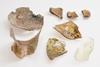
NewsArchaeological dig at Tycho Brahe’s island lab reveals some of his alchemical secrets
Analysis of what appears to be laboratory vessels shows elements Danish astronomer was working with
-
 Research
Pioneering preservative removal from ancient Greek ship allows accurate dating
Extraction of polyethylene glycol from ship’s wood enables radiocarbon recalibration
-
 News
NewsColourant chemistry identifies ancient Greek workshop for Tyrian purple
Dye favoured by royalty was produced at site 3600 years ago
-
 Research
Chemical analysis reveals origins of early English silver coins
Byzantine silver plates were melted down to make many of the first Anglo-Saxon coins
-
 Research
Striking reptilian fossil discovered in 1931 found to be fake
280-million-year-old lizard ‘fossil’ was mostly painted on
-
 Feature
The archaeologists saving Africa’s ironworking heritage
The fires of traditional African iron smelters burned out a century ago and now the researchers dedicated to uncovering their stories are disappearing from the continent too, writes Hayley Bennett