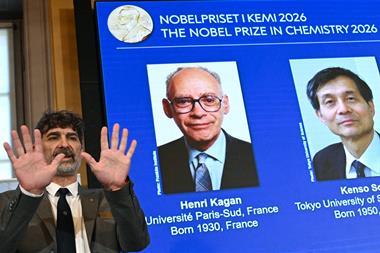
In keeping with Chemistry World tradition, we once again invited you to join us and our expert panel just days after the announcement of the 2026 Nobel prize in chemistry to celebrate and unpack the research that lead to this year’s chemistry Nobel award.
This hour-long webinar – broadcast on the Friday of Nobels week – explores the far-reaching impact of the Nobel-winning work, featuring expert opinions from scientists closely involved in the research. Whether you’re a seasoned chemist, an aspiring researcher or simply curious about scientific advancement, this session will highlight for you the remarkable strides being made at the forefront of chemistry.
Don’t miss your chance to watch our expert panel discussion on the ground-breaking research honoured with the 2026 Nobel prize in chemistry.
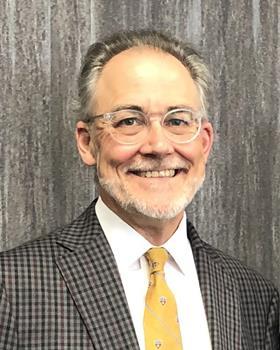
David Pendlebury
Head of research analysis, Institute for Scientific Information (ISI) at Clarivate
David leads analysis for Clarivate’s annual Citation Laureates program, which uses Web of Science citation data and expert evaluation to identify researchers whose work is of Nobel class. The program has a well-established record of highlighting future Nobel prize recipients, and David is widely recognised for his expertise in using citation analysis to understand scientific excellence and Nobel-level research impact.
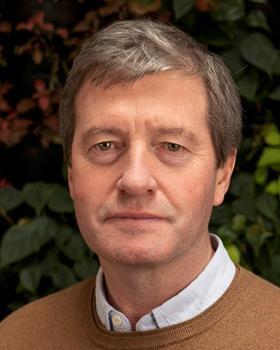
Patrick Guiry
Professor of synthetic organic chemistry, University College Dublin
Patrick’s research group focuses on synthetic organic chemistry, with interests in both the development of asymmetric synthetic methodology through the application of new and existing chiral ligands in homogeneous metal-catalysed transformations and in the total synthesis of compounds of biological interest. His contributions have been recognised with multiple awards, including the Boyle-Higgins Medal of the Institute of Chemistry of Ireland (2013), the Science Foundation Ireland Mentorship Award (2020), and the EuChemS Division of Organic Chemistry Service Award (2026).
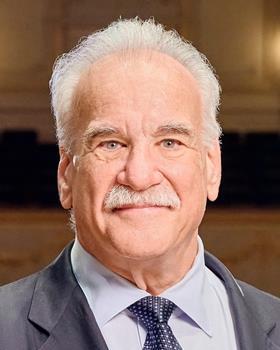
Scott Denmark
Fuson professor of chemistry, University of Illinois
Scott received his SB degree from MIT in 1975 and his DSc Tech degree (with Professor Albert Eschenmoser) from ETH Zürich in 1980. That same year he began his career at the University of Illinois Urbana-Champaign, US, and since 1991 has been the Reynold C Fuson professor of chemistry. His research interests include the synthetic, mechanistic and stereochemical aspects of preparatively useful organic reactions and organoelement chemistry across the periodic table. In recent years he has applied AI/machine learning and chemoinformatics to the optimisation of enantioselective and diastereoselective catalysts as well as predicting conditions and yields for workhorse reactions.
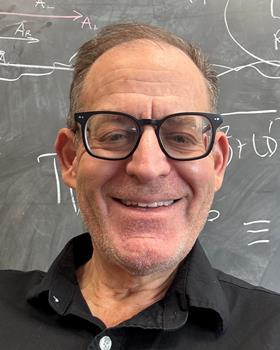
Bart Kahr
Professor of chemistry, New York University
Bart studied chemistry with ID Reingold at Middlebury College, with Kurt Mislow at Princeton University (PhD, 1988), and with JM McBride at Yale University, US. He was a faculty member at Purdue University from 1990 to 1996 and at the University of Washington, Seattle from 1997 to 2009. After which, he returned to his hometown where he is currently professor of chemistry in the Molecular Design Institute at New York University. Kahr’s research group studies the growth, structure and physical properties of complex organised media.
Irena Stará
Deputy group leader, Czech Academy of Sciences
Irena is senior researcher and deputy head of the research group at the Institute of Organic Chemistry and Biochemistry of the Czech Academy of Sciences in Prague. She graduated from Charles University and earned her PhD at the Institute of Organic Chemistry and Biochemistry. She was a postdoctoral fellow with Professor W Oppolzer at the University of Geneva and a visiting scientist at the University of Glasgow, Scotland. She has also served as a visiting professor in Dijon, Tokyo, and Toulouse, France. She is an internationally recognised expert in the synthesis and properties of pi-electron systems and in aspects of chirality.
Christian Girard
Senior associate professor, Ecole Nationale Supérieure de Chimie de Paris
Christian obtained his PhD with Professor Stephen Hanessian from Université de Montréal, Canada. He then crossed the Atlantic ocean to work for two years with Professor Kagan as a Chateaubriand post-doctoral fellow on non-linear effects. After two more years of post-doc work, he was appointed assistant professor at Ecole Nationale Supérieure de Chimie de Paris (also known as Chimie Paris – PSL), France. He is now senior associate professor, working in the i-CLeHS research unit and teaching at the same Ecole from which professor Kagan obtained his chemical engineer diploma in 1954.
Loading FAQs…