All articles by Jamie Durrani
-
 News
NewsWho will win the 2026 Nobel prize in chemistry?
Annual list of ‘citation laureates’ includes scientists behind base editing, self-assembled monolayers, and those who improved our understanding of electron transfer in proteins
-
 Opinion
The Chemistry World team shares some of its low-stakes mistakes
Have you ever made a typo, broken some equipment or made a general slip-up? Get in touch and tell us about some of your own low-stakes mistakes.
-
 News
NewsAria chair steps aside after conflict of interest concerns over role at Anthropic
Matt Clifford leaves UK’s moonshot research funder after taking role at US AI company
-
 Podcast
UK science department abolished & Ireland’s crumbling concrete
What does a new prime minister mean for UK science? Plus, why are thousands of Irish buildings falling apart?
-
 News
NewsJapan finalises joining the EU’s flagship research programme Horizon Europe
Twenty-three countries outside the EU have now affiliated to the research funding scheme with Japan being the most populous
-
 News
News61% of Germany’s chemistry PhD students consider quitting their degrees
Unhealthy supervisor–student relationships driving poor mental health outcomes among chemistry researchers
-
 News
NewsChemical engineer Chris McDonald appointed as UK’s science minister
Former head of Materials Processing Institute given responsibility for science in hybrid role
-
 Podcast
50 years after Seveso & changing the way we separate hydrocarbons
What have we learned 50 years on from the Seveso accident? And we discuss three promising membrane strategies that could replace fractional distillation in crude oil refineries.
-
 News
NewsScience department abolished as UK’s new prime minister Andy Burnham appoints first cabinet
New business secretary Jonathan Reynolds given responsibility for science and innovation portfolio
-
 Business
Rewriting genetic medicine
Scribe Therapeutics will soon begin clinical trials for its epigenetic treatment to tackle ‘bad’ cholesterol
-
 Feature
Seveso disaster at 50: how Italy’s dioxin catastrophe transformed chemical safety
On 10 July 1976, a chemical reactor near Milan released a cloud containing dioxin over residential areas. The Seveso disaster traumatised a community, sparked pan-European environmental campaigns and transformed industrial safety regulation across the continent.
-
 News
NewsUniversity of Sheffield planning to cut jobs in chemistry and materials science
Around 20% of the chemistry and materials science faculty could lose their jobs as university address financial challenges
-
 News
NewsNottingham’s chemistry department faces loss of 30% of faculty amid university-wide staff cuts
The department’s technicians and support staff are also at risk
-
 Research
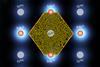
Atomic manipulation enters the mesoscale as 40,000 atoms repositioned in single crystal
Electron beam method used to create ’a new form of engineered artificial matter’
-
 News
NewsUK government nominates Leszek Borysiewicz as next UKRI chair
Immunologist has held numerous roles in scientific administration, including at the University of Cambridge, MRC and CRUK
-
 Research
New studies highlight emerging potential of aluminium(I) chemistry
Aluminium redox catalysis and reactive aluminium clusters showcase main-group element’s transition-metal-like reactivity
-
 Research
Stable copper sandwich complexes complete the 3d transition-metal metallocene series
75 years after the discovery of ferrocene, stable metallocenes have now been made with all of the 3d transition metals
-
 News
NewsBrexit led to decline in UK participation in EU research programmes, report finds
Researchers decry difficulties joining international collaborations following 2016 referendum vote
-
 Podcast
Halogen-bond catalysis & the future of total synthesis
In this inaugural podcast episode, we explore the future of a 200-year old field of chemistry, investigate an up-and-coming form of catalysis and hear the latest headlines
-
 News
NewsAria for chemist who wants to tackle key challenge of our age
Chemistry World spoke to Mark Symes, an electrochemist heading up Aria’s geoengineering programme