





In this episode, we discuss what a new UK prime minister could mean for the country’s science policy and breakdown the chemistry behind crumbling concrete in Ireland, discussing a surprising culprit that could be contributing to the damage – with Jamie Durrani and Mason Wakley.
This week’s headlines
Featured stories
Science policy shifts in the UK have prompted questions from across academia and industry. Just a day after taking office, new prime minister Andy Burnham abolished the Department for Science, Innovation and Technology, folding its responsibilities into the Department of Business and Trade and ending the standalone science ministry established just three years ago.
This has been accompanied by a shift in leadership, with Labour MP Chris McDonald set to take over as science minister from Patrick Vallance.
With all of these changes, the scientific community has been left wondering what this means for research priorities in the UK. Some see it as an opportunity to tie research developments more closely to economic growth while others worry it signals a deprioritising of science. How will this new political landscape impact the future of UK science?
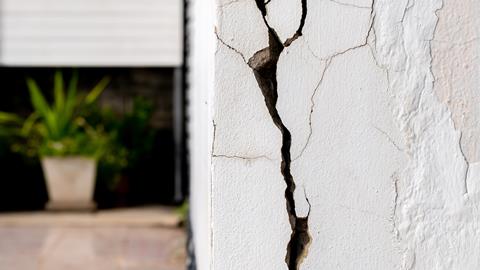
And, something strange has been happening to buildings in Ireland. It began in the early 2010s in Donegal as cracks appeared on the walls of concrete structures throughout the region. At first, residents thought the masonry was settling with time. But the cracks grew wider and spread, threatening the structural integrity of thousands of homes, schools, hospitals and more. Without a clear cause, the concrete used to construct these buildings was failing and beginning to crumble.
It’s become known as the mica crisis, and it’s likely to have affected tens of thousands of buildings in Ireland, leaving communities questioning how this occurred and who to hold responsible. Experts initially thought the cause was related to the amount of mica present in the concrete, but more recent investigations have revealed a different component could be contributing to the concrete failure.
We would love to hear your feedback on this new podcast, so if you have any questions or comments please get in touch.
Introduction and News Roundup
Mariana Kneppers
On July 21st, new UK Prime Minister Andy Burnham abolished the government’s Department of Science and absorbed its functions into the business department. What does this mean for UK research? And thousands of Irish homes are cracking apart, but the culprit may not be what scientists first thought. We discussed the mica crisis and the chemistry behind it.
I’m Mariana Kneppers, a Chemistry World science media producer, and this is the Chemical Breakdown.
We’ll be diving deeper into these stories shortly, but first let’s take a look at this week’s news from the Chemistry World website.
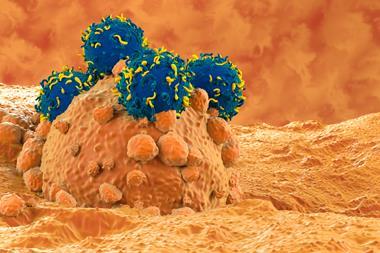
A-team in the US has developed genetically engineered T cells derived from patients to recognise and destroy human-derived bladder tumors grown in mice. The researchers were able to control these tumours by delivering treatment directly via catheter, minimising side effects.
A recent study has found that British Asian chemistry students often suppress their cultural identity, find it difficult to report racism, and note a lack of diversity within UK chemistry departments and curricula. The authors note that these factors could help explain why these students often achieve lower degree results compared to their white peers.
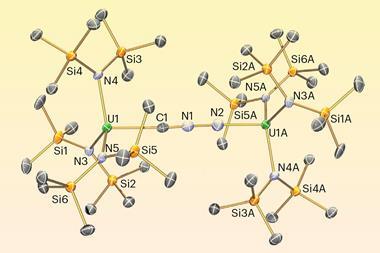
A-team at Nanjing University has synthesised A uranium-based complex with 10 bonds across 3 atoms. The complex now holds the record as the first all-metal compound with the highest number of bonds between consecutive atoms.
And a new framework developed by the Safer Chemistry Impact Fund standardises chemical hazard data into simple metrics to help companies monitor safety across their supply chains. It’s designed to make it easier to understand whether replacing one chemical with another is safer and to phase out more hazardous chemicals.
You can find these stories and more online. Just visit chemistryworld.com for more of the latest news in the chemical sciences.
UK Science Policy and the Department of Science
Mariana Kneppers
Science policy in the UK has entered a new era. Just a day after taking office, new Prime Minister Andy Burnham abolished the Department for Science, Innovation and Technology, folding its responsibilities into the Department of Business and Trade and ending the standalone science ministry established just three years ago.
This has been accompanied by a shift in leadership, with Labour MP Chris McDonald presumed to be taking over as science minister from Patrick Vallance.
With all of these changes, the scientific community has been left wondering what this means for research priorities in the UK. Supporters see an opportunity to tie research more closely to economic growth, but critics worry science risks becoming a secondary concern.
In this new political landscape, what kind of future does this government envision for UK science?
Here to discuss today’s stories are senior science correspondent Jamie Durrani and science correspondent Mason Wakley.
Mason Wakley
Hello, thank you for having us.
Jamie Durrani
Hey, Mariana.
Mariana Kneppers
So, Jamie, let’s start with you. Why abolish the science department? Is this just part of an effort for a new incoming PM to make his mark on Parliament or is there something a bit more strategic behind this?
Jamie Durrani
Yeah, it’s a really good question. I suppose one thing to point out is that any time you get a new Prime Minister, it’s very common for them to sort of shuffle different government responsibilities.
So departments can be mixed up a little bit, responsibility for certain policy areas might shift between different departments. So in this case, the standalone Department of Science, Innovation and Technology has sort of been subsumed into the business department.
There’s kind of precedent for that because those policy areas have previously lived together. So it’s not necessarily like a hugely dramatic change, but it is interesting and it has some sort of potential implications.
I suppose one issue that a lot of people in the research community might be worried about is whether it means that science kind of falls down the priority list a little bit for the government.
So previously you had the science secretary, so it was Liz Kendall, and she attended cabinet level meetings and was able to put across the case for science, you know, directly in those meetings.
Now science is one part of the department for business, innovation, science and trade. So that’s kind of a larger department, you could say, with many different responsibilities. And science is now just one part of that.
So some people are maybe a bit worried about what does it mean for representation of science at the kind of top level of government.
But I think as you said in your intro as well, there’s a lot of people would say, well, there’s potential benefits from this. People are obviously very keen to get the economic benefit of research. So maybe having science more closely integrated with business could have potential positive outcomes.
Mariana Kneppers
Yeah, there’s a lot of science that is tied to industry as well, isn’t it? So I guess, do you think there will be more of a focus on science that exclusively relates to industry and maybe at the detriment of maybe more foundational research.
Jamie Durrani
I think it’s very hard to say. And I think we should probably be careful about kind of prognosticating about what might happen.
We’re at the very early stages of Andy Burnham’s prime ministership. So to be honest, it’s not very clear as to what it really means.
You know, actually two weeks after this change took place with the science department closing, Chi Onwurah, who’s the chair of the House of Commons Science Committee, she’s a Labour MP, put out a statement basically saying, you know, she was concerned that at that point, a fortnight after these changes were announced, it still wasn’t very clear as to what this actually meant in terms of practical impact on science.
I mean, you could also argue that the previous Department of Science, Industry and Technology, the one that’s just been closed, some people had levelled criticism at that, it was so focused on AI and tech and the other areas of science and sort of fundamental research across life sciences and all these other different areas were maybe a bit of an afterthought.
So is that going to change? We don’t know.
Mariana Kneppers
And something that’s interesting is three years prior to this, the UK government didn’t have a science department. This is something that was actually quite, I mean, new in the grand scheme of things. So is its removal, is it as big of a shift as you know it sounds?
Jamie Durrani
It probably isn’t. I mean, in the last 10 years, there’s been 11 different people who’ve been responsible for science policy in the UK.
You could go back to 2007 when science had been folded into the Department of Trade and Industry. That then changed to the Department of Innovation, Universities and Skills. That only survived for two years and then science became part of the Department of Business, Innovation and Skills.
After that there was the Department of Business, Energy and Industrial Strategy. Then you had three years ago the science department and now it’s back to the case that science has sort of rolled in with business again.
So you know it has been just sort of a constantly changing environment. So whether it has a huge difference, I don’t know, we’ll have to wait and see.
One thing that’s quite interesting is that it’s been sort of announced that Chris McDonald, a Labour MP who’s a minister for state within both the business department and the Department for Health, is going to have some sort of responsibility for science.
I mean, this still isn’t 100% clear, but it appears that it’s very likely that he’s going to be sort of responsible for science policy.
And he has this sort of dual role across two different government departments, kind of recognising the impact that, you know, the close relationship between science and health. and also the importance of science for business and trade.
Mariana Kneppers
And he’s going to be replacing Patrick Vallance. Well, he’s presumed to be replacing, I guess.
Jamie Durrani
Yeah, so Patrick Vallance announced his resignation like the day before it was announced that DCIT was going to close. So yeah, it’s interesting to see what that will mean.
Patrick Vallance had some critics, but also a lot of people within the sort of science community.
Mariana Kneppers
Exactly. Had quite a lot of respect from…
Jamie Durrani
Yeah, so a lot of the people within the science community did really respect him. He had very senior roles at GSK. He’d been a very senior science advisor to the UK government and he really understood the environment that science works in and how R and D actually works in practice.
So I think there were a lot of people within the science community who saw him as a real ally for science, who kind of got it. as someone with a lot of respect, he was able to make that case, directly to the Prime Minister or whatever.
Chris McDonald, he also has a background in science. He was a chemical engineer. He worked for 20 years in the steel industry. He was the chief executive of the Materials Processing Institute.
So he has a background in sort of science technology. So yeah, you know, it’ll be interesting to see what happens in the next few years. I don’t know, we don’t even know, maybe it will change again.
Mariana Kneppers
Yeah, there’s been so much shifting. Who knows? I mean, it could just be a couple of months and everything.
Jamie Durrani
I mean, I suppose that’s one concern that probably people within the science community have is that there has been this kind of continually shifting environment for science policy.
And really the one thing that a lot of science policy experts will say is that science really needs stability. People want longer term funding deals so that they kind of know what they’ve got to work with.
And a sort of stable environment really benefits R&D, but that’s just not. been something that we’ve had in the UK at any level of government for the last several years.
Mariana Kneppers
For quite a while.
Mason Wakley
I know you alluded to the fact that this might not necessarily change the direction of focus of the research, but I think from what I’ve partially read of things, there is that concern of it’s going to be more focused on business-centric things that will produce economic output to a degree.
Yeah, that’s a concern of mine as well. I think I remember learning about university of how ferrocene was randomly discovered kind of by accident and that’s a chemical that’s been used in a whole variety of industries.
So it eventually had an economic impact sort of in pharmaceuticals, in an anti-knocking agent, but the researchers wouldn’t have been able to have discovered that if they didn’t necessarily have that support. to do more fundamental research.
Mariana Kneppers
Yeah, it does beg the question, what does this mean for the future of fundamental research in the UK?
Mason Wakley
I think, yeah, I think as Jamie said, it’s too soon to say, like…
Jamie Durrani
Yeah, I mean, that’s the thing is that nobody within government has really sort of laid out any dramatic changes for the way they want to approach warranty. And yeah, like you say, Mason, like there is maybe a concern that there’s sort of a disproportionate focus on translation of research and quite well developed areas of research that fit into particular sectors of technology or whatever that can be quickly turned into some sort of money spinning project.
But what does it mean for the real fundamental research where really you just kind of need to give scientists money and let them go and investigate the things that they’re interested in?
But as I said earlier, that was a criticism that was levelled at the science department anyway, that it was so focused on AI and tech and there didn’t appear to be a huge amount of work going on in sort of developing policy for other areas of science.
So whether that’s going to change, whether it will stay the same, I don’t know. We’ll have to do that.
Mason Wakley
I think you make a very good point of like it’s not necessarily about the name of the department itself. and which department it’s involved with is that broader issue of giving science stability in the UK?
Jamie Durrani
Yeah, it’s a multi-layered thing. Like you have politicians making decisions at a very high level on this kind of thing, who have a million different priorities and obviously supporting the economy is very high up that list.
At the same time, you have to remember that like research funding in the UK is predominantly covered by UKRI, which is an arm’s length body.
So, you know, areas that receive funding, it’s not like the science secretary or the minister of science is sort of making decisions on what projects get money. That is done by a sort of independent body.
Although, you know, all of this actually comes at a time where UKRI is also facing a lot of questions as well, because their budget has been tightened recently.
And so, you’ll have seen all the headlines in the news about what that means for, example, physics and astronomy.
Mariana Kneppers
You kind of have access to these big research facilities. The concerns over the cost cutting is will researchers still have access to these big facilities that help with fundamental research?
Jamie Durrani
Yeah, and so, you know, obviously people in the science community will be hoping that there will be people at a high level in government who can really make the case.
Things like the diamond light source, there were sort of suggestions that maybe some of the access to that could be restricted as part of cost cutting measures at the STFC.
There’s been headlines about Jodrell Bank and the telescopes there.
So people want representation at a high level of government to try and persuade decision makers that these areas of science are really important and need to be funded.
Whether that’s done by the Department for Science, Innovation and Technology or whether it’s the Department of Business, Innovation, Science and Trade, does it really matter? I think the real question is, who is making that case and are they being listened to?
Mariana Kneppers
Yeah, absolutely. That’s a really, really good point. Well, we’ll have to see. I mean, fingers crossed that we do see some stability in the upcoming months. Years would be nice, but we’ll definitely be keeping our eye on this story. Thank you both.
The Irish Mica Crisis and Concrete Chemistry
Mariana Kneppers
Something strange has been happening to buildings in Ireland. It began in the early 2010s in Donegal as cracks began to appear on the walls of buildings throughout the region. At first they thought the masonry was just settling with time, but the cracks grew wider and spread, threatening the structural integrity of thousands of homes, schools, hospitals and more.
For some reason, the concrete used to construct these buildings was failing. and beginning to crumble. It’s become known as the mica crisis, and it’s likely to have affected 10s of thousands of buildings in Ireland, leaving communities questioning how this occurred and who to hold responsible.
Experts initially thought the cause was related to the amount of mica present in the concrete, but more recent investigations have revealed a different component could be contributing to the concrete failure.
So Mason, what have we learned about the chemistry behind what is causing the concrete to crack?
Mason Wakley
That’s a good question. So as you mentioned in your intro, this issue is being known as the mica crisis.
So mica is a silicate aggregate material that is found in concrete, sort of helps thicken the concrete to kind of give it its structural stability.
And so when some of these homes were starting to show signs of cracking and crumbling, analysis revealed that a lot of buildings that were affected had high levels of mica. And so people kind of reached the conclusion that this must be the reason that is causing the buildings to crack.
And the reason that is that because it thickens concrete, that can make it quite difficult to pour. So then you’re going to have to add quite a lot of water to give it the right consistencies that you can make it into prefabricated blocks that many of these homes are built with.
But then the issue is that if you’ve got a lot of water, when you’ve got varying temperatures sort of above and below the freezing point of water, the water in that concrete is changing from and that expansion and contraction of that water can then sort of degrade the concrete that you’ve got.
It’s very similar to how you can form pockets of water within cliff faces and then that can lead to caves and that sort of thing. I’m now thinking back to my geography A-level classes.
So that’s what they initially thought. But then some researchers went back and did some more detailed analysis and they essentially found when they sort of analysed the temperatures in the years sort of around 2010, that the temperatures in some of the areas being affected weren’t ever really going below 0 enough for this to be the cause of the cracking.
And so when they did the higher net level analysis with things like X-ray diffraction and scanning electron microscopy and those sorts of techniques, they also found another chemical called pyrotite, which is an iron sulphide based mineral.
And they’ve now come to the conclusion that there’s a series of chemical processes that are essentially breaking down the concrete. And that starts by the pyratite being oxidised, which eventually gives sulfur, which then can react with this water to give sulfuric acid, which then react with a variety of the different components within the concrete and is sort of chemically breaking down rather than mechanically.
And so standards now for testing the houses and buildings that have been affected now include for pyratite is the thing that you look for rather than mica.
That’s a really whirlwind explanation of what’s going on in this concrete.
Mariana Kneppers
Yeah, I guess in the I guess if you wanted to broad strokes terms. We initially thought it had to do with, like you say, a more mechanical, like as water is freezing, it’s expanding, as it melts, it’s contracting.
And you know, that, whereas what’s actually happening is a bit more of a chemical process. You have an asset that’s going to be dissolving things, right? So, and you don’t want your concrete to be doing that.
Mason Wakley
No, and it’s worth saying that there may be some freeze-thaw degradation, which is how the process of this water expanding, contracting is kind of formally known as.
But that’s not the main cause, or at least that’s not what people think is now the main cause of what’s causing these buildings to crumble.
Mariana Kneppers
It could be an interplay of both of them. Yeah, absolutely.
So now there’s a shift. I mean, initially we were concerned about Micah and I mean, not necessarily Micah, but the freeze thaw kind of interaction. But now we know the cause is pyratite.
Has this changed their approach to tackling the problem at all? I mean, you say that the testing now includes pyratite, but what about actually addressing the issue?
Mason Wakley
Well, I think addressing the issue starts by testing which buildings are being affected. And there could be other reasons why certain buildings are crumbling and failing that are not related to the issue in and around Ireland.
But I think now knowing what you’re looking for can kind of help speed up that process a little bit more. But they were also doing these tests for mica.
So I just think it gives certainty of knowing like, yes, this home is being affected by this crisis, which then allows for building owners to apply to the scheme that the Irish government has set up that is essentially giving compensation as a result of this.
So I think each house or building can get on the order of about 400,000 EUR to help demolish and rebuild the house, as well as there are some other grants for helping people relocate.
So that’s where we’re at with tackling the problem, but there are concerns that not many buildings have gone through this process. The process to do that is quite slow.
I think only 300 houses or so have gone through this whole process, but with an estimated amount of 10s of thousands and an estimate of this problem potentially costing up to 9 billion EUR.
We’re quite a way off from really covering the whole issue within Ireland.
Mariana Kneppers
Yeah, well the tough thing, the thing that I got the impression of reading your story is, you know, it’s one thing to be given kind of here’s a lump sum to rebuild your house.
But you’re also talking to people who they haven’t necessarily signed up to build a new house, right? Like all of a sudden you have to become your own project manager.
I mean, is there any guidance that’s being provided for people? It’s not easy. It’s not as simple as like building a Lego house, right?
Mason Wakley
As far as I’m aware, well, I have to say I don’t quite know what the exact guidance that all these homeowners on building owners are being given.
But from someone that I spoke to who was actually one of the researchers who led that second analysis of all the concrete materials that are being used. He himself is being affected by this issue and he notes that sometimes the grants don’t come when they need to.
People might be paying out of their own pocket and like this is causing quite severe mental stress of homes are a big financial investment and then having to be told you have to essentially start again from scratch.
Mariana Kneppers
It’s a big thing in a life as well. You know, it’s not like just moving house, the house you’re living in has to be reconstructed.
What are the implications?
I mean, there are families, there are people who, work multiple jobs. I mean, it’s so time consuming and so stressful.
I mean, yeah, I can absolutely imagine it’s very tough on the local mental health.
Mason Wakley
No, I think it’s going to be a long time before this situation is completely resolved.
But that’s also just down to the fact that it’s really quick, relatively speaking, to knock down a house or a building, but it does also take a while to then rebuild said buildings.
And there’s also then becoming sort of a housing crisis within the areas. There was already a housing crisis anyway, that’s kind of a more widespread issue throughout the country and through the UK as well. but then this is now adding to it because there isn’t enough accommodation to go around.
So yeah, it’s a bit of a mess in some ways.
Jamie Durrani
Just picking up on something that you just said, like, so is this exclusively a problem within Ireland?
Like it would seem intuitive that maybe similar techniques and materials are being used in Northern Ireland or in like the West of Scotland or something, you know, places that are geographically close.
So we’ve just been talking about buildings in Ireland and the Irish government has this scheme that you’ve been talking about as well. So is it just an Irish problem?
Mason Wakley
That’s a really good question.
So the mineral pyratite can effectively be found quite largely all over the world. In fact, it was found quite a lot in the US and they’ve mapped it all around the country because they were having a similar issue, but I believe that they were more focused on the mineral pyrrhotite, which is a simpler version of pyrrhotite, still an iron sulphide mineral.
But for why it’s happening in Ireland more so is that there are some suggestions that when there was a big housing boom in the sort of 90s and early 2000s in what’s known as the Celtic tiger period, So many houses were built quite quickly using prefabricated concrete blocks that things could have been overlooked and that these minerals might not have been removed or people might have chose to use these minerals with not necessarily caring about what or knowing about what their impact might have later down the line.
So like a large area of the local geology around some of the places in Ireland like Donegal and other areas, they contain a lot of these pyrrhotite materials.
So I think it’s a case of probably like chemically reacting with them to get rid of them before you then use them in them. But again, that’s somewhat speculation.
There’s probably a variety of different factors as to why Ireland is having.
Jamie Durrani
Right, but because it sounds like a big part of it is just that, because Ireland’s economy was booming at the end of the 90s and early noughties, that they built a lot of houses using materials and techniques that were being used at that time.
And so maybe it’s more of a problem there than it would be.
Mariana Kneppers
That rapid growth. Yeah, that rapid growth, I mean, you know, you can see this in a lot of different situations where rapid growth sometimes. the regulations aren’t in place quite yet or the monitoring is in place.
You just don’t have the same knowledge as you do now. So, it’s quite tough.
Mason Wakley
Yeah, and I think going back to one of your earlier questions of how people are adapting is that some people are suing some of the local suppliers that built or used these concrete blocks within their buildings, presumably as a way of getting financial compensation for the situation that they’re going through.
But the end result of that is still, we’re still waiting to see what happens there.
I mean, this is a situation that, like you said, it started in the 2010s, nearly over 15 years on, and people are still dealing with the issue.
More buildings are, it’s not like suddenly it hit 2010 and then all building started crumbling, some have lasted slightly longer and so the kind of scale of the issue is ever growing.
I think this situation in Ireland is a sign that regulation is important and that it might take longer to build a building or home, but being quite thorough and just sort of checking those sorts of things. These are people’s livelihoods.
Mariana Kneppers
It sounds like we’re still learning about the full extent of the situation and we’ll be learning about it for quite some time.
So we’ll definitely keep it on our radar and see what happens as time progresses.
Perfect. Well, thanks so much everyone.
Mason Wakley
Thank you very much.
This Week in Chemistry History: Dorothy Hodgkins and Vitamin B12
Mariana Kneppers
And finally, this week in chemistry history, Dorothy Hodgkins and her team published the complete 3D molecular structure of vitamin B12 on August 20, 1955.
The achievement marked a vital milestone in the development of crystallography as a scientific tool and allowed for the pharmaceutical breakthroughs in treating pernicious anaemia.
Hodgkins’ love of science blossomed from a young age, fostered by her parents, both academics, who introduced her to a range of subjects from botany to archaeology.
At age 10, Hodgkins became particularly enamoured with crystals.
In an interview, she recalled a specific moment in a science class, watching crystals emerge from solutions of alum and copper sulfate.
She said that in that moment, quote, I was captured for life by chemistry and by crystals.
Hodgkins’ life work became crystallography, a research technique she took on during her fourth year of her chemistry degree investigating the crystal structure of dimethyl thallium halides.
Her PhD took her to Cambridge, where she studied steroid crystals.
During this time, however, Hodgkins was diagnosed with ulna deviation caused by arthritic knuckles. This marked the beginning of what would be a lifelong battle with rheumatoid arthritis.
Over time, her hands and feet became painfully swollen and distorted, making the delicate work of manipulating fragile crystals incredibly difficult.
But Hodgkins adapted her laboratory equipment to continue her work, designing longer levers on instruments and using specialised forceps that allowed her to work through her ailment.
Hodgkins eventually became one of the world’s leading researchers in deciphering complex organic structures by mapping penicillin in 1945.
This success led her to be elected as a fellow to the Royal Society 2 years later, one of the first women to do so.
The prestige of the position allowed her to tackle the next big challenge, vitamin B12.
At the time, scientists were racing to find a treatment for pernicious anaemia, a fatal blood disease.
The only thing known to work was consuming large amounts of raw liver.
Why this was effective remained a mystery until 1948, when chemical teams from Merck and Glaxo successfully identified an isolated vitamin B12 as the active component.
The massive molecule would be a monster to map, so Dr. Lester Smith at Glaxo grew the isolated B12 into crystals and sent them to Hodgkins at Oxford.
If anyone could decipher the structure, it would be her.
Her first X-ray photographs revealed A fascinating discovery. The molecule contained a central cobalt atom, serving as an anchor point.
Using this information, she was able to construct a rough electron density map.
Over the course of eight years, her team improved upon this map, refining their calculations and redrawing the map until the entire skeleton was resolved.
The final molecule contained 181 atoms.
The sheer work involved was an impressive feat and a monumental achievement for chemistry.
With the fully mapped molecule, researchers learned how vitamin B12 fought pernicious anaemia and were now able to mass produce the treatment.
Her work saved millions around the world from this once fatal condition.
Her crystallography methodology eventually culminated in the mapping of insulin with a whopping 788 atoms, taking 34 years.
Her efforts won her the Nobel Prize in Chemistry in 1964, cementing her place in history.
Her work not only saved millions of lives, but also made crystallography a vital scientific tool that we continue to use to this day.
Outro
Mariana Kneppers
That’s all for this edition of the podcast.
If you’re interested and want to hear more about any of the items we’ve covered, check out chemistryworld.com for more of the latest stories in the chemical sciences.
You can also sign up for our weekly newsletters like Reaction, giving you a hand-picked selection of stories from Chemistry World and Beyond, from newsletter and research editor Jennifer Newton, or our industry brief containing essential analysis and insight on the industrial side of chemistry from business editor Phillip Broadwith.
I’m Mariana Kneppers. We’ll see you next time.
SEO Keywords
Andy Burnham, UK science policy, Department for Science Innovation and Technology, Department of Business and Trade, Chi Onwurah, Chris McDonald, Patrick Vallance, Jamie Durrani, Mason Wakley, Mariana Kneppers, UK research funding, UKRI, fundamental research, science minister, science policy UK, research priorities, economic growth and science, Diamond Light Source, Jodrell Bank, STFC, Labour government science policy, UK innovation strategy, scientific research UK, Chemistry World podcast, Chemical Breakdown podcast, mica crisis, Irish concrete crisis, Donegal homes, concrete cracking Ireland, pyrrhotite concrete, pyrite mineral, mica in concrete, iron sulphide mineral, freeze-thaw degradation, structural integrity buildings, Irish housing crisis, concrete chemistry, sulfuric acid concrete damage, prefabricated concrete blocks, building regulation Ireland, construction materials science, Dorothy Hodgkin, vitamin B12 structure, crystallography history, Nobel Prize Chemistry 1964, pernicious anaemia, penicillin structure, insulin structure, X-ray crystallography
This transcript was generated by AI and checked by a human editor















No comments yet