
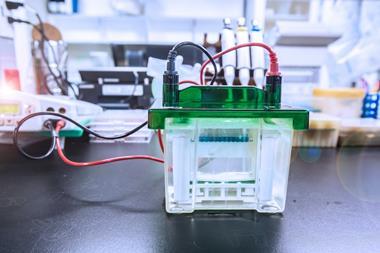


In this episode, we reflect on the longstanding impacts of the Seveso chemical disaster of 1976, and discuss the latest membrane materials that could slash the energy required to refine crude oil – with Jamie Durrani and Mason Wakley.
This week’s headlines
Featured stories
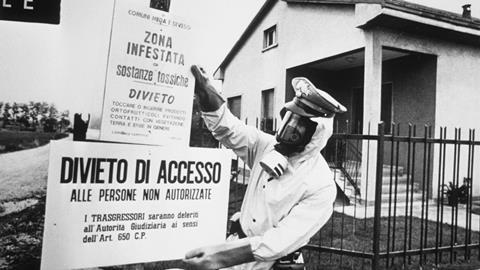
This July marked fifty years since the Seveso disaster of 1976, in which an accident at a chemical plant released a cloud containing the toxic compound dioxin over residential areas. It was the largest exposure recorded of its kind, affecting around 35,000 people.
The effects became apparent within days; plants withered, small mammals died, and residents developed blackheads and swellings on their faces and necks, a common sign of dioxin exposure. However, half a century later we are still learning of the long-term health effects the event may have had on these individuals. How has the world changed since this fateful day?
And, new materials research could transform the way crude oil is separated. Refining crude oil is a crucial step in the production of downstream its products. The first step in the process is to separate out the various types of hydrocarbons, after which these can be chemically altered and purified according to consumer needs.
Traditionally, hydrocarbons are separated out using a process called fractional distillation, which heats the oil, siphoning off hydrocarbons based on their boiling points. But this process alone accounts for 1% of the world’s global energy use and emits over 160 million tonnes of carbon dioxide each year.
A recent materials breakthrough could allow for a more efficient way to separate hydrocarbons using membranes. Three teams around the world have developed promising candidates that could provide a less energy-intensive alternative to fractional distillation.
We would love to hear your feedback on this new podcast, so if you have any questions or comments please get in touch.
Introduction and News Roundup
Mariana Kneppers
Fifty years ago, a major accident at an Italian chemical plant released a cloud of dioxin that spread across 18 square kilometres, exposing 35,000 residents to the toxin.
We discussed the legacy of Seveso and its impact on chemical regulation.
And a new method of separating hydrocarbons using membranes could provide a more energy-efficient way of refining crude oil and cut back on carbon dioxide emissions.
But what does this mean for a world trying to move beyond fossil fuels altogether?
I’m Mariana Kneppers, Chemistry World’s science media producer, and this is the Chemical Breakdown.
We’ll be diving deeper into these stories shortly, but first let’s take a look at this week’s news from the Chemistry World website.
Prominent research universities throughout the U.S. admitted 15% fewer applicants to their Ph.D. programmes for the upcoming 2026 academic year compared with last year.
The Association of American Universities suggests this trend can be linked to the Trump administration’s actions regarding federal research.
The UK’s Science and Technology Facilities Council has announced a 160 million-pound cost-cutting plan taking place over the next four years.
While its three major research facilities will remain operational, smaller national labs will face substantial cuts, prompting concern about what this will mean for the country’s research sector.
The German Research Foundation has issued a warning to scientists and research institutions about growing threats to academic freedom.
The report outlines how independent research is increasingly vulnerable to political interference and urges the research community to take action to become more resilient to such attacks.
And researchers are calling for greater transparency after uncovering hundreds of doctored images of validation Western blots in Thermo Fisher Scientific’s online antibody reagent catalogue.
The company is investigating the issue, stating the image manipulation is mostly cosmetic and is confident of its reagent’s performance.
You can find these stories and more online.
Just visit chemistryworld.com for more of the latest news in the chemical sciences.
The Seveso Disaster
Mariana Kneppers
This month marked 50 years since the Seveso disaster of 1976, in which an accident at a chemical plant released a cloud containing the toxic compound dioxin over residential areas.
It was the largest exposure recorded of its kind, affecting around 35,000 people.
The effects became apparent within days.
Plants withered, small mammals died, and residents developed blackheads and swellings on their faces and necks, a common sign of dioxin exposure.
However, half a century later, we’re still learning of the long-term health effects the event may have had on these individuals.
How has the world changed since this fateful day?
Here to discuss today’s stories are senior science correspondent Jamie Durrani and science correspondent Mason Wakley.
Hello to you both.
Mason Wakley
Hello.
Jamie Durrani
Hi, Mariana.
Mariana Kneppers
Thanks for being here.
So Jamie, you worked very hard on this story. How did this accident happen?
Can you describe the events leading up to the, I guess it wasn’t really an explosion, was it?
Jamie Durrani
I mean, I suppose technically, yes, it was a sort of rapid expansion of material in a chemical reactor, but it didn’t necessarily like rip apart the entire facility.
So what had actually happened was this facility, which was owned by a company called Icmesa, about 20 kilometres north of Milan in Italy, it was producing a compound called trichlorophenol, which was an intermediate compound that would be moved on and then converted into another compound for use in hand sanitisers.
But as the plant was shutting down for the weekend, on the 10th of July, they wanted to bring this reaction to a halt.
So they shut down the reactor, stopped the agitation of the material within it.
But usually at this point, they would add several 1000 litres of water, which would quench any reaction and stop any more chemistry from happening.
But on this occasion, no water was added and people left the facility.
And over the next six hours, the reactor kind of heated up.
This caused an exothermic reaction to take place, which drove up the temperature in the reactor, drove up the pressure inside it.
And yeah, just after midday on the 10th of July 1976, one of the safety valves ruptured.
And that caused the entire contents of the reactor to then just be released through the ventilation systems above the chimney stack above the facility.
And it released this huge cloud of material that then drifted southwards across like the local towns.
Mariana Kneppers
Do we know why the water wasn’t added?
Was it just a malfunction or is that still kind of up for debate?
Jamie Durrani
It was more to do with just the correct protocol wasn’t followed on that occasion.
So it took a couple of weeks until it became public that this cloud of chlorinated aromatic compounds also contained a substantial amount of dioxin, this toxic compound that you’ve mentioned.
And dioxin is an incredibly toxic compound.
People had known a bit about it because it was also a contaminant in the Agent Orange herbicide that was used by US and British forces during their kind of warfare campaigns in Southeast Asia.
And so it had been studied to a degree, but exactly what effect it would have on local residents who were exposed to it really wasn’t very clear at the time.
And so this was obviously a huge worry for people living in the vicinity.
One of the sort of most scandalous aspects of the Seveso disaster is the amount of time it took for the company that owned the facility and local health authorities to sort of really recognise exactly how dangerous this situation could have been.
And then two weeks after the event, tell residents that they needed to leave their homes and evacuate.
Mariana Kneppers
I mean, surely that’s too late.
I mean, they’ve already been exposed, haven’t they?
Jamie Durrani
Well, yeah, and so this obviously was pretty traumatic for the local population.
I think, as you mentioned in your intro, they’d already seen the effects.
The plants in the area were beginning to die, small animals, birds were dying in their thousands.
A lot of people, particularly children, were developing these really horrible rashes on their face and necks.
And yet nobody was really in a position to give them sort of information about what this might mean, what precautionary measures they should take.
There were maybe sort of suggestions that you shouldn’t eat vegetables you’d grown in your garden, but you know, it took a long time for sort of specific measures to be officially undertaken.
Mariana Kneppers
And is that just from kind of, as you said, like a lack of knowledge of what dioxin does?
What kind of prompted that hesitation, I guess.
Jamie Durrani
Well, it took a while to confirm that dioxin was in this material because it was actually the product of a side reaction.
It wasn’t, you know, the main thing that was being made at the Icmesa facility.
But I mean, it was obviously a very important event that’s had a lot of consequences for the people who were affected by it.
For our understanding of dioxin, some quick thinking by some of the local health officials enabled decades of research to be undertaken in the years that have followed to shine a light on what dioxin exposure actually means in terms of health impacts.
And it also had a big effect on European chemical regulation.
There were lots of campaigns that took place across Europe because a lot of people could identify with the sort of insecurity that people in Seveso felt.
There were lots of people all over Europe who lived near big chemical facilities where they didn’t really understand what was going on inside them.
And, you know, that’s scary for people.
Mariana Kneppers
Yeah, absolutely.
Long-Term Health Impacts
Mariana Kneppers
Now, we talked about some of the short, you know, the immediate effects that we saw, and you mentioned quite a lot of research came after the fact.
Can you touch on some of those kind of longer lasting impacts?
Jamie Durrani
Well, one of the first big concerns for people were what would it mean for pregnant women and for unborn children?
At the time, studies on animals in laboratories suggested that actually this could be really, really serious for developing embryos and foetuses and could lead to malformations.
And so women in Sevesa were put in a, you know, impossibly difficult position.
At the time, abortion was illegal in Italy, but the local health authorities passed a sort of emergency rule that would allow exceptions on a case-by-case basis for women in Seveso.
So around 30 women are known to have terminated their pregnancies, but quite a few others will have maybe travelled abroad or had unregulated operations.
Mariana Kneppers
Yeah. Because if it was case by case, I imagine some individuals were probably told not to have the abortion, still were concerned, and went about it, as.
Jamie Durrani
You say. Absolutely.
At the time, there would have been huge pressure on these women because Italy was quite a conservative country.
There was a strong influence from the Catholic Church, the press, local politicians.
There was, you know, a bit of outrage that this could be something that people would even consider.
And a lot of women, because of strongly held beliefs, would not have wanted to go down this route.
And research, after the fact, has kind of shown that actually, if you look at the statistics, there weren’t really any serious differences, you know, to do with malformation or birth weight.
There weren’t any big differences with children that were born to women in Seveso.
Mariana Kneppers
That’s quite difficult.
I imagine, I mean, mothers who had made that very difficult choice to see, that things may have been fine in the end, that’s so difficult to realise.
Jamie Durrani
Yeah, absolutely.
But yeah, and then sort of over the longer term, dioxin is known to be carcinogenic.
It’s also a persistent pollutant, so it doesn’t dissolve in water, it doesn’t dissolve in fat, it sticks around in the ground and in your body for a long time.
So some of the research that’s been conducted since has shown a degree of impact on fertility in both men and women.
It’s shown increased rates of certain cancers, but not in the total number of cancers.
So really kind of the upshot was that the dioxin exposure was not as harmful as was initially feared.
I mean, that said, it still traumatised an entire community of people.
And there are effects that we still might not know about.
Some of the people that have carried out some of this research have suggested that, with the technology that we have now, we could look at epigenetics and see, were there any sort of changes at that level within people that were exposed to dioxin or to children that were born to those people.
So there’s a whole range of different things that people could look at.
But 50 years after the event, it’s quite difficult to obtain the funds to actually carry out that sort of research.
Mason Wakley
I hadn’t realised kind of the gravity of the situation and then how much it has influenced the way that we look at chemical safety and the way that we make sure that those sort of incidents don’t happen as frequently.
When I was reading the article, I really enjoyed learning about one of the clinical scientists called Paolo Mocarelli, I think is his name, who actually ended up collecting lots of blood samples from lots of those that were affected and stored them.
And then when in the 80s, they were then able to properly analyse them and to detect the dioxin in those blood samples, which they weren’t necessarily able to do before.
They were able to get direct evidence of how much people had been exposed to these chemicals.
And I guess I was just thinking, like, what if that person hadn’t have, and other people that were involved hadn’t have collected those samples?
Jamie Durrani
Yeah, it’s super interesting.
I was really lucky to get hold of Paolo Mocarelli.
The local health authorities came to him in the aftermath of this disaster and said, what should we do?
So little was known about dioxin exposure.
And at the time, there wasn’t really any method in place to be able to detect dioxin in the very, very low concentrations that you would find it in.
And it also wasn’t known, like, where do you even look?
Like, do you look in blood?
Do you look in other biological material?
So there was a lot of uncertainty, and Paolo basically just sort of followed his instincts.
He was drawing blood from local people so they could do sort of regular health tests, see was there any impact on sort of liver and kidney function, that kind of thing.
But he also kind of realised, well, maybe we should save some of these samples.
And hopefully in the future, maybe this will allow us to sort of interrogate what’s happened here in a bit more detail.
And it would be like another 10 years or so until the technology actually developed to be able to start looking at these blood samples and detecting the dioxin in them.
Even when they did, it cost about 1000 pounds per sample to do.
I spoke to another epidemiologist, Brenda Eskenazi, and she got involved in the 90s in tracking health impacts on women from Seveso.
But she was saying, you know, at the time, to analyse 1000 blood samples cost $1,000,000, so it’s not, it wasn’t something that was sort of easy to do at all.
I think they managed to get some backing from the CDC to start looking at this huge archive of biological material that Paola had kept and stored for all those years.
Lessons from Seveso
Mariana Kneppers
It’s incredible foresight, isn’t it?
I mean, to be able to sit back then and say, okay, we need to hold on to this data for posterity because we may not be able to find an answer now, but somewhere down the line somebody may be interested and want to find this answer of the future and benefit all of humanity.
It’s quite a selfless thing to do as a scientist.
I thought that was, yeah, really, really admirable.
Jamie, you got to speak, as you’ve mentioned, you’ve got to speak to some really incredible individuals in writing this story.
What stood out to you the most from these conversations?
Jamie Durrani
Yeah, I mean, like you said, there were really, really interesting people to talk to.
I’ve mentioned Brenda and Paolo.
I also spoke to Alastair Hay, who is someone that Chemistry World readers might have come across that name a few times in the past.
He’s a toxicologist, he’s also an expert on chemical weapons.
When Chemistry World have reported on OPCW, for example, Alastair has often been someone we’ve turned to.
But while I was researching the Seveso disaster, I found out that actually at the very beginning of Alastair’s academic career, he worked as a freelance journalist and wrote a number of reports on Seveso for Nature.
And I think it’s one of the events that actually had a big influence on his career path.
So I spoke to him and he was really fascinating because at the time he got kind of unprecedented access to the investigation team from Givaudan, which was a Swiss chemicals company that owned Icmesa.
And so they were obviously carrying out their own internal investigations into what had happened.
And so Alastair had really interesting insights to all this stuff and was very helpful in being able to kind of piece together what had happened.
He also wrote a book all about the history of dioxin that goes into Agent Orange and the Seveso disaster.
So he was a very interesting person to talk to.
But yeah, I would say I think like also Paolo Mocarelli, who was the clinical chemist at a local hospital, who was, you know, there as the event happened.
And he has some really fascinating thoughts on it all.
You know, I think there’s a lot of lessons from Seveso.
He’s written elsewhere in the past about how it kind of really shows you that scientists need to remain humble.
Because at the time he’s obviously dealing with a nervous, scared population of people and the scientists and the hospital workers, like they didn’t have answers for all the questions these people would have about what they’d been exposed to.
What does it mean?
What does it mean for all my kids?
So he’s written about, you know, how scientists need to remain humble, we need to be as transparent as possible if you want to be able to reassure people.
And it’s actually really amazing because the long-term health studies that Paolo headed up, the rates that the participants have come back for decades and decades and decades.
So like, it’s like almost 90% of the participants that they were looking at in the 70s and 80s were still coming back in the 90s and 2000s, which is in large part to the trust that the scientists carrying out this research were able to build up with the local population.
Mariana Kneppers
Yeah, it’s so important, the role of trust and the role of staying humble.
And this is, yeah, as you say, probably had quite a major impact on not only the public’s just comfort and confidence in the scientific community, but also dedication to continue contributing to the data set that’s become so valuable for all of us.
Jamie Durrani
Yeah, absolutely. Absolutely.
So yeah, I mean, there were a lot of really interesting kind of lessons.
And, you know, my story, you know, we have to work to word counts.
I probably could have written like five times as much at least if I was to go into all the kind of legal cases that came out of the Seveso disaster.
I mean, we did touch on the impact it had on European chemical regulation, for example, that there’s a whole series of EU directives that are named after Seveso.
The way that it influenced environmental campaigning in Europe as well was quite dramatic.
Yeah, so it’s a tragic, but you know, really important, really symbolic event.
Mariana Kneppers
Yeah, absolutely. There’s a lot that… a lot of lessons that we’ve learned from this and unfortunately can’t cover them all today.
Like you say, you had a word limit. We have a time limit.
But if you do want to hear more about these stories, it’s an incredible feature. You can find it online and we’ll of course link this in the description of the podcast.
Thank you so much, both.
Membrane Technologies for Hydrocarbon Separation
Mariana Kneppers
Refining crude oil is a crucial step in the production of downstream products.
The first step in the process is to separate out the various types of hydrocarbons, after which these can be chemically altered and purified according to consumer needs.
Traditionally, hydrocarbons are separated out using a process called fractional distillation, which heats the oil and siphons off hydrocarbons based on their boiling points.
But this process alone accounts for 1% of the world’s global energy use and emits over 160 million tons of carbon dioxide each year.
A recent materials breakthrough could allow for a more efficient way to separate hydrocarbons using membranes.
Three teams around the world have developed promising candidates that could provide a less energy-intensive alternative to fractional distillation.
And we’ll be hearing about some of those today.
Mason, so what in this story, what is different?
What’s novel here about this methodology?
Mason Wakley
I think it’s worth noting that like membranes themselves are different to sort of how fractional distillation works.
So rather than separating these components based on their boiling points, you’re able to separate them based on their size or their shape or depending on the kind of chemistry of the pores within the membranes, kind of separate them by their chemical affinity and how they interact with those pores.
So I think what’s really different though now is that similar membranes have been used throughout the crude oil industry before, but now these membranes are getting to the point where they can be scaled up to be used in industrial settings.
So that’s the breakthrough of people have been experimenting with them before, but now we’re slowly getting to the point where they can be long lasting and work with actual crude oil streams rather than idealised trials and experiments within the lab that are not the imperfect conditions that you would have in a chemical stream.
Mariana Kneppers
Yeah, that makes sense.
Now, how do these membranes work?
I imagine it’s, I mean, when you think of a membrane, it’s filtering things out, right?
You mentioned you can filter them out based on very specific characteristics.
How is that accomplished?
They seem so highly customisable.
Mason Wakley
So I think there’s a couple of ways that you could do this.
So in the case of one of the membranes that I touch on in the article, one of the problems that they were finding was that they had their polymer membrane, but when you actually supply crude oil through it, the pores within the membrane are going to so expand and then you just lose all selectivity that you would have had otherwise.
So they…
Mariana Kneppers
Imagine that’s like taking like a dry sponge, you wet it and it just gets bigger, doesn’t it?
Mason Wakley
Yeah, essentially.
So what they’ve done is cross-link those polymer backbones together, which makes the membrane a lot more rigid and makes the pore sizes a lot more consistent throughout so that when you are applying the crude oil, your pores aren’t swelling and you still get the same level of selectivity.
So that’s one strategy.
One of the other strategies that I touch on is being able to use COFs, covalent organic frameworks, which are built with essentially a series of organic linkers that form this 3D network and this highly porous material.
And so they’re able to alter the chemical nature of those linkers and introduce various alkyl chains to alter the pore shape and also then the chemical affinity.
So you’re able to do some clever chemistry.
So it’s kind of coming down to how you actually rationally design these membranes in the 1st place.
Mariana Kneppers
Can you elaborate on some of the advantages?
We’ve touched on some of them in the intro, but yeah, how does this have a leg up on fractional distillation?
Mason Wakley
An interesting fact that I came across when I was looking at this is that to be able to do fractional distillation, you need to often currently burn crude oil to generate the heat that you need to do fractional distillation.
And around 10% of crude oil is used to do that process.
So I guess one benefit is that you’re getting more crude oil out and not wasting it.
However, it’s probably worth mentioning that that’s not necessarily a reason to be doing this process.
I think a key advantage is that we’re starting to see a transformation of using crude oil as a fuel to being able to use crude oil as a chemical feedstock.
And some of these membranes are really good because you get better selectivity of the types of chemicals that you’re separating.
So one of them is able, for example, to separate your aromatic and your antiphatic compounds with high selectivity, which allows chemists then able to do different reactions on those.
And that was maybe a difficult challenge that people weren’t able to separate those out as easily.
But I think it’s also worth touching on that these kind of membranes, they’re not going to allow us to continually use crude oil in the way that we do, but it’s like an interim technology on the transition away from crude oils.
Sustainability and Industrial Adoption
Mariana Kneppers
That is a very good point.
You know, I think we need to mention here, we’re almost applying an eco mindset to a process that is inherently unsustainable.
A lot of the kind of chat over the past 10, 20, 30 years has been around moving away from fossil fuel based products, which we know very well contribute to climate change.
And here we are, you know, making this process less carbon, there’s less carbon emissions when you do it this way, but it’s still an inherently carbon based process, if that makes sense.
Do you have any thoughts on this juxtaposition?
I mean, is it worth looking at this through a sustainability lens or when we’re trying to move away from fossil fuels in general?
Mason Wakley
That’s a very good question.
I think there’s a risk that like you don’t want necessarily see this high, like this headline, see that it will cut emissions by 90% and sort of, I don’t want people to look at that and go, okay, that means we can continue as a business as usual scenario, but we’re not immediately going to stop using fossil fuels like today.
So in that gap of moving from what we do now to what we should be doing to meet net 0 targets, then yeah, I think viewing it through a sustainability lens is okay for now.
But I think it’s also like, yes, the membranes that they’ve developed have been built and designed for separating crude oil, but at the end of the day, they are membranes.
So they might be able to separate other types of mixtures that you’ve got.
And if they’ve got as high selectivity as they do and are able to be fabricated in these big membrane roles and modules, then we might be to find other applications for them in the future as well, which might help us with that sustainable chemical production that we’re wanting to go down.
Mariana Kneppers
Yeah, absolutely.
And as you said, this does play quite a big role in chemical feedstocks and things like that.
So it’s not just fossil fuels that we’re using, it’s also processes that are really important for conducting chemistry and producing other commodities, I suppose.
Jamie Durrani
One question I’ve got, because if we are talking about how these can potentially lessen the worst effects of processing crude oil or even in future if they’re used in other chemical plants that are using sort of renewable based feedstocks and using these membranes for separation.
I guess one question I’ve got is how close are we to actually being able to implement this type of technology when these facilities, you know, fractional distillation plant is dealing with like millions and millions of barrels of oil every day they operate on these huge scales.
So what’s the feasibility of using these membrane technologies on that sort of scale?
Is that still a long way off?
Mason Wakley
I think that’s a really good question.
Two of the technologies that I talk about in the article, they test them up to kind of a month-long cycle period with a type of crude oil called Arabian Light or Extralight, which has lower sulphur content and it’s more fluid.
So it’s not necessarily the whole spectrum of crude oil.
So whilst that is a major step to being on the way to using them in long-term, everyday, 24-7 industrial processes, yeah, I probably would say that there is still more that needs to be done.
That might not necessarily mean that these membranes aren’t able to do that, but we still need to do the testing to see whether they can work on those long periods.
Jamie Durrani
Yeah, I mean, that sounds positive.
Can they be produced on a large scale as well?
Mason Wakley
Yeah, they were able to make, I think it was up to 50 metres like long membrane.
Membranes and then spiral those into these membrane modules, which then sit at the heart of a crude oil refinery plant and then the crude oil can go through that.
So from my perspective, that seems like it’s moving in the right direction of being something that is quite feasible.
But how maybe quickly and cheaply and consistently you can produce these membranes.
A lot of these were produced within the lab.
Whether there is a way that you can have that production line on a commercial scale, I’m not too sure about.
Jamie Durrani
Because you’d imagine like that, yeah, economics must be so important because these sorts of facilities, they’re built with a planned lifetime of 20, 30, 40 years, maybe even longer.
So there has to be that incentive for companies to want to start adopting this technology, whether it’s when a facility comes towards the end of its lifetime or to have that real incentive to start adopting technology earlier.
That must be really important, like the cost that they can make these membranes at and actually implement them into sort of real world settings.
Mason Wakley
Yeah, because I suppose at the moment you’re talking about companies that largely care about profit.
And so there needs to be an economic incentive for them to introduce these technologies.
And if there’s not, then they don’t have a reason why they would introduce them.
Mariana Kneppers
I think that that’s key to adopting so many new processes, isn’t it?
You’ve got to make, you’ve got to translate it into economic terms.
For it to be feasible, people need to see where the money’s going to come from it, which it’s annoying because, I don’t like to think like that.
But I mean, that is kind of the world we live in.
Mason Wakley
But no, I think these membranes are really interesting because I think aside from being at the point where they’re slowly moving towards being on an industrial scale, I think they’re just sort of also changing the way that we view membranes and what we can kind of do with them and how we actually go about building them.
The COF membrane, for example, most people look at these as kind of powdery materials and actually being able to do some clever chemistry where they sort of apply an electric field so that the COF then deposits on a support network, which then is taken away.
When I spoke to one of the independents about this, they describe it as a breakthrough because you’re doing chemistry in a different way that you wouldn’t necessarily have thought possible of these materials.
And so actually, I think by approaching some of these big challenges, it’s like pushing us forward to find new applications for chemistry that we already have.
Jamie Durrani
Yeah, that formulation side of it must be so important, like in the translation of like what is a really interesting technology that someone’s working on in a small laboratory somewhere, but being able to then, like you mentioned, like produce metres long rolls of a material, like it’s that step’s so important.
Mason Wakley
Yeah, because I suppose it’s all well and good having like a small scale idea that works and as soon as you scale it up or change the conditions, all sorts of factors can come into play and means that your technology might not work as well or be as efficient or it costs more to make.
So yeah, I’m excited to see where these types of membrane materials go in the future.
I think at least they’ll have a big impact on the chemical industry and how we sort of separate out our different.
Mariana Kneppers
Yeah, absolutely.
Even if it’s not applied in the long term in crude oil, it sounds like it has applications across a number of different fields.
So yeah, certainly sounds like it’s on the right track for sure.
Well, thank you so much for joining us today.
Mason Wakley
No worries.
Thank you for having us.
Jamie Durrani
Yeah, thanks for having us.
This Week in Chemistry History: Alice Augusta Ball
Mariana Kneppers
And finally, this week in chemistry history, Alice Augusta Ball was born, one of the first African-American women to earn an advanced degree in chemistry and who developed the first injectable treatment for leprosy.
Ball was born in Seattle, Washington on July 24th, 1892.
She was incredibly academic, earning top grades in the sciences early on.
She went on to obtain 2 degrees, one in pharmaceutical chemistry and one in pharmacy, and published her research on benzylations in ether solution in the prestigious Journal of the American Chemical Society.
In 1915, she completed her master’s in chemistry at the University of Hawaii, writing an impressive thesis on the chemical properties of the kava plant.
She was promptly brought on as a chemistry professor, becoming the institution’s first African-American and female professor at the age of just 23.
At this point in history, science was searching for an effective treatment for leprosy.
It was a disease surrounded in stigma, causing painful lesions on the face and deformed fingers and feet.
Intense fear and lack of real medical knowledge led governments around the world to force people with leprosy into strict exile.
In 1865, the Hawaiian authorities began forcibly removing infected individuals, quarantining them on the island of Molokai, where they remained until they succumbed to the disease.
Back then, a leprosy diagnosis was a lonely death sentence.
The only available treatment for leprosy was chaulmoogra tree oil, either consumed or rubbed onto the skin.
But the oil had mixed success.
While it contained active acids that could kill leprosy-causing bacteria, it was hard on the stomach and had a terrible taste, so vile that many refused to take it.
And the oil’s high viscosity prevented efficient absorption as an ointment or an injection.
In order for the treatment to work, it needed to be modified into a useful form.
Ball took on this challenge.
She identified the main 2 components, chaulmoogric acid and hydnocarpic acid, and isolated their fatty acids.
She then converted these to ethyl esters, making them water-soluble.
The result was a safe and effective injectable treatment for leprosy.
The Ball method, as it would be called, helped free countless people from isolated leper colonies.
It wasn’t a cure, but it was as close as anyone had gotten, and her method quickly became the most widely used treatment for leprosy in the pre-antibiotic years of the 1920s and 30s.
Unfortunately, Ball died suddenly just a year after her discovery, before she could publish her findings.
President of the College of Hawaii, Arthur Dean and chemistry professor Richard Wrenshall, came across her findings and took credit for the discovery, naming the method the Dean Method.
It took over a century before the truth came out.
In the 1970s, 2 professors at the University of Hawaii had heard rumours of Ball’s work and dug through the university’s archives, eventually finding evidence of the true developer of the groundbreaking treatment.
Since then, Ball’s work has been widely recognised.
In 2019, the London School of Hygiene and Tropical Medicine honoured Ball by placing her name in the frieze of its main building.
And in February 2022, Governor David Ige of Hawaii declared February 28th Alice Augusta Ball Day in recognition of her discovery.
Despite the original miscredit, Ball’s legacy remains as a young pioneer who shattered racial and gender barriers in STEM and saved thousands of lives, paving the way for future leprosy treatment.
Outro
Mariana Kneppers
That’s all for this edition of the podcast.
If you’re interested and want to hear more about any of the items we’ve covered, check out chemistryworld.com for more of the latest stories in the chemical sciences.
You can also sign up for our weekly newsletters like Reaction, giving you a hand-picked selection of stories from Chemistry World and beyond, from newsletter and research editor Jennifer Newton, or our industry brief containing essential analysis and insight on the industrial side of chemistry from business editor Philip Broadwith.
I’m Mariana Kneppers.
We’ll see you next time.
SEO Keywords
hydrocarbon separation membranes, membrane technology, crude oil refining, fractional distillation, energy-efficient refining, carbon dioxide emissions, covalent organic frameworks, COF membranes, polymer membranes, chemical feedstocks, sustainable chemistry, industrial chemistry, crude oil processing, membrane separation, net zero targets, chemical engineering, refinery technology, materials science, Alice Augusta Ball, Ball Method, leprosy treatment, chaulmoogra oil, history of chemistry, women in STEM, African-American chemists, pharmaceutical chemistry, University of Hawaii, Chemistry World podcast, Chemical Breakdown podcast, chemistry history
This transcript was generated by AI and checked by a human editor













No comments yet