More features – Page 23
-
 Feature
Age of the phage
Hayley Birch discovers how researchers are using proteins from viruses to create new antimicrobial drugs
-
 Feature
A volatile question
VOCs are more than just a man-made problem. Anthony King looks through the wood to the trees
-
 Feature
The cutting edge of gene editing
The new gene-editing tool Crispr is taking the scientific world by storm, reports Katrina Megget
-
 Feature
Raiders of the lost steel
The skills behind the legendary sharpness of wootz steel were once forgotten, but Andy Extance talks to the researchers unsheathing its secrets
-
 Feature
The natural food dye revolution
As consumers turn their backs on artificial food colorants, food scientists learn how to work with natural alternatives. Sarah Houlton investigates
-
 Feature
Bones of contention
Can protein in dinosaur bones survive for millions of years? Rachel Brazil explores the evidence
-
 Feature
The bonds that bind
Mike Sutton plots the journey of the scientists who solved the riddle of chemical bonding
-
 Feature
Sers and the rise of the Raman empire
Dermot Martin looks at how Sers was invented and how it is expanding its sphere of influence
-
 Feature
Going for gold
Nina Notman looks at attempts to reduce the environmental impacts of small-scale gold mining
-
 Feature
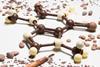
Well-tempered chocolate
Nina Notman discovers that controlling crystal structures and emulsions is the key to good chocolate
-

-
 Feature
Dating the age of humans
Physical science is helping archaeologists close in on the real answers behind the mysteries of human evolution, finds Ida Emilie Steinmark
-
 Feature
Molecule-making microbes
Extracting terpene drugs from plants is difficult and wasteful, so pharma companies are looking to biosynthesis, as Emiliano Feresin discovers
-
 Feature
The dream of zeolite design
Zeolites are important industrial catalysts, so why can’t chemists make them to order? Andrew Turley finds out
-
 Feature
The origin of homochirality
Why do so many biological molecules exist in just one chirality – and how did it emerge? Rachel Brazil reflects on life’s strange asymmetry
-
 Feature
The house that DNA built
The 2015 chemistry Nobel prize was awarded to Tomas Lindahl, Paul Modrich and Aziz Sancar for DNA repair. Matthew Gunther reconstructs their story
-
 Feature
Snakes, sausages and structural formulae
Mike Sutton tells the story of how August Kekulé dreamt up the structure of benzene
-
-
-