Our scientific education is punctuated by classic tales of discovery. We learn about figures such as Marie Curie and her discovery of radium and polonium through pioneering research into radioactivity. By the time these stories reach textbooks, however, they have often been distilled into simplified versions, stripping out valuable insight into how scientific discoveries were actually made.
This is the focus of the new book Discovering the elements: no simple stories. Join us for an hour-long webinar with the book’s authors, Brigitte Van Tiggelen and Annette Lykknes, as they unpack the stories behind some of chemistry’s pioneers. Drawing on case studies from across the periodic table, the discussion explores the historical context behind element discovery. From aluminium to yttrium, and many in between we will discuss what these stories reveal about how science really works.
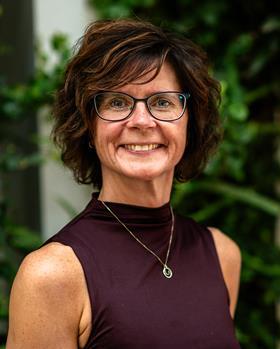
Brigitte Van Tiggelen
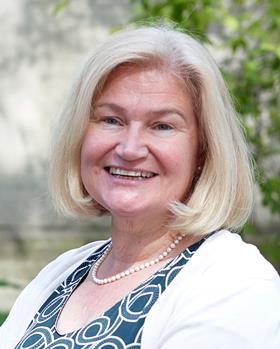
Brigitte Van Tiggelen is director for international affairs at the Science History Institute, Philadelphia, USA and member of the Centre de Recherche en Histoire des Sciences, Université catholique de Louvain, Belgium. Graduated both in physics and history, her PhD dissertation focused on chemistry in eighteenth century Belgium. Her research interests include topics such as couples and women in science, domestic science, heritage of chemical and molecular sciences, philosophy of chemistry and Belgian chemistry.
Publications include co-edited books From bench to brand and back: the co-shaping of materials and chemists in the twentieth century (2017); Domesticity in the making of modern science (2016); For better or for worse?: collaborative couples in the sciences (2012), The public image of chemistry (2007) and Women in their element: selected contribution of women to the periodic system (2019), as well two special issues devoted to the history of the periodic system.
Annette Lykknes
Annette Lykknes is a historian of chemistry and professor of chemistry education at NTNU-Norwegian University of Science and Technology in Trondheim. She is chair of the Division of History of Chemistry (DHC) of the European Chemical Society (EuChemS), the History of Chemistry group of the Norwegian Chemical Society, and the Norwegian Association for History of Science. Her research interests include the history of 19th and 20th-century chemistry and university history, the history of women and couples in science, and the nature of science in chemistry textbooks. She is editor-in-chief of Ambix (the journal of the Society for the History of Alchemy and Chemistry, SHAC), co-editor (with Brigitte Van Tiggelen) of the book series of Analysis: historical cases in chemistry (World Scientific) and has co-edited several collective volumes in the history of science.
About the book
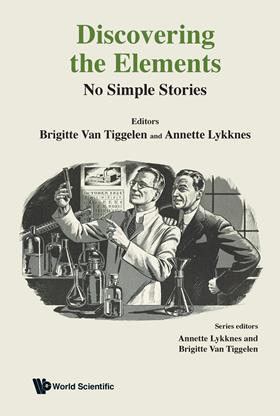
What constitutes a scientific discovery, how do stories about them emerge and what aspects of science are communicated through these accounts? Discovery histories fascinate and are often used as windows into the practice of science, past and present. As these stories are shared in popular media and in the classroom, they inevitably tell simplified stories that might give a distorted picture of how science works and how its now well-established results came about. How can we negotiate enthusiasm for heroic tales of scientific breakthroughs with a respect for historical scholarship?
This volume challenges some aspects characteristic of many discovery histories, namely a pinpointing of events in time and space and the reduction of scientific processes to simple strings of linear events, by providing research-based case stories of element discoveries along with didactic materials that can be used in teaching to reflect on scientific progress.
You can purchase the book here. Use code ELEMENTS25 at checkout to get 25% off. This code is valid until 23:59 on 31 December 2026.
Loading FAQs…