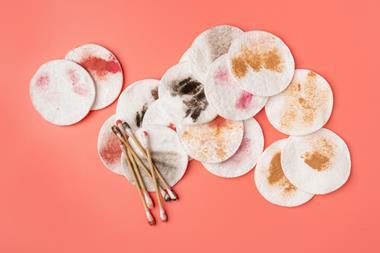
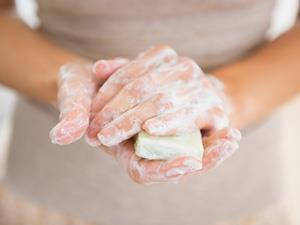
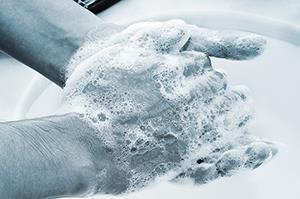
From the kitchen to the bathroom, and everywhere in-between, soap is an integral part of our daily routine. And it has been for centuries, with the earliest evidence dating back to the Babylonians in 2800 BC. But while today’s soaps look remarkably different from the original formulations, the basic chemistry is the same: a fat reacts with an alkali to create the bubbly concoction powering our cleaning.
Join us for a fascinating webinar session – broadcast on 25 June 2026 – exploring the chemistry behind soap. During the hour, you will hear from Julian Silverman, author of How and why soap works, who discusses themes from his latest book and provides live demonstrations that you can try for yourself at home. This webinar will suit anyone who has a fascination with science and a curiosity about the chemical basis for the world around them.
Julian Silverman
Julian is a chemist and educator teaching cosmetic and material science at the Fashion Institute of Technology in New York City, US. While researching how to develop bio-based surfactants from waste, he fell in love with exploring the diverse architectures that molecules assemble to create. His work translating science to non-scientists led him to the Science History Institute in the US, where, as a Haas fellow, he had the opportunity to dive deep into the historical, practical and material history of soap. In addition to teaching and research, he has developed live science demonstrations for educational and public audiences, including Chemical (R)evolution, exploring the fine line between the chemical and biological origins of life.
About the book
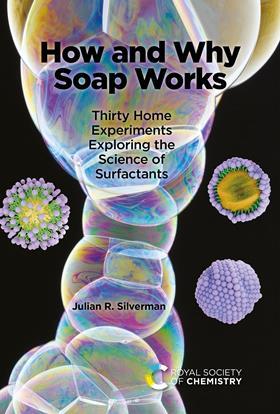
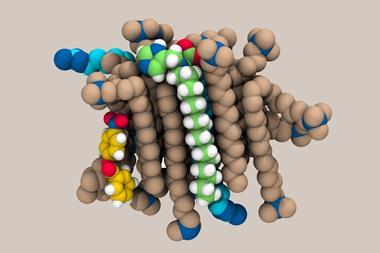
The book How and why soap works illuminates the fascinating science behind an ancient innovation that remains vital to modern hygiene. At its molecular core, soap is a product of saponification, where fats and oils react with an alkali to create a substance that bridges the gap between water and oil. These molecules possess a dual nature: a ‘water-loving’ head and a ‘fat-loving’ tail.
When you wash, these molecules organise into structures called micelles, which trap dirt and bacteria in their centres so they can be rinsed away. By engaging with hands-on demonstrations, readers can explore basic chemistry and materials science while learning to develop their own scientific enquiries. Ultimately, the book reveals that soap is a complex intersection of toxicology, medicine and sustainability. It is more than just a cleanser; it is a sophisticated tool that continues to shape our health and how we move through the world.
The book is available to order here. Use code CWSOAP25 at checkout to get 25% off. This code is valid from 25 June until 2 July 2026.
Loading FAQs…