
Departmental workshops provide support for researchers in more ways than one
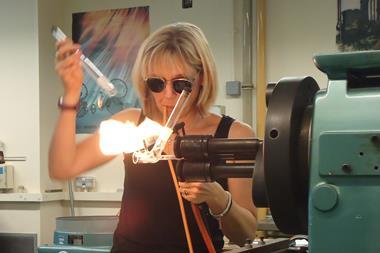
Tuesdays were a special day during my PhD: it was the day the glassblowing rep would visit. We didn’t have in-house glassblowers, so if you needed something repairing or an unusual piece of glassware designed you had to head up to the tearoom to meet Paul, who would cheerfully listen to your problem, distilling it down to the key issues that he could then take to his technical team to design a solution.
Everyone at the glassblowing company was excellent, designing several delicate and unique glass cells that surpassed my expectations. But approving designs over email or waiting for the weekly meetings wasn’t the same as having someone on-site who I could pop round to discuss ideas with at any time.
I’m incredibly grateful that we did have an electronics workshop in the department (especially as I was an electrochemist). It wasn’t just a place to get equipment built and fixed; it was a space to collaborate and learn. I spent many a happy half-hour up there with Keith and Maddy, getting advice on how to set up my circuits, mulling over potential causes of spikes on oscilloscope traces and learning some basic electronics theory to help me to troubleshoot future issues.
Yet it’s rare for university workshops to be viewed as educational environments. And while I admit it’s not their primary purpose (nor should it be), I think we should do more to celebrate this side of them. Particularly now, as the financial pressures placed on universities lead administrators to look into whether there’s value in merging workshops across departments or outsourcing the work entirely.
Workshops also have an important cultural contribution to make to university departments. I think one of the reasons I enjoyed hanging around them was that I felt more at home there than in other parts of the university. While I loved the grandeur of the lecture halls and the smell of history emanating from the old books in the libraries, as a first-generation student I never fully felt part of that world – more like a grateful admirer of it. But the workshops were filled with the kinds of people I grew up with, doing the skilled practical activities that I understood to be part of a normal job (I was less clear about how some of the things academics did counted as work). Seeing how everyone in the workshops contributed to research and university life made it easier for me to see how I might fit in as well.











No comments yet