The Royal Society of Chemistry is offering support to early-stage ventures that aim to solve problems associated with forever chemicals
Per- and polyfluoroalkyl substances (PFAS) have become one of the most challenging, complex and comprehensive chemical threats of our time. Having infiltrated our soil, our water and our blood, these forever chemicals can cause significant harm to our environment and our bodies if left untreated. Originally created for convenience and resilience, their longevity is now a burden we can no longer ignore if we want a cleaner, safer future.
That need for urgency is why PFAS has become a focal point for this year’s Change Makers programme from the Royal Society of Chemistry (RSC). Each cycle, we invite innovators with the ground-breaking ideas needed to solve societal problems to join our programme and receive the support they need to realise their potential.
Addressing PFAS requires fresh thinking and the courage to pursue new, unconventional approaches – something start-ups are well placed to do. Free from legacy processes, they can take risks and explore ideas that might unlock real progress.
When it comes to a challenge like PFAS, we need as many credible solutions as possible
Yet too many of these ventures within the start-up ecosystem struggle to succeed because of a lack of support. Many are led by researchers with deep scientific expertise but limited time or resources to navigate investment, regulation and customer engagement. Equipping them with these capabilities is often what turns a strong idea into a viable business.
That is precisely why we established Change Makers: to support ambitious, science-led ventures with the potential to deliver transformative solutions. Previous cohorts have already demonstrated what is possible, taking deep tech chemistry innovations forward to tackle global challenges.
When it comes to a challenge like PFAS, we need as many credible solutions as possible – and start-ups will play a central role in delivering them. We are therefore seeking applications from ventures approaching the problem from multiple angles, spanning chemistry, water treatment, advanced materials and sustainable manufacturing – particularly those with strong potential to scale.
Our first Change Makers cohort of 2026 will focus on early-stage ventures working in priority areas where PFAS innovation can have the greatest impact, namely:
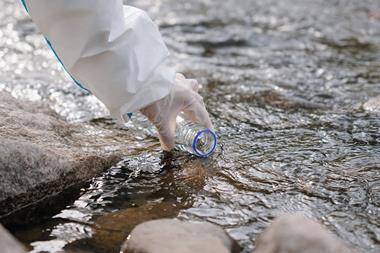
Detection: Advances in analytical chemistry are revealing PFAS in new environments and at increasingly lower concentrations than previously detectable. Research must move quickly to deliver detection and monitoring technologies that are faster, more sensitive and deployable in a wide range of settings.
Destruction: PFAS are chemically diverse and highly persistent, making them difficult to destroy with conventional approaches. Research must accelerate across multiple fronts simultaneously: understanding degradation pathways, scaling destruction technologies and ensuring these approaches are energy-efficient, safe, and economically viable.
Alternatives: There is an urgent need for safe and functional alternatives. PFAS are widely used because of their unique properties. Replacing them requires rapid innovation in sustainable materials chemistry to design substitutes that match performance without introducing new environmental or health risks, while also being scalable for commercial use.
The chemistry community already has the expertise to respond. Research into PFAS behaviour has advanced significantly, pressure from the likes of the RSC’s Policy and Evidence team is gaining traction, and public awareness is growing.
What is needed now is innovation at pace – led by teams ready to rethink what is possible. Change Makers provides the environment where that ambition meets practical support, helping ideas become viable ventures and enabling founders to focus on impact.
What does Change Makers offer?
Selected companies will receive tailored support designed specifically for the challenges of commercialising chemistry-based technologies. Over 12 months, chosen companies will benefit from:
Our mentorship programme: Access to our pool of more than 50 deep tech chemistry Change Makers mentors. Founders can work with up to two mentors for the duration of the programme.
Our masterclass programme: Delivered in-person and over eight months, a programme of monthly sessions, built around our strategic pillars of technology development, market entry and investment readiness.
Investment support: Guidance on strategy, investor readiness, pitch development, and access to our established ‘Investment Catalyst’ events and curated investor networks.
Professional services: Access to chemistry venture-focused experts, including lawyers, IP specialists, accountants, insurers, and tax advisors via seminars and 1:1 ‘clinic’ sessions.
Peer networks: Facilitated sessions with curated groups to share insights, tackle entrepreneur challenges, and build supportive peer connections.
In addition, ventures gain access to high-quality scientific data to validate their technologies and strengthen credibility with regulators, investors and partners. The programme also enables connections with policymakers, research networks and industry stakeholders – supporting knowledge exchange and the development of strategic partnerships that can accelerate progress.
With one week left until the application window closes, we urge the chemistry community to put its strongest ideas now. The scale of the PFAS challenge is matched only by the opportunity to solve it. With the right ideas, support and momentum, we can accelerate the transition to safer alternatives and more effective solutions. The next generation of innovators has the potential not just to manage PFAS, but to redefine how we design chemicals for the future.
Applications for the 2026 Change Makers venture accelerator programme close at 5pm on 17 April.








No comments yet