All Matter articles – Page 11
-
 Research
Harvesting water from the air with organic crystals
Discovery could lead to novel technologies for fighting water scarcity
-
 Research
Water works as medium for reactions that reduce carboxylic acids
Catalytic system works on a wide range of acid substrates and doesn’t require precious metals or air and moisture intolerant reagents
-
 Research
Machine learning ecosystem evolves MOF design
Mofdscribe handles all stages from collecting data to evaluating performance
-
 Research
New example of molecular chirality discovered
The first instance of a molecule in which an oxygen atom is the sole stereocentre has been reported
-
 Research
AI identifies molecules from their featureless visible spectrum
Forget about trying to interpret peaks and let machine learning identify organic compounds from their entirely smooth visible spectrum
-
 Feature
The long future of nuclear waste
Although enthusiasm for atomic energy has waxed and waned over the decades, Bárbara Pinho finds the question of waste has yet to be solved
-
 Business
US government sues chemical firm over chloroprene emissions
Denka disputes claims of ‘unacceptably high’ releases from neoprene manufacturing facility
-
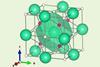 Research
Record room-temperature superconductor could boost quantum computer chips
New material reduces pressures needed more than a hundredfold, but experts urge caution over structural questions and previously retracted research
-
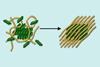 Research
Pure conjugated polymer nanowires crystallised using oligomers
Oligomers used to induce crystallisation in parent conjugated polymers for the first time
-
 Research
Open source software could deliver huge time savings for computational chemists
Program could improve efficiency of operations and automated solutions
-
 Research
Dataset with millions of entries set to help AI find new drugs
Neural networks perform better when trained on larger datasets
-
 Opinion
N-heterocyclic carbenes are more than passive spectators
The practical importance of N-heterocyclic carbenes continues to grow
-
 Research
Wood that traps carbon dioxide could make buildings cleaner and greener
Integral metal–organic framework could let wood in construction sequester greenhouse gas
-
 Research
New theory provides answers to why metals have the structures that they do
The simple concept shows that a metal’s structure results from chemical interactions between localised electrons, challenging the traditional free electron gas model
-
 Research
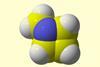
First synthesis of 1-azahomocubane shows nitrogen can take the strain
Chemists overcome synthetic challenges to finally incorporate a nitrogen atom into the homocubane skeleton
-
 Business
Transforming sawdust with ultrasound
Bio-Sep can break down biomass and extract valuable molecules without damaging them
-
 Research
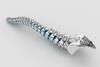
Polymer shows some backbone as it becomes first with extended metal spine
Construction process for 21-atom-long one-dimensional nickel wires could find use in nanoelectronics
-
 Feature
The wonderful wizards of wood
Clever chemistry can turn humble timber into a sustainable material with many uses, Kit Chapman finds
-
 Research
Gel capsules make reactions with organolithiums simpler and safer
Low-cost gels improve the handling and storage of traditionally dangerous organometallics, expanding applications and possibilities in synthesis
-