More features – Page 8
-
 Feature
The plant trade’s scientific secrets
Growers are using advanced techniques to mass-produce the next trendy houseplant. But Katrina Krämer finds that collectors’ demand for new varieties has also opened the door to deception and fraud
-
 Feature
Cultured meat flexes its muscles
Rebecca Trager examines an emerging industry that is growing ‘meat’ outside of animals using cell lines cultivated in bioreactors
-
 Feature
How a murder and a bombing cleaned up DNA profiling
The UK pioneered a forensic process to identify suspects from tiny amounts of DNA, but occasional flaws had big consequences. Andy Extance pieces together the whole story for the first time
-
 Feature
A lightning burst of chemistry
Trying to understand the chemistry that occurs around immensely powerful but short-lived lightning bolts is a feat in itself. James Mitchell Crow looks for a flash of inspiration
-
 Feature
A material future for fusion?
Nuclear fusion has been a dream for decades. Kit Chapman finds out about the latest developments that could help it fulfil its promise
-
 Feature
Using genetics to personalise prescriptions
We’ve known for a long time that different people respond to certain drugs to very different extents, but now cheap DNA testing could make these disparities a thing of the past, as Ian Le Guillou reports
-
 Feature
Is synthetic petroleum the missing link in the route to net zero?
Weaning our economy off liquid fuels could be impossible, so can we make them without the carbon emissions? Rachel Brazil surveys the scene
-
 Feature
The bioorthogonal revolution
A set of reactions operating silently inside live cells or whole animals are lighting up chemical biology and inspiring new medicines, James Mitchell Crow finds
-
 Feature
3D printing adds another dimension
Nina Notman learns how 4D printing is opening the door to unique smart materials whose applications may only be limited by our imaginations
-
 Feature
The incredible antibodies of sharks, llamas and camels
Sharks and llamas share a strange quirk of their immune systems. Hayley Bennett finds out how their ‘nanobodies’ could help us tackle Covid and a host of other diseases
-
 Feature
The human health observatory in our sewers
From tracking disease outbreaks to monitoring drug use, there’s a lot to be learned from the things we flush down the toilet, Katrina Krämer finds
-
 Feature
Life’s chemistry goes through the looking glass
Chemists were taught that natural systems only use L-amino acids. Andy Extance finds out just how wrong that is proving
-
 Feature
Not just batteries: The chemistry of electric cars
The materials required in battery-powered cars are providing new challenges to chemists and the chemical industry. Clare Sansom reports
-
 Feature
A decade of CAR-T cell therapy
Nina Notman looks at the revolutionary treatment already taking on cancer, now aiming for wider use
-
 Feature
The secrets of the sulfur cycle
There’s still a lot we don’t know about the biogeochemical cycling of sulfur, and this could impact our ability to correctly model the climate. Rachel Brazil talks to the researchers trying to fill in the gaps.
-
 Feature
Methane – the other greenhouse gas
Bárbara Pinho looks at the problem of methane emissions and how scientists are trying to prevent them
-
 Feature
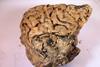
The curious case of the ancient brain
A 2000 year old decapitated Yorkshire man and the ancient proteins in his preserved brain might provide clues to modern diseases, as Hayley Bennett discovers
-
 Feature
Sequencing one cell at a time
New advances that allow scientists to uncover the molecular differences between individual cells could revolutionise medicine, Ian le Guillou finds
-
 Feature
The toxic tide of ship breaking
Kit Chapman explores the chemical cost of the most dangerous industry in the world
-
 Feature
Drilling deep to discover the secrets of the mantle
Nina Notman hears from the scientists trying to pierce the Earth’s crust below the seafloor to learn more about our home planet