An author of the much-loved Organic Chemistry shares his insights on creating a chemistry textbook

How did you get involved in writing textbooks?

Stuart Warren, who was my PhD supervisor, was approached by Michael Rodgers, a commissioning editor at Oxford University Press, to write a textbook on organic chemistry.

Stuart said to Rodgers ‘No, I haven’t got time by myself, but I could do it if I brought on a team of co-authors.’ And so that’s how I got involved. We started writing Organic Chemistry in 1996 and the first edition was published in 2001.

The structure of the textbook came very much from Stuart’s experience of teaching chemistry, approaching chemistry through mechanisms rather than functional groups. We each wrote individual chapters, exchanged them and then edited as we went.

We’ve always tried to write in a discursive way. It’s the sort of book that you could sit down and read a chapter and not feel battered or exhausted by the end of it.

What are the practicalities of writing a textbook?

Jonathan Clayden

Source: Courtesy of Jonathan Clayden

Jonathan Clayden started writing textbooks when his PhD supervisor took him on as a co-author

I started properly writing the first edition at the same time as becoming a new lecturer. My research group was only just getting going, so I didn’t have many people to supervise. I would go to the chemistry library for an afternoon and get journals off the shelves to hunt for examples. It helped that I was writing lecture courses at the same time as writing chapters.

The second edition was harder. I put a day in my calendar to focus on writing. I’d get up early and I’d just work solidly on the textbook. I did that one day every two weeks for a year, and then one day a week for nine months – so a total of less than one hundred days of writing.

What content has changed in Organic Chemistry through the editions?

People often come up to me and say: ‘I really like your textbook, but…’. There’s always a suggestion of something to add to the book. Then my answer is: ‘If I do that, what should I take out?’, which is a difficult question to answer.

Organic chemistry textbooks

Source: © Royal Society of Chemistry

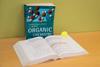
Organic Chemistry tackles the subject by taking a mechanism-led approach

The main change from the first to the second edition has been the organisation of the material. Certain things just weren’t in a logical order. For example, I remember that conjugate addition was introduced really early on in the first edition, almost before simple additions to carbonyl groups.

Photochemistry was always considered a slightly niche area of chemistry – we didn’t discuss it at all in the first edition, except in the context of pericyclic reactions. There has been a massive change in the use of photochemistry in the last 10 years as it’s become a standard tool. Now you can’t really talk about radical chemistry without photochemistry, so I think there’s going to be a big overhaul of how we teach these subjects in the third edition.

The other thing that has changed a lot is catalysis. In the earlier editions, catalysis is ‘here are the principles of organometallic chemistry and you can use some of these molecules as catalysts’. In the third edition, I think we’re going to turn that on its head.

We also reduced the amount of biological chemistry – trying to keep the level of detail suitable for an organic textbook.

How do you keep a textbook relevant?

People have been predicting the imminent death of the textbook for as long as our textbook has been in existence. And we still have textbooks.

I think keeping the textbook relevant starts with my own teaching and research, with an awareness of what people are doing. I also talk with people in industry to see what chemistry they’re doing as you’ve got to have some feel for what the expectations are of graduates. If I had trained an undergraduate and they didn’t know about Suzuki couplings, that’d be ridiculous.

At the same time, you’ve got to have a feel for where the research is going so that you’re preparing students for the future of chemistry.

I think our textbook is a little bit different from some as it was designed to go in parallel to lecture courses. I like to feel that we have set the curriculum rather than followed the curriculum.

Are students still using textbooks?

I think usage has changed but not as much as you might imagine. Obviously, the availability of ebooks means that now I suspect that hardly anyone looks at the index of a textbook. What tends to happen is that students read a little section, rather than opening the book and reading chunks. But I think that depends on the student.

I get a lot of comments from students, particularly those who’ve come into organic chemistry from pharmacy or biochemistry and need to quickly get up to speed. I’ll get an email saying something like: ‘Until I read your book, I really couldn’t get to grips with how mechanisms work’.

The book is also quite heavily used in southern Asian countries – such as India, Pakistan, Indonesia, Malaysia – and I have had some really wonderful comments from students in these countries, and all across the world.

Jonathan Clayden is a professor of chemistry at the University of Bristol in the UK. He is the co-author of Organic Chemistry (Clayden, Greeves and Warren).

This article has been edited for clarity and brevity.

Rewriting the textbooks

Textbooks

Peter Atkins, Catherine Housecroft and Jonathan Clayden guide us through the changing world of textbooks