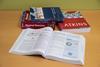
The author of the venerable Physical Chemistry on how writing chemistry textbooks has changed over his career
Which textbooks have you written?
The first textbook that I wrote was Molecular Quantum Mechanics, which was published in 1970. Physical Chemistry came along in 1978 and its now in its 12th edition. I’ve worked on various other textbooks. They span from the hard left – the physical chemistry aspects of biology – to the hard right quantum mechanics.
How do you decide when it’s time to bring out a new edition?
It’s really driven by the market. Quite frankly, there’s not much progress in physical chemistry, whereas with something like molecular biology, it’s out of date before its published.
University courses in the US are what I like to think of as horizontal – you give them for a year and then you move on. That means a book is used for a year, the second-hand market snaps them up and then sells them to the next cohort. Publishers don’t really make much of a sale after the second year so they have to put out a new edition to recapture sales. A new edition of Physical Chemistry comes out every four or five years or so.

Increasingly everyone says people don’t know how to use books and allied with that is the lessening of attention spans. Even if one wants to create a new edition, you really have to adjust the mode of exposition to the changing expectations of the student market.
I think publishers are giving up paper for a variety of reasons. It’s easier for students to carry them around. It also controls the second-hand market – books should become cheaper because of that. But part of reading a physical book leads you to have a visual image of where you read something. You remember it on the page, whereas reading off a screen isn’t the same in my experience.
How has Physical Chemistry changed over the course of your career?
I rewrite it each time. I refresh it thoroughly. It’s partly because I see new ways of expressing things – I reckon I’ve got a literary style that survives with a half-life of about six months.

I think mathematically people are less well prepared than they were 50 years ago, though that does depend on the region. You have to cater for the differences in ability and give some more help, perhaps with line-by-line derivations of key formulae or results. I think one of the problems is that lecturers give the impression that when students embark on physical chemistry it’s going to be a tough voyage with choppy seas. But, if you keep your wits about you, the maths really is very straightforward.
Student reading time is also increasingly limited. Very few of them will go off to original sources. Sometimes you put in a reference for further reading but a complete bibliography is just a complete waste.
How is textbook writing changing?
It takes around two years full time to write a textbook. I’m retired so my time is mine. But I know that for my co-authors, who span Europe and North America, the increasing pressure put on them by their universities and colleges makes it terribly difficult for them to find writing time.
Textbooks are now interactive, which certainly enriches the reading experience. The downside of that is it requires many technical skills and for the publisher expensive programming. Few authors, including myself, have the skills to do all the programming that’s necessary. So, rather than a single author book with an author’s voice, it’s becoming more of a committee construction.
Publishers are finding it increasingly difficult to get new authors to commit to writing texts simply because heads of departments are desperate to get research funds. People like me don’t pull their weight in that respect. I think the combination of demand, student reluctance to purchase textbooks and heads of departments’ imposition on other duties is taking its toll on textbook writing.
Peter Atkins is an emeritus professor of physical chemistry at the University of Oxford, UK. He has written several chemistry textbooks throughout his career, including Physical Chemistry and Molecular Quantum Mechanics.
This interview has been edited for clarity and brevity.

Rewriting the textbooks

Peter Atkins, Catherine Housecroft and Jonathan Clayden guide us through the changing world of textbooks
- 1
Currently
reading
Peter Atkins: ‘Rather than a single author book with an author’s voice, it’s becoming more of a committee construction’
- 3
- 4


No comments yet