Even best practices aren’t always enough to protect heritage sites

Shows and films might have us thinking that the biggest threat to heritage sites – whether museums, palaces, libraries, national parks, churches or temples – is an elaborately orchestrated incursion to probe, extract or deface something of cultural and historic significance for nefarious or heroic purposes. In reality, heritage sites and cultural heritage items are far less threatened by intricate plots à la Lupin, The Thomas Crown Affair, Ocean’s 12, National Treasure or La casa de papel (Money Heist) than by dangers including armed conflict, natural disasters, climate change, pollution and overtourism.1–17

Tourism is a significant contributor to the world’s economies, with the United Nations’ World Tourism Organization (UN Tourism) reporting that 2025 tourism export revenues set a record at $2.2 trillion (£1.6 trillion). UN Tourism’s first World Tourism Barometer report of 2026 estimated 60 million more tourists travelled in 2025 than 2024 – an estimated 1.52 billion. By 2030, a whopping 1.8 billion tourists are expected to cross borders.2 The world’s popular travel destinations will see benefits and costs, with overtourism adversely affecting heritage sites worldwide.

Tourism surges increase the risk of damaging heritage sites and cultural heritage items, as evidenced by a litany of studies, reports and news alerts. While each heritage site faces unique challenges related to overtourism, effective mitigation strategies have been developed across a diverse range of sites.2,5,6,15,16 Such strategies can be considered under the umbrella of ‘sustainable tourism’, which seeks to balance community and environmental welfare, heritage protection and economic growth.

Even if a museum does everything right, things can still go very wrong

Key to developing and evaluating sustainable tourism strategies are measurements. Whether monitoring visitor numbers, economic indicators, site alteration, waste generated or microclimates, careful measurement and analysis supports the mitigation of a wide range of risks.1,3–5,7,8,10,13,14,17

One such risk is fungal growth, which can negatively impact human health and devastate heritage collections as the fungi degrade surfaces and secrete toxic substances.4,14 In museums, sudden water damage paired with a poor recovery effort and inadequate climate control are common causes of fungal growth. Yet even if a museum does everything right, things can still go very wrong. 

A riddle in the repository

Denmark’s ROMU historical museum found this out when its repository was hit by a mysterious – and comprehensive – fungal outbreak.14 The design of this 1450m2 repository, housed in a made-over warehouse, incorporated the advice of a conservation company, adhered to Danish building legislation and followed Danish Cultural Board guidelines for heritage collection preservation. All artefacts were cleaned and freeze disinfected prior to rehoming in the repository, a treatment likely to guard against any old dangers being transported into a new space. 

This new space was suitably climate controlled, maintained and monitored. Tracking and controlling relative humidity and temperature is a key strategy to prevent fungal colonisations, with the major applicable heritage environment guidelines recommending a relative humidity of 40–60% and a temperature of 15–25°C. At the repository, relative humidity was controlled using an oversized desiccant dehumidifier that set off an alarm if relative humidity exceeded 60%. Data logs showed a relative humidity of 50–57% annually and no alarm incidents. 

Beyond tracking relative humidity and temperature, thorough building and collections inspection is recommended and it was during such an inspection that repository staff clocked an ‘unexpected fungal colonisation’ that appeared white on artefacts. 

Artefacts and samples

Source: © 2022 Camilla Jul Bastholm et al/DOI: 10.1016/j.culher.2022.02.009

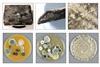
Top: A white fungus attacked many historical items stored at the ROMU repository. Bottom: Attempts to culture the fungus on V8 and DG18 agar (left, centre) produced different species that were clearly not the ones growing on items in the repository; using low water activity MY50G (right) produced the correct white growths

The offending white fungal growth was distributed on artefacts throughout the repository, but not on interior and building structures. An environmental lab was called in to identify the fungi, to aid in recovery and future prevention. Assuming that a relative humidity of 75–100% caused the colonisation, the external laboratory reached for V8 agar media. Fungal culture tests of artefact samples using V8 agar media showed no growth. Yet, the presence of bright white fungal growth was clear to see on contaminated items. 

The problem wasn’t faulty observations, but problematic V8 agar. This type of agar is suitable for detecting moisture-needing fungi such as genus Stachybotrys and Chaetomium, but is not recommended for xerophilic fungi – such as specific Aspergillus species A. halophilicus – that thrive in low moisture to extreme dryness. Plus, commonly encountered moisture-needing fungi – regardless of growth substrate – are not white in appearance but brown, green/blue, black, and yellow. 

The laboratory’s use of V8 agar did not allow xerophilic fungi to be detected, which proved to be the offenders. Researchers that studied the ROMU outbreak pointed out ‘a closer dialogue’ on the repository’s relative humidity data could have hastened finding the offending fungi. A later round of testing using low water activity agar MY50G followed by DNA-sequencing revealed the fiendish fungi to be gang of AspergillusA. halophilicus, A. domesticus, A. magnivesiculatus and A. vitricola. These are just the type of fungi that could thrive in the repository, even in conditions that follow museum guidelines. The team unravelling this mould mystery stated their ‘study questions whether the guidelines for heritage collections prevent the risk of fungal growth adequately’ and called for larger xerophilic fungi studies to aid in developing strategies to meet their unique risks.14

Risks identified are risks that can be managed.