
Risk assessments and flexible working policies all provide valuable support – but how proactively this is offered varies greatly
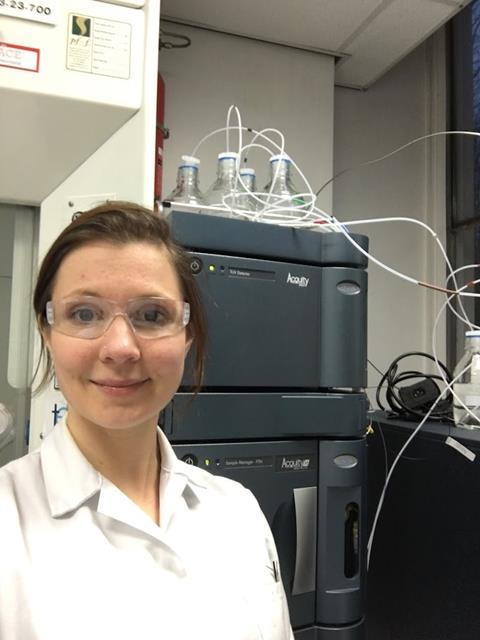
When Anna Slater became pregnant as a postdoc 11 years ago she felt she was entering uncharted territory. ‘There really wasn’t a lot of information out there, I felt like I was the first person to ask: “How do we do this?”’
It’s a sentiment still echoed by researchers, as Slater and colleagues found out when gathering chemists’ experiences of pregnancy for the Women and Inclusion In Supramolecular Chemistry (Wisc) Network. But with 40% of chemistry researchers worldwide being women, it’s more than likely somebody in your team – an employee, colleague, manager or yourself – will become pregnant during your career. How can we best support them?
One of the first considerations for pregnant chemists is when to tell colleagues. Because of the inherent risks of working in a lab, this news often has to be shared with supervisors early.
Slater was lucky to have an understanding line manager. But even if that’s not the case there will be processes in place to ensure you are not putting yourself or your baby at risk. Once you disclose your pregnancy, most institutions will carry out a risk assessment and make adjustments accordingly.
Finding what works
Possible adjustments include working on different experiments, moving into a different lab or performing more desk-based work. Although this can prove tricky in larger communal lab spaces, there are ways for workplaces to handle this with discretion and care. For example, labs can have signs highlighting the hazards and type of work being carried out, or supervisors can review how the lab’s activities could affect you without informing the wider team.
All pregnancies are different, and as time progresses different needs may arise. The manual nature of the job – delivering lectures, performing experiments or even sitting for long stretches at a computer – can all require adjustments. Ensuring that organisations have a supply of personal protective equipment (PPE) suitable for pregnant people, a quiet room for breaks and the flexibility to attend doctor’s appointments can all make a big difference. But it’s not a one-size-fits-all solution. ‘There are lots of different things that will impact how you feel and it’s impossible to predict how that will go,’ says Slater.
Even the stage of your career can make a marked difference to your experience. Rachel Evans had her first child last year as a professor of materials chemistry at the University of Cambridge, UK. While she didn’t have to worry about the insecurity of being on a fixed term contract, she encountered other challenges.
‘I’m not in the lab. I’m managing a group, I’m teaching. So [my department] were quick to implement a risk assessment, but actually it didn’t change anything,’ she says. The burden fell on her to arrange cover for various responsibilities as well as to manage and adjust her teaching duties. ‘There was probably a whole additional day’s work a week for several months, where I was doing all the administration around putting into place cover for every single aspect of my job during my leave.’
If you’re in a similar position, Evans’ advice is to speak to colleagues who have gone through the same situation recently. ‘See if they’ve got a list or plan that worked well for them. Because then when you do go to speak to your line manager, you have a plan of what you can be asking for.’
How employers can help
So how can institutions and managers support employees better? Jaclyn Raeburn runs the formulation team at the pharmaceutical company Curia Global in Glasgow, UK, and has supervised several colleagues through pregnancies. The company has a clear policy in place while allowing for flexibility. ‘We try to be open and honest and tell people to let us know if their situation changes. Especially if it’s your first child, you might not know how you’ll feel from month one to month to eight. It really depends, and we just have to be flexible as an employer.’
If you have an unsupportive line manager, Slater suggests seeking out others at your institution, including senior managers, HR, parent networks, family friendly advisors or unions, for help and advice. However, she stresses that ‘if we want to change the culture of science, we need to make sure that that one person doesn’t have such an outsize influence on the experience of people in their team.’
For organisations, having robust policies in place for pregnant researchers doesn’t just support parents – it helps to build a more resilient, inclusive chemistry community. Raeburn says: ‘I think if we want a diverse workforce and for people to feel appreciated at work there needs to be support in place for them to feel that they can still work… and feel valued. I don’t want people to feel, “Oh, I’m pregnant now. I’m just a burden on the team.” That’s absolutely not how it is.’














No comments yet