Materials
The latest chemistry news and research on materials, including polymers, electronic materials, soft matter and porous materials, from the Royal Society of Chemistry's magazine, Chemistry World
-
 News
NewsWho will win the 2026 Nobel prize in chemistry?
Annual list of ‘citation laureates’ includes scientists behind base editing, self-assembled monolayers, and those who improved our understanding of electron transfer in proteins
-
 Research
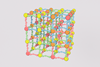
Multivariate MOFs make the case for embracing complexity
Frameworks built from multiple different metals and ligands are expanding the possibilities for materials that can do many things at once
-
 Research
Butterfly-inspired structural colours could replace synthetic pigments
Inspired by nature, chemists in the US are working to create vibrant, long-lasting and safer colours that could be used in food, cosmetics and paints
-
 News
NewsHideki Shirakawa, who shared chemistry Nobel for discovering conductive polymers, passes away at 90
Collaboration with Alan MacDiarmid and Alan Heeger on doped polyacetylenes ushered in new field of electronics
-
 Podcast
Advances in CAR-T cancer therapy & carbon materials’ hidden defects
What does recent success with bladder tumours mean for solid cancer treatment? And we discuss why scientists are rethinking how they assign peaks in spectra of carbon-based materials.
-
 Research
Waste chlorine upcycled into valuable materials using simple resin
Polystyrene-based resin could capture chlorine lost in industrial waste streams
-
 Research
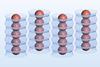
Copper chains more than 4000 atoms long are the longest ever produced
Carbon-sheathed copper wires produced under extreme pressure
-
 Research
The twisted chemistry of Narwhal tusks
Narwhal tusks grow in distinctive shape due to opposing chiral collagen fibrils
-
 Podcast
UK science department abolished & Ireland’s crumbling concrete
What does a new prime minister mean for UK science? Plus, why are thousands of Irish buildings falling apart?
-
 Research
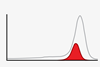
Chemists may be misassigning defects in carbon materials, study suggests
Peaks in certain spectra are likely a combination of several defects, such as heteroatoms, different ring sizes and vacancies
-
 Business
Record low European river levels threaten chemical freight and process cooling
Cutting off bulk barges leaves few options for high-volume gaseous cargoes, where road and rail options are unsuitable
-
 Business
Combining AI with experiments to solve real-world materials problems
CuspAI’s Materials Foundry partner network includes 45 technology, data and materials chemistry companies to make and test its predictions
-
 Podcast
Thermo Fisher data manipulation & the shrinking chemical recycling industry
We discuss fabricated images in Thermo Fisher’s online catalogue. And, what barriers are preventing chemical plastic recycling from taking off?
-
 Research
Chiral phenomenon previously thought impossible discovered in metal sulfide crystal
First instance of piezochiral effect where strain induces a changes in chirality
-
 News
NewsWhy are buildings cracking-up in Ireland?
The chemistry behind an epidemic that is destroying concrete in houses, hospitals and schools
-
 News
NewsChemistry Nobel laureate wants humanity to focus on mining ‘invisible gold’ all around us
Susumu Kitagawa says that his vision is that one day porous materials will allow us to tap air for raw materials
-
 Opinion
Where does chemical recycling of plastics go from here?
US and EU plant closures highlight economic difficulties of scaling technology alongside associated policy and infrastructure
-
 Business
Chemical recycling plants closing in EU and US
Firms aiming to break down and re-make plastics are struggling with economic feasibility and environmental impact
-
 Podcast
50 years after Seveso & changing the way we separate hydrocarbons
What have we learned 50 years on from the Seveso accident? And we discuss three promising membrane strategies that could replace fractional distillation in crude oil refineries.
-
 Opinion
‘Science felt like a level playing field’: in situ with Anthony Cheetham
The materials chemist on being a scientific contrarian, his love of cricket, and what AI might mean for materials science