The EU is moving closer to strengthening EU stockpiles and production of key medicines under its Critical Medicines Act (CMA). The new rules, agreed by the European Parliament and ministers from member states in May, will incentivise EU-based manufacturing of critical medicines and their active ingredients. There are indications that EU lawmakers are planning similar rules for chemicals and other sectors, but these are not yet as far advanced.

Many generic drugs are now made mainly outside of Europe, especially in China and India, which is now viewed as a supply risk. Even when India is an exporter of medicines, often precursors and ingredients come from China. Swiss drugmaker Sandoz recently called on the European Commission to investigate imports of amoxicillin trihydrate, a key antibiotic active ingredient, from China, alleging unfair state subsidies and below-market pricing hampering production in Europe.

‘The EU faces not only a dependence on foreign suppliers, but also a deeper dependence on highly concentrated upstream production networks, with a supplier that cannot be considered politically close,’ says Stefano Riela, an expert on EU economic policy and trade at Bocconi University in Italy.

Amoxicillin

Source: © Gado/Getty Images

Swiss drugmaker Sandoz has complained to the EU about alleged economic dumping of amoxicillin active ingredient from China

Once Parliament and the EU Council of ministers have given their approval to the act, the text will go through legal checks, before adoption likely in the autumn of 2026, said a commission spokesperson.

This is part of a bigger shift in how the EU views its trading dependencies with China and fears over low-cost dumping by Chinese firms. ‘Ten years ago people didn’t really think about dependencies and sourced their inputs wherever is cheapest. That has now changed,’ says Holger Görg, trade economist at the Kiel Institute for the World Economy in Germany.

China is widely viewed as not playing by World Trade Organization (WTO) rules, often using state intervention to support companies and make them competitive. ‘China subsidises its companies, but that is only against the rules if you are trying to give your own companies an advantage internationally – and that is difficult to prove,’ says Görg. The response by the EU has been tepid: ‘The EU has not implemented very strong policies because [it has] not felt the need,’ says Görg.

The commission has been pushed to take action by complaints from EU firms, launching a record 33 investigations in 2024, including 12 in the chemical sector. Chemical group Ineos alone recently sent a list of ten chemicals in an antidumping complaint.

For China, the goal is often self-sufficiency, but slackening domestic demand has led to oversupplies that have translated into low-cost exports to Europe, pressuring local pharmaceutical and chemical manufacturers. ‘This is the Chinese nation as a corporation with a clear 10–20 year strategy to become self-sufficient,’ says Richard Carter, an independent consultant to the chemical industry and former BASF manager. Imports from China grew by 8% in the first half of 2025, according to Ineos in its complaints.

Tariffs in today’s world are written on a flipchart in the White House, whereas Europe is still playing by the old rules

The European Commission has launched investigations and found that Chinese companies are dumping materials below cost, resulting in tariffs being imposed on specific firms. In February, it introduced massive antidumping duties to 1,4-butanediol on imports from China, Saudi Arabia and the US. In May, after an investigation of adipic acid – used to make polyamide materials and polyester polyols – the commission imposed defensive antidumping duties of around 30 to 40% on imports from China.

Despite global overcapacity in many basic chemicals, ‘China is still investing in steam crackers and building out downstream derivative plants, where we will see massive overcapacities,’ says Carter. While some smaller, older less efficient plants are being decommissioned, the overall growth is significant. ‘Once Chinese capacities are built, they don’t go away. In some cases they are content to run at 50% capacity utilisation,’ he observes. In western countries, anything below 80% is unsatisfactory and would jeopardise a facility’s economic viability.

Some countries have taken measures against cheap Chinese imports. The US imposed anti-dumping tariffs for methylene diphenyl diisocyanate (MDI) at 85% for specific exporters and over 150% for all other Chinese producers. Brazil introduced protective duties for some polymer imports and some analysts predict an intensification of trade defences this year. The European approach requires exhaustive investigations and targeting of specific companies, but Carter says this simply allows another firm to step in and dump the same chemical into Europe.

Chinese chemicals and goods have begun bouncing off trade barriers erected by other countries and heading to Europe. ‘Tariffs in today’s world are written on a flipchart in the White House, without analysis, whereas Europe is still playing by the old rules,’ says Carter.

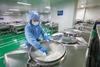
Drugs manufacturing

Source: © Yang Dong/VCG/Getty Images

China’s pro-active trade policy and subsidies have led to dominance in several spheres of chemical manufacturing, from pharmaceuticals to rare earth elements and increasingly basic chemicals

Others agree that the situation needs to change. ‘Antidumping investigations have been reformed and shortened but it continues to take too much time,’ says Elvire Fabry, director of the trade and economic security programme at European thinktank the Jacques Delors Institute. Europe can address the bigger problem by giving financial support or incentives to its own industries, introducing new regulations or wielding new instruments such as the Foreign Subsidies Regulation, she suggests.

The problems have been a long time in the making. Deep specialisation from decades of globalisation has introduced vulnerabilities, says Riela, and supply chains can be upended by industrial incidents, logistical shocks or pandemics. ‘They may also be disrupted by deliberate political decisions, the so-called weaponisation of trade,’ Riela adds. A example recently was when China introduced export licenses for rare earth materials, which allowed it to slow down supply to companies outside China.

‘A big problem is the concentration of production and even monopoly positions in some sectors that China is gaining, as we have seen in the automotive sector with batteries, battery components and materials,’ says Fabry. The Critical Medicines Act is part of a broader revival of EU industrial policy, even though industrial policy was once anathema to the EU because of its commitment to competition and market integration. ‘The EU has recognised that industrial policy may be necessary both to compete on more equal terms with China – and increasingly with the US – and to reduce excessive external dependencies,’ says Riela.

China is throwing down the gauntlet and asking the EU: what are going to do about it?

The Financial Times recently reported an unnamed source describing EU plans to force European companies to buy critical components from at least three different suppliers, not all in the same country, to reduce the EU’s dependence on China. Fabry believes the commission is seriously considering such a proposal. ‘I hope this is not a serious proposal. We are a market-based economy and firms make their own business decisions,’ says Görg, who believes this would create a bureaucratic monster. 

China is unlikely to change its behaviour in terms of state subsidies and building up its manufacturing capacity. ‘There are systemic imbalances in the global economy because of proactive policies of the Chinese [government] to reduce its dependency on the rest of the world,’ says Fabry. ‘It’s a defensive position but it is also an offensive when it uses economic coercion.’

The rare earth policies revealed how easily Beijing’s authorities can throttle exports, ban critical element exports, or introduce licensing requirements for materials where it dominates supply. The US has begun investing in domestic producers of rare earths and signed supply agreements and international alliances with countries such as Canada and Australia. However, global supplies of rare earths are still heavily reliant on China.

Meanwhile, Europe’s perception of China has shifted in recent years, especially with the support China has offered Russia in its invasion of Ukraine. ‘The unwillingness of China to cooperate [for Ukraine] has pushed it from being an economic competitor to more of a rival,’ Fabry says. Others note that the US has de facto withdrawn from the WTO and launched a trade war with China through its tariffs, weakening the legalistic approach favoured by the EU based on WTO rules.

Carter and others do not foresee China taking European concerns into account regarding exports. Carter says: ‘They know they’re dealing with a complex bureaucracy of 27 states and they are throwing down the gauntlet and asking the EU: what are going to do about it?’ Fabry notes that the trade situation is not a one-way dependency and China needs to be open to dialogue on its imbalances if it wants access to the EU market. ‘This is a global problem and cannot be addressed just by the EU on a bilateral basis but globally,’ says Fabry, who favours the WTO as a forum, although it has been hobbled by US disdain and inaction.

Other options open to Europe include support for vital indigenous industries such as chemicals and pharmaceuticals. ‘If the Critical Medicines Act succeeds in delivering a credible EU industrial policy, it should pursue a targeted reshoring strategy that accounts for Europe’s structural constraints, including high energy costs and strict regulatory requirements,’ says Riela.

‘Even limited domestic pharmaceutical manufacturing capacity may reduce the EU’s exposure to external coercion by creating a credible alternative to highly concentrated foreign suppliers. Selective production capacity for critical [active pharmaceutical ingredients] may act not only as an emergency reserve during supply disruptions and export restrictions, but also as a source of bargaining leverage during periods of geopolitical tension,’ he adds.