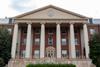
Hundreds of grant applications that were delayed or withdrawn by the US National Institutes of Health (NIH) last year will now be reevaluated under an agreement reached between the federal government and affected scientists. The settlement, announced on 29 December to resolve ongoing legal action, was met with relief from the US research community but also some scepticism.

More than 5000 grants across the country fall within the scope of the new settlement, and rolling decisions on those research proposals are expected according to the schedule laid out. For example, decisions on non-competing renewal or continuation grants were due by 29 December 2025, and on that date the NIH issued 528 grant decisions of which 499 were approvals. That is according to the Massachusetts attorney general’s office, which is leading one of the cases.
The affected grants cut across the NIH’s entire mission, says Jeremy Berg, a biochemist who served as director of the NIH’s National Institute of General Medical Sciences for almost eight years. He says the reason many of these projects were not reviewed had to do with the applicant having an interest in diversity issues or being from a group that is underrepresented in biomedical research, such as scientists from socioeconomically disadvantaged backgrounds and people with disabilities. ‘It’s people doing cancer research and biochemistry,’ Berg says.
The new agreement resolves two separate lawsuits launched against the NIH and the federal government last year, which have been merged into one lawsuit in the state of Massachusetts. The first case, which was led by the American Public Health Association, unions and others claimed the abrupt cancellation of NIH grants was baseless and constituted a ‘reckless purge’. The second suit was filed by Democratic attorneys general in 16 states and made similar arguments.
Judge William Young in Massachusetts took up the case in June, dividing it into two phases, with the first focused on existing NIH grants that had already been awarded but then terminated. He ruled that the terminations were illegal because they violated the established law that required an effort be made to evaluate each grant and clarify why the project was being cancelled. The NIH then appealed and lost, leading to the case being referred to the supreme court, which in August declined to stay the district court’s decision. The matter remains in legal limbo.
A ’very mixed victory’
Meanwhile, the new settlement resolves the second phase of the lawsuit that focused on NIH grant applications that were sent for peer review but then never vetted. This agreement does not affect the first phase of the lawsuit. ‘The settlement agreement says that the NIH agrees to review in good faith the applications that had been submitted and pulled from peer review,’ explains Berg.
Berg has been involved in both lawsuits against the NIH, providing information to court about historical norms at the agency. ‘In the past, when grants at NIH came up for non-competitive renewal they were granted in about 98% or 99% of the time, but that number was about 70% during the delays that were occurring in 2025,’ he says.
‘This was a very mixed victory,’ says Berg. ‘NIH is reviewing things that they previously thought they could avoid reviewing, but the bad news is that the agency has a huge amount of discretion about what they fund,’ he continues. ‘Applications may well go through study section review, get a really great priority score in the second or third percentile, and then not receive funding.’
In August, the NIH’s director Jay Bhattacharya issued a ‘unified strategy statement’ empowering its various institutes and centres to make funding decisions that reflect the ‘priorities’ of the agency and its institutes. It is ‘very clear that NIH has the authority to not fund things because it’s not aligned with agency priorities’, Berg states.
Derek Lowe, a US-based drug discovery chemist and Chemistry World columnist, is also concerned. ‘It is true that the NIH and the administration have been forced to review these things when previously they had said they would not,’ he states. ‘But we are going to have to watch and see what comes out the other end of this – do they just say, “We reviewed the research applications, and nothing is funded?” We will have to stay tuned.’
Berg is not sure that the new settlement will provide significant relief for grant applicants who were affected by the Trump administration’s policies. ‘Only time will tell, but my guess is probably not very much. I think they are still going to be in the same situation of not having money to do what they want to do.’ Nevertheless, he says the agreement is probably the best-case scenario that would have resulted if the case had gone to trial.


No comments yet