The nanogeoscientist on the importance of people to good science, the recent turnaround on diversity, equity and inclusion and why she will never be a professional artist

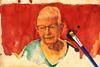
Alexandra Navrotsky

Alexandra Navrotsky

Source: © Peter Strain @ Début Art

Alexandra Navrotsky is a regents professor in the School of Molecular Sciences and the School for Engineering of Matter, Transport and Energy and affiliated faculty member of the School of Earth and Space Exploration, at Arizona State University (ASU), in the US. She is also director of the Navrotsky Eyring Center for Materials of the Universe, a collaborative research and education initiative at ASU. Recently, a newly discovered mineral was named Navrotskyite in her honour.

I realised I was interested in science and engineering, probably by the time I was five or six years old. My grandfather was a great influence in that. He was a civil engineer … he would sometimes take me to work. I also had a great aunt who taught Russian at Columbia University, New York, so she sometimes would take me in so I would see what a university was like. It came pretty naturally that I was going to do something in science.

I was at the Bronx High School of Science, which had a lot of advanced courses. They had chemistry, physics, calculus, etc and by that time, I realised in some sense, that biology was too qualitative, physics was a little dull, and chemistry was somewhere in the middle … and it just suited me.

My mother was an artist. We would talk a lot about careers, and she would say ‘You don’t want a career in art. There’s nothing in it. It ends up being a job. You do your art on the side, but as a career, it stinks.’

My first big award was when I was elected to the National Academy of Sciences. That was in 1993 – I was barely 50 years old. I was about to go off and teach a thermodynamics class to undergrads when I got the phone call from one of my good friends who was in the academy. I was shocked, of course, but then I had a class to teach, so my first reaction was ‘Yeah, that’s nice. I’ll deal with it after class.’

Many of my students now have all sorts of careers, jobs, good personal lives. They have their own students … so now I’m not just a scientific mother, but a scientific grandmother. I’m very proud of them on an individual basis.

You get ideas or directions that you wouldn’t get if you were just thinking by yourself

Everybody talks about big challenges. It’s going to sound silly, but I didn’t have any big challenges. I had day-to-day challenges, but since I always knew in the big picture what I wanted to do, and in the more immediate picture, what I needed to do the next day, the next week, the challenges were operational, they were not philosophical.

In the last couple of years, I’ve seen a complete turnaround from where DEI [Diversity, Equity and Inclusion] was the absolute, fashionable, natural, wonderful, necessary thing, to where it’s almost a bad word. And my feeling is that I don’t think you attract people to science by big initiatives … people are attracted by people.

I like doing things that might be called administration, or, better said, leadership, without doing them from an official position. I think I have a reputation for [saying] what I’m thinking, rather than for being some sort of administrator, so, in that sense I deal with people a lot. But the real work I do is sitting at my desk at home; that’s one thing that Covid-19 certainly taught us, was how much you can do at home.

To do good science you need people – good students, good colleagues, a lot of discussion, a lot of involvement with people – involvement where there’s no clear distinction between when you’re talking science and when you’re talking about where there is a good restaurant. It’s those human relations that you build over the years.

My advice for young researchers is three words: go for it. Look at the opportunities that are there – they will keep changing – and interact with the people that can give you information.

Collaboration is important for two reasons. One is a human reason – we are basically interactive people – it is natural for people to interact, to form groups. The second reason is that it expands the science – if three people get together to talk about things, you get ideas or directions that you wouldn’t get if you were just thinking by yourself.

I don’t have much free time, but I have my three dogs, so they take a lot of attention – they’re always wanting something. They keep me active. My second hobby – and I just don’t have enough time for it – I’m an amateur artist. I draw, I paint, I do crafts, but I look at it and I say ‘It’s kind of amateurish, but I don’t have time to make it professional’.

The things that are exciting right now is the new work that we’re doing at high pressure, which we have pretty much pioneered. We have established a large multi-anvil apparatus here, which previously existed in Japan. Being able to do, not just experiments, but to think about new things that one can do with high pressure, in particular, about the new materials one might try to make. There’s always the hope that some new material you make will have some delightful, useful applications, etc, but that’s not my driving force – my driving force is to look at what new materials can be made in the hope that they’re scientifically interesting, and of course, if they’re technologically interesting, that’s good, because that’s the way you get money.