Making connections from the small scientific community of Costa Rica to a global network of peers

Researchers in the lab handling a snake

Source: Courtesy Noelia Rechnitzer

Noelia Rechnitzer’s research connects chemistry, microbiology and public health

When I started my journey as a young scientist, I met the professor who would change everything – my current mentor. During my third year studying chemistry at the University of Costa Rica, I asked if I could join his research group. He said yes immediately, without knowing whether I even had good lab skills. That simple ‘yes’ became the foundation of my scientific career – the first spark in a chain reaction of mentorship that I now hope to continue for those who come after me.

One of the best lessons my mentor has given me is to be interdisciplinary – ‘to know a little about everything’ – but also to focus on what I do well and not compare myself to others. He often says that students are like crystals: a good mentor helps to polish them so they can shine.

For me, good mentorship is about more than technical training – it’s about kindness, patience and vision. My mentor didn’t just teach me how to pipette or write a paper; he taught me how to think like a scientist, how to collaborate and how to stay human in the process. I’ll always be grateful for the trust he placed in me when I was still learning who I was.

Science with limited means, but limitless passion

Doing science in Latin America – and especially in Costa Rica – comes with challenges that many around the world may not realise. Funding is limited, laboratory resources are scarce, and there are no salaries for master’s or PhD students. We often have to teach courses to support ourselves while conducting research at the same time. Waiting months for reagents or dealing with the lack of equipment is common.

But these limitations also shape our creativity. They push us to find solutions, to improvise and to make the most of every opportunity. We do research not for money, but for passion. That passion keeps science alive in our region – and it has carried me through every late night of work and study.

Carrying hopes across the world

Thanks to strong mentorship and persistence, in 2025 I was nominated to attend the 74th Lindau Nobel Laureate meeting in chemistry in Germany, joining 600 young scientists from around the globe and more than 30 Nobel prize winners.

When I arrived, I carried more than a suitcase – I carried the hopes of a small scientific community back home. I was among a very small group of researchers from Costa Rica ever to attend.

Lindau felt like stepping into a global laboratory. Beyond the brilliant lectures and discussions, what struck me most were the honest, human conversations with Nobel laureates about balance, failure and passion.

A chain reaction of mentorship

Still, what I treasure most from Lindau are not the Nobel lunches, but the friendships formed by Lake Constance. I met incredible young scientists from every corner of the world – and especially from Latin America. We shared stories of resourcefulness, determination and pride in doing good science despite limitations.

Even months later, that network continues to guide me. As I look for a PhD opportunity abroad, some of the friends I met in Lindau have become mentors themselves – sharing advice on how to choose the right supervisor, how to navigate applications and even forwarding PhD offers. It reminded me that mentorship doesn’t always come from senior scientists; sometimes it comes from peers who understand your journey.

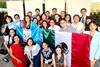
Group Photo

Source: Courtesy Noelia Rechnitzer

Attending the Lindau Nobel Laureate meeting allowed young researchers to build international networks of supportive peers

Rethinking success

In Latin America, young researchers often feel pressured to build a ‘perfect CV’ to be competitive abroad. But Lindau changed how I define success. It’s not about how many papers you publish, but about the impact you have on others – the students you inspire, the colleagues you support, the bridges you help build.

Now, back at my university, I try to pass on what I’ve learned. I mentor undergraduate students who, like me, once doubted whether they could make it in science. I tell them that being from a small country doesn’t make you less of a scientist. It makes you more creative, more resilient and more driven.

Beyond borders

Lindau taught me that science thrives on connection – across generations, across disciplines and across continents. It reminded me that mentorship is not a hierarchy but a circle. Each of us can lift another, just as someone once lifted us.

Science should not be a ladder that only a few can climb – it should be a network that lifts everyone. And maybe, one day, another young scientist from Costa Rica will see their name on the Lindau list and know they’re not alone.

Because mentorship, like chemistry, depends on connection – and one spark can change everything.