


The Gosh community and Trend in Africa help researchers to access and build low-cost lab equipment
Many researchers share the plans and details of how they make their equipment so that others can create their own versions. This could be informally, as part of a study’s supplementary material or on a forum. The gathering for open science hardware (Gosh) community is a prime example of the latter.
‘Gosh is a community that started about 10 years ago and gathered momentum through the Gosh forum,’ explains Jason Griffey, who helped set up the network. He explains that ‘it’s a very typical internet forum’ that is split into different topics. Around 900 people are currently active on Gosh, sharing projects and ideas, much like how software engineers share code on platforms such as GitHub.
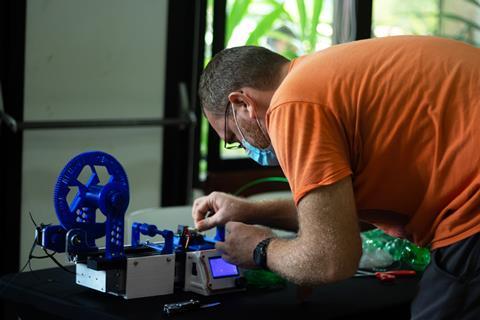
‘The idea is that you make everything available that people would need to build the device,’ explains Jenny Molloy at the University of Cambridge, UK, who was another of Gosh’s co-founders. This could involve sharing 3D printing instructions, prototype designs, CAD files or PCB board layouts for electronics, she explains. ‘If you want to, you can get the entire blueprints for [Cern’s] Large Hadron Collider [on Gosh],’ she says.
Sharing designs allows researchers to adapt their instruments for specific needs. Molloy notes that, for example, scientists could alter the number of sensors in an analytical instrument to fine tune the resolution and precision as required.
‘If [researchers] adopt the open approach and take the additional time to make it such that other people can copy the work, it [also] has this broader impact and helps everybody else out there,’ explains Molloy. Yet, she recognises that this takes time and requires teams to ‘build multiple iterations of a thing that you might have bodged together’ to make sure their designs are reproducible. Equally, scientists still need to buy certain components such as silicon chips from a supplier, as these can’t be made in house.
Meeting open mandates
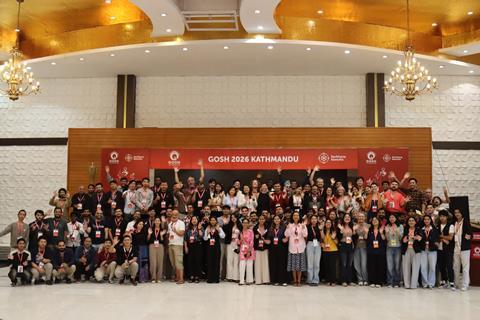
Aside from the forum, Gosh also hosts regular gatherings around every two years. The first of these meetings was at Cern, Switzerland in 2016, where around 50 people attended, including researchers, citizen scientists, artists, educators and people from industry. ‘[Cern] has a mandate that their work is open… whether that is software, hardware or results,’ explains Griffey.
‘Policy wise I think it’s important that those research outputs be available to the world,’ he notes. Many research institutes rely on public funding from governments, charities and academies, with Griffey commenting that ‘the public should have the knowledge that is generated from those funds.’ While protecting research and methods with intellectual property can be an invaluable source of income, Griffey believes ‘opening knowledge often acts as its own sort of multiplier for economic generation’. For example, creators can sell individual components that they make in their own lab to others in a test-before-you-make scenario.
Sharing knowledge also helps to level the scientific playing field. For example, the organisation Trend (Teaching and Research in Natural Sciences for Development) in Africa organises exchange programmes, where scientists share their expertise with African researchers who want to learn about a specific field or instrument.
Lucia Prieto Godino, who co-founded Trend while a PhD student at the University of Cambridge, notes that Trend also has a donation scheme. She highlights that some equipment ‘will be too complex, too expensive and not practical to build’ from scratch. Lab groups can instead donate equipment that they no longer use, for example, or that they no longer have the lab space for.
Beyond donation to sharing expertise
Prieto Godino, now at the Francis Crick Institute in London, UK, says that Trend has ‘never just donated equipment’, adding that Trend works with local companies to service equipment and trains researchers how to fix issues themselves. ‘It was always our idea that we wanted to make African science more global, to be more connected to the rest of the science, because there was this big disconnect,’ she says.
Yet, being able to make equipment and materials open requires researchers to carefully document their methods. As Molloy notes, this doesn’t necessarily mean that all labs have to be able to make their own versions; some equipment will be for educational purposes, while others will require specialist equipment that not all labs will have. Even these complex projects meet the open definition. ‘They’re giving you the designs [but] whether you can then replicate those or not is dependent,’ says Molloy.
Comparing instruments against commercial versions or providing a set of controls to benchmark against helps ensure that these ‘build-it-yourself’ designs are as reliable and accurate as current systems. ‘[Yet] even when you get a commercial instrument, labs are not required to disclose the service [history] of that instrument and how many times [researchers] have had it calibrated,’ says Molloy. ‘I can tell you that many labs will be running instruments that have not been calibrated in a number of years.’
The ethos of sharing knowledge and resources has dropped off
Molloy notes that sharing blueprints is not just a way to reduce costs. ‘People are [now] thinking about the scientific ecosystem as a whole… and how everything’s changing for how research is carried out.’ Many scientists historically made their own equipment with whatever resources they had lying around them. Crucially, they also shared the blueprints to their DIY instruments so that others could make their own versions.
For example, Robert Bunsen and other creators of the eponymous Bunsen burner built on earlier designs by Michael Faraday, which were publicly available. Other researchers then adapted Bunsen’s creation – published in research papers – to make burners with flames of different shapes or number.
The ethos of sharing knowledge and resources has, for a long time, dropped off, as science has become more competitive. But being public about how to make equipment is as much a win for individual researchers – by opening up collaboration – as it is for the rest of the scientific community.

How researchers are producing high quality science at lower cost
Group leaders are no longer just academics; they’re also accountants balancing an increasingly tight budget. In this collection, several scientists share creative ways that they’re saving money, without compromising the quality of their research.
- 1
- 2
- 3
 Currently
reading
The communities making research more accessible through open hardware



No comments yet