


Need a new tribometer, chemical vapour deposition unit or differential thermal analyser? These chemists have made their own from spare parts and scrap materials
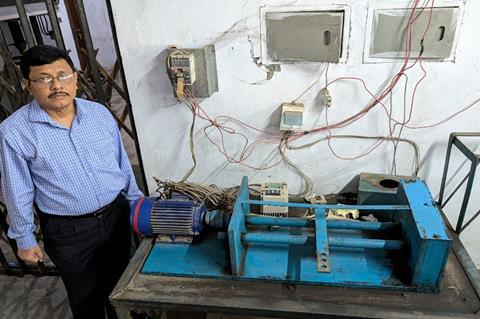
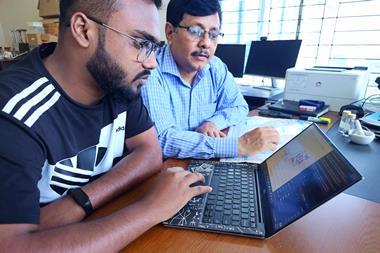
Mohammad Chowdhury, a materials scientist at Dhaka University of Engineering and Technology (DUET) in Bangladesh, explains that when he started his research career, he envisioned a well-stocked, up-to-date research lab with lots of funding. ‘The reality is completely different,’ he says. But this has not stopped Chowdhury from running a thriving research group that covers everything from lithium-ion batteries to semiconductors to two-dimensional materials like graphene.
The list of equipment that Chowdhury and his group have built themselves is just as vast. This includes a chemical vapour deposition (CVD) unit to produce films and solids, microbial fuel cells, a machine to make coin-cell batteries and various instruments to test the mechanical properties of materials.
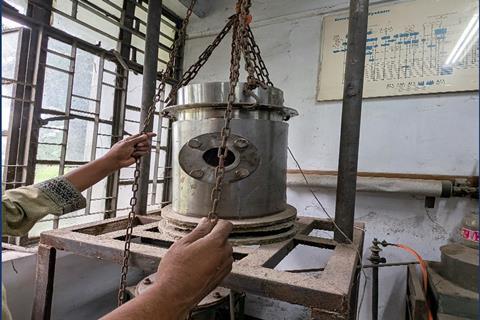
Chowdhury is particularly proud of his self-built tribometer – an instrument that measures friction coefficients. He says that he collected scrap steel from the marine ship market, found broken chairs and a frame from a discarded table in his department and fixed an old speed controller. ‘I assembled everything in my personal room at home because I had no lab space. It was not elegant,’ he says. Equally, he notes that ‘the first prototype tilted [and] the second died completely as the motor burned out.’ Funding is also an issue, with Chowdhury spending his own money to source and buy the parts he needs.
Chowdhury’s persistence and drive to find a solution is evident from his ever-growing suite of self-built instruments. ‘I have overcome every challenge by asking “What is another way?”’ he says.
Avoiding import costs
Building equipment has also helped chemist Theo Geswindt at Rhodes University in South Africa. ‘I’ve been increasingly frustrated by the cost of instruments,’ he says. Being based in South Africa means that Geswindt and his team often have to import equipment, as many manufacturers are based outside of the country, leading to high exchange rates and import taxes that raise costs even further.
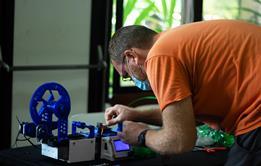
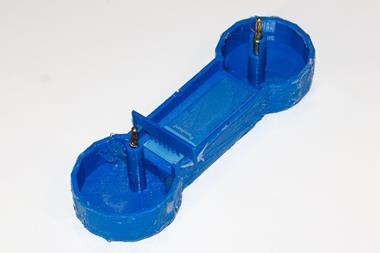
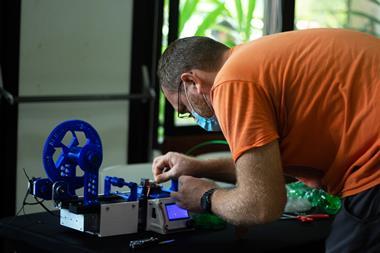
By working with his university’s workshops and 3D printers, Geswindt and his team have developed several of their own pieces of equipment, including ‘do-it-yourself visible spectrophotometers’. His lab is also currently building its own version of a differential thermal analyser – a machine that determines a process’s enthalpy change. Geswindt says that such an instrument typically costs around £23,000, yet the team’s setup costs no more than £226.
‘Everything sort of just happens organically,’ says Geswindt. He has sourced motors, gears, sensors and other key components from around his department. Teaching himself machinery skills such as lathing to build pieces has also helped. Yet, Geswindt points out that making sure the equipment generates comparable results to commercial instruments can be a challenge. ‘I have access to standard instruments,’ he says, adding that he runs ‘a reference on both of the instruments and see how close I can get to within that specification’.
Reducing repair times and building skills
Building equipment from scratch may seem unnecessary if a group already has access to working instruments. But having the tools and skills to repair or make your equipment can help research groups avoid sudden costs and limit downtime caused by faulty instruments that need repairing.
Geswindt highlights that those in research who rely on instruments to collect and report data are feeling the ‘financial pinch’ of rising costs. ‘I think it’s becoming increasingly important that we should find more flexible ways [to finance research].’
Relying on commercial manufacturers has led to students losing skills
Aside from saving money, Geswindt says that building his own equipment had led to more direct engagement with his students. ‘It’s all good and well that you teach a student in class, where you’re just conveying this concept to the student,’ he says. ‘Sometimes they spend some time in a practical delving a little bit into that concept, but they don’t really get hands-on experience like taking an instrument apart for yourself.’
Relying on commercial manufacturers for equipment has led to students losing the skills of understanding how a machine works and how to repair it. ‘Before we really lose those skills, let’s do something about it,’ says Geswindt.


How researchers are producing high quality science at lower cost
Group leaders are no longer just academics; they’re also accountants balancing an increasingly tight budget. In this collection, several scientists share creative ways that they’re saving money, without compromising the quality of their research.
- 1
- 2
 Currently
reading
The researchers saving thousands by assembling their own lab equipment
- 4





No comments yet