More features – Page 37
-
 Feature
Gold fever
The catalytic potential of gold nanoparticles was overlooked for years, but researchers are making up for lost time, writes Bea Perks
-
Feature
Repulsive chemistry
Simon Hadlington discovers why some people get bitten by more insects than others, and how new chemical deterrents are helping fight them off
-
 Feature
The lost Boys of quantum chemistry
Dermot Martin profiles Frank Boys, an unsung hero of theoretical chemistry
-
 Feature
Receptive receptors
One route to developing new drugs is to look at targeting the hundreds of G-protein-coupled receptors that are not currently exploited clinically. Clare Sansom investigates
-
Feature
Saudi science breaks the mould
Sarah Houlton speaks to research pioneers at the King Abdullah University of Science and Technology as it approaches its first anniversary
-
Feature
Lets get physical
Physical chemists are finding themselves more in demand than ever. Emma Davies finds out why
-
 Feature
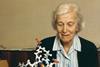
Dorothy Hodgkin: Cracking crystal codes
Cholesterol, penicillin, vitamin B12...? Mike Sutton completes the list and explains the connection
-
Feature
I spy with my MRI
Boundaries of magnetic resonance imaging are continuing to be pushed to reveal more about the human body and aid disease diagnosis
-
Feature
Roadblock on memory lane
The ability to wipe out traumatic memories is just around the corner. Katrina Megget looks into the science of forgetting
-
Feature
Medicine made to measure
Healthcare tailored to suit the genetic makeup of the patient is finally coming to fruition, as Anna Lewcock reports
-
Feature
Solar storms
Storm clouds looming over Solar Valley in Germany, the world's largest cluster of solar panel producers, as Ned Stafford reports
-
Feature
Cultivating the seeds of hope
There are 250 million cases of malaria each year, and effective medication is expensive and in short supply. Justine Davies explores possible solutions
-
Feature
Sweets for my sweet
Could new sweet enhancers and natural sweeteners finally make zero-calorie products taste more like the real thing? Emma Davies finds out
-
Feature
How to disappear completely
Animals use all sorts of optical trickery to make themselves invisible to predators. Hayley Birch finds out how the natural world can help develop new camouflage materials
-
Feature
Solvents reveal their ionic powers
Katharine Sanderson unveils the proof that finally showed quite how special the green solvents ionic liquids really are
-
Feature
Spinning around
Electron spin resonance is emerging as a valuable analytical tool with a wide range of uses. Michael Gross reports
-
Feature
A barrel load of compounds
As the world's petroleum supply dries up, Phillip Broadwith goes hunting for oil armed with a mass spectrometer, a chromatography column and state-of-the-art data-mining software
-
Feature
One extreme to another
It takes a mix of ingenuity and engineering expertise to develop mass spectrometers for use in extreme environments. Emma Davies investigates
-
 Feature
The iconic curly arrow
Robert Robinson pioneered the use of curly arrows to show electron movement. David O'Hagan and Douglas Lloyd report on this eminent historical figure
-
Feature
Model molecules
As computational chemistry's footprint expands, Clare Sansom considers the technical challenges that remain