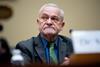
The arrest of David Morens, a former senior adviser to Anthony Fauci, has left many in the US research community reeling and raising concerns about political persecution. Morens was indicted on 28 April on several felony charges related to the coronavirus pandemic.

Fauci is one of the world’s leading infectious disease experts and helped guide the US response to Covid‑19. Morens, a 78-year-old virologist and epidemiologist, served as a senior adviser to Fauci from 2006 to 2022. He worked at the US National Institutes of Health’s (NIH’s) allergy and infectious diseases institute, which Fauci directed for almost four decades.

Federal prosecutors claim that Morens used private email accounts for government business and deleted records. They also allege that he coordinated with co-conspirators to hide communications related to the genesis of the Covid-19 virus and high-risk coronavirus research that the NIH was funding. Those co-conspirators include EcoHealth Alliance’s president Peter Daszak and an unnamed scientist described as being affiliated with an institute that received federal funding. If convicted on all charges, he faces up to 51 years in federal prison.

David Morens

Source: © Andrew Harnik/Getty Images

David Morens during a House select subcommittee on the coronavirus pandemic in May 2024

According to the indictment, Morens and his two co-conspirators took actions in May 2020 tantamount to fraud to restore a research grant of Daszak’s that had been terminated by NIH. The previous month the agency had suddenly terminated the grant, held by EcoHealth and subawarded to the Wuhan Institute of Virology in China, which researched coronaviruses in bats and their potential to jump into humans. The project was ended after it attracted the attention and criticism of President Trump and some Republican lawmakers.

I am not a lawyer, but it seems like a weak case for criminal prosecution

A few weeks after the grant was ended, nearly 80 US science Nobel prize winners – including more than 20 chemistry Nobel laureates – wrote to then-NIH director Francis Collins to warn this ‘sets a dangerous precedent by interfering in the conduct of science and jeopardises public trust in the process of awarding federal funds for research.’

Alleged coordinated concealment

Following the project’s termination, the US Department of Justice (DOJ) alleges that Morens and his second co-conspirator pledged to help restore Daszak’s bat coronavirus grant and counter the narrative that the Covid-19 virus leaked from a lab. Anticipating that their communications would be requested through the freedom of information act (FOIA), they decided to intentionally hide their communications by corresponding using Morens’s personal Gmail account, rather than his official NIH email account, according to the department.

Further, federal prosecutors accuse Morens and Daszak of conspiring to pay ‘illegal gratuities’, saying Daszak gifted Morens wine and in return Daszak allegedly agreed to write a scientific commentary for a prominent medical journal advocating that Covid-19 had natural origins.

Jeremy Berg, a biochemist who served as director of the NIH’s National Institute of General Medical Sciences for almost eight years, is sceptical. ‘I am not a lawyer, but it seems like a weak case for criminal prosecution,’ he tells Chemistry World.

‘It was inappropriate for Dr Morens to use his personal email account for government business, particularly when he explicitly said that the purpose of doing this was to avoid FOIA access,’ Berg adds. ‘With that said, given the widespread reporting about government officials using Signal and other non-governmental services to conduct government business, this seems like an unfairly targeted prosecution, in violation of the equal protection clause of the constitution.’

Political persecution

‪Angie Rasmussen, a virologist at Georgetown University in Washington, DC, agrees that Morens should not have evaded public records laws. But she points out that no records were destroyed and suggests that all the messages in question were colleagues blowing off steam. ‘The “conspiracy” is made up,’ Rasmussen posted on Bluesky. ‘This is political persecution, not legitimate prosecution for an actual crime.’

Dorit Reiss, a professor of law at UC Law San Francisco who focuses on vaccine policy, echoes these sentiments. ‘I am concerned that this is political retaliation over a scientific disagreement,’ she states. Reiss concurs that trying to elude FOIA is ‘clearly wrong’, but states that the claims of alternative origins of Covid-19 were not hidden and were investigated. ‘The way the arrest was done – arresting an elderly scientist with no criminal record in a violent manner – makes it looks punitive, too,’ she adds.

Reiss says she is ‘fairly sure’ that the DOJ is also targeting Daszak but states that going after 85-year-old Fauci – who became a target for attacks from Trump’s supporters during the pandemic over concerns about his public health positions and beliefs that he had a political agenda – would be trickier. President Biden granted him a preemptive, ‘full and unconditional’ pardon before leaving office in January 2025.