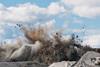
At least 41 people have been killed and 38 others injured in two separate industrial explosions in India.

Blast

Source: © stilrentfoto/Shutterstock

SBL Energy in Nagpur was manufacturing explosives and detonators for mining and infrastructure building as well as munitionsworks

A massive explosion ripped through an industrial explosives factory run by SBL Energy near Nagpur in Maharashtra state on 1 March, killing 19 people and injuring 23 others, many critically. The blast occurred at the detonator packing section of the plant.

Police in Nagpur have registered a case against 21 directors of the SBL Energy, nine of whom have already been arrested. Teams from the National and State Disaster Response Forces had to work hard in search and rescue operations. According to the police, an initial report by the Petroleum and Explosives Safety Organisation (PESO) and Defence Information System for Security (DISS) point to safety failings at the company.

The chief minister of Maharashtra, Devendra Phadanvis, has ordered a thorough probe into the cause of explosion and also promised compensation of ₹500,000 (£4085) for the families of those killed. Calling the incident ‘deeply distressing’, Prime Minister Narendra Modi also promised compensation of ₹200,000 for families of the dead and ₹50,000 for those injured from the Prime Minister’s National Relief Fund.

The situation is not improving and the frequency of such incidents is going up because there is no political will to prevent them

Separately, at least 22 people were killed and 15 critically injured in an explosion at Suryashree Fireworks in the Kakinada district of Andhra Pradesh on 28 February. Around 35–40 workers, mostly women, were mixing explosives to make firecrackers when the explosion occurred. The factory owners, brothers Adabala Veerababu and Arjun have been arrested by the Andhra police – their father, Adabala Srinivasa Rao, perished in the fire.

The Suryashree factory had been temporarily banned from manufacturing following an inspection in January. The owners defied the ban with cooperation from local politicians and local police, according to media reports. Chief Minister N. Chandrababu Naidu visited the area, announcing suspension of several officers and pledging compensation of ₹2 million for the families of the deceased. Three senior local officials have been suspended for failing to enforce safety measures, inspections and oversight, according to the Deccan Herald newspaper.

‘We are living in an era of huge deregulation and dilution of environmental laws and lowering of standards to promote “ease of doing business” over the past 10–12 years, making the situation very problematic,’ says Lara Jesani, an environmental lawyer and civil rights activist based in Mumbai. ‘The situation is not improving and the frequency of such incidents is going up because there is no political will to prevent them. There is an illegal nexus between apathetic business owners, sections of law enforcement authorities and the politicians,’ she adds. ‘Nothing is being done for prevention – we need strict regulation, monitoring, ground level action and business accountability.’

Jesani also questions the compensation norms and calls them highly inadequate. It has become routine in India to award ₹50,000 to those injured, but she questions how this is calculated. ‘Routinely there are cases of multiple and critical injuries, involving permanent disability in industrial accidents. At times, the injured need long term follow-ups, repeat surgeries and care but nobody accounts for that,’ she says. ‘Even in the case of the deceased, how do you account for the loss of the sole earning family member, the needs and aspirations of children and other family members, or their alternative employment,’ she asks. ‘The government just stops at the declaration of some compensation amount and forgets everything else,’ she says.